

Introduction:
Plastic packaging materials are widely used in pharmaceutical products because they are lightweight, durable, and cost-effective. However, these materials can introduce chemical contaminants into drug formulations. Understanding the Extractables Risk in Plastic Packaging is therefore critical for ensuring patient safety and maintaining regulatory compliance.
Pharmaceutical manufacturers must carefully evaluate whether chemicals from packaging materials can migrate into the drug product during manufacturing, storage, transportation, or patient use. These migrated substances may compromise drug quality, alter stability profiles, or create toxicological concerns.
As biologics, injectable products, ophthalmics, inhalation therapies, and long-term drug formulations become more complex, extractables and leachables (E&L) studies have become a fundamental requirement in pharmaceutical development.
Summary:
- Plastic packaging systems can release chemical compounds into drug products through extractables and leachables (E&L).
- Extractables are compounds that can be forced out under aggressive conditions, while leachables migrate under normal storage conditions.
- E&L risks may impact drug safety, efficacy, stability, and regulatory compliance.
- Regulatory agencies including the FDA, USP, and EMA require robust E&L assessments for pharmaceutical packaging systems.
- Modern E&L studies use advanced analytical techniques such as LC-MS, GC-MS, ICP-MS, and headspace GC.
- Risk-based E&L strategies help pharmaceutical companies reduce product recalls and regulatory delays.
- ResolveMass Laboratories Inc. provides scientifically driven E&L testing solutions for complex pharmaceutical packaging systems.
1: What Are Extractables and Leachables?
Extractables and leachables are chemical compounds that originate from packaging systems, manufacturing components, or delivery devices.
What Are Extractables?
Extractables are compounds that can be released from packaging materials under aggressive laboratory conditions such as:
- High temperatures
- Organic solvents
- Extreme pH conditions
- Prolonged extraction time
These studies help identify potential chemical migrants before commercial product storage.
Common extractables include:
- Plasticizers
- Antioxidants
- Slip agents
- Oligomers
- Residual monomers
- Catalysts
- UV stabilizers
What Are Leachables?
Leachables are compounds that actually migrate into the drug product during normal storage and use conditions.
Unlike extractables, leachables directly affect the patient because they are present in the final pharmaceutical product.
Examples include:
- Compounds migrating from IV bags
- Chemicals from prefilled syringes
- Additives released from plastic containers
- Rubber stopper contaminants
- Ink and adhesive residues
2: Why Is Extractables Risk in Plastic Packaging Important?
The primary concern of Extractables Risk in Plastic Packaging is patient safety. Even trace-level contaminants can affect sensitive pharmaceutical formulations.
Potential Risks Include
| Risk Area | Impact |
|---|---|
| Toxicity | Harmful compounds may cause adverse patient reactions |
| Stability Issues | Chemical interactions may degrade APIs |
| Reduced Efficacy | Drug potency may decrease over time |
| Regulatory Non-Compliance | Inadequate E&L studies may delay approvals |
| Product Recalls | Unexpected contaminants may trigger recalls |
| Container Closure Failure | Material degradation may compromise sterility |
For highly sensitive products such as biologics and injectable drugs, even low concentrations of leachables may create serious concerns.
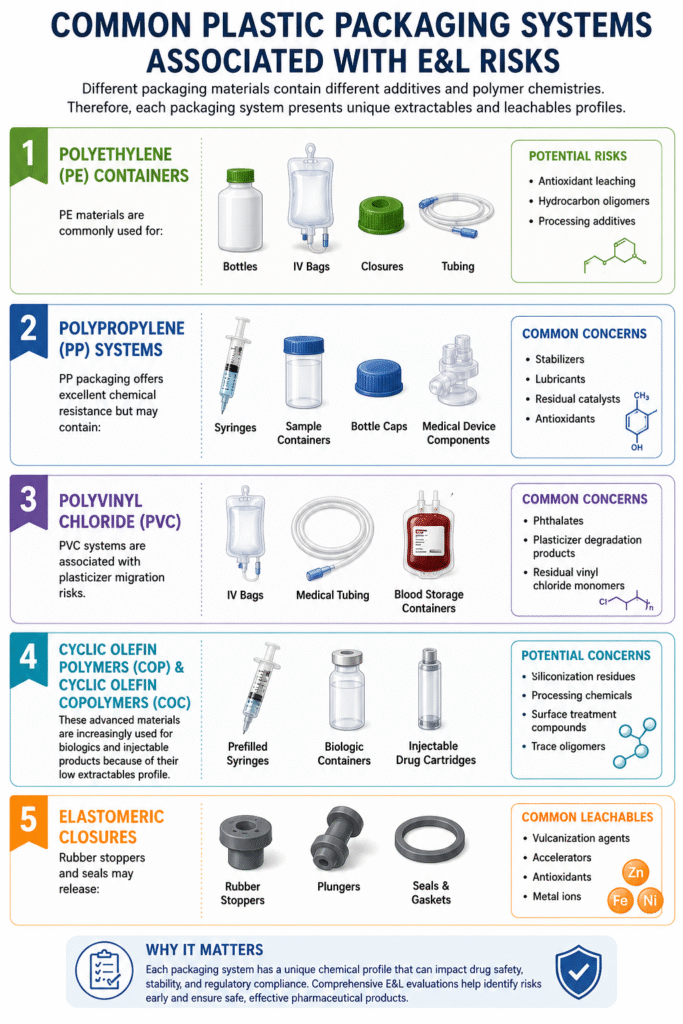
3: Common Plastic Packaging Systems Associated with E&L Risks
Different pharmaceutical packaging materials contain unique polymer compositions, additives, and manufacturing aids. As a result, each packaging system presents distinct extractables and leachables (E&L) risks that must be carefully evaluated during pharmaceutical development.
Below are some of the most frequently assessed plastic packaging systems in E&L studies.
Frequently Evaluated Packaging Components:
1. Polyethylene (PE) Containers
Polyethylene (PE) is one of the most widely used pharmaceutical packaging materials because of its flexibility, durability, and chemical compatibility.
PE materials are commonly used in:
- Bottles
- IV bags
- Closures
- Pharmaceutical tubing
- Single-use bioprocess assemblies
Despite their broad use, PE systems may release several extractable compounds during storage or processing.
Potential E&L Risks in PE Systems
- Antioxidant leaching
- Hydrocarbon oligomers
- Slip agents
- Processing additives
- Polymer degradation byproducts
Low-density polyethylene (LDPE) and high-density polyethylene (HDPE) may exhibit different extractables profiles depending on manufacturing conditions and additive content.
2. Polypropylene (PP) Systems
Polypropylene (PP) packaging is valued for its strong chemical resistance, heat tolerance, and sterilization compatibility.
PP is frequently used for:
- Syringes
- Sample containers
- Bottle caps
- Medical device components
- Diagnostic packaging
Although PP generally demonstrates lower leachables risk than some other polymers, additives used during manufacturing may still migrate into drug products.
Common Concerns in PP Packaging
- Stabilizers
- Lubricants
- Residual catalysts
- Antioxidants
- Degradation products generated during sterilization
Gamma irradiation and high-temperature sterilization may further alter PP chemistry and contribute to new extractables formation.
3. Polyvinyl Chloride (PVC)
Polyvinyl chloride (PVC) has historically been used in pharmaceutical and medical packaging applications because of its flexibility and low production cost.
PVC is commonly found in:
- IV bags
- Medical tubing
- Blood storage containers
- Flexible packaging systems
However, PVC is strongly associated with plasticizer migration concerns, making it a major focus area in E&L evaluations.
Common E&L Concerns in PVC Systems
- Phthalates
- Plasticizer degradation products
- Residual vinyl chloride monomers
- Thermal degradation compounds
Certain plasticizers, such as DEHP, have received increased regulatory scrutiny because of their potential toxicological impact, particularly in vulnerable patient populations.
4. Cyclic Olefin Polymers (COP) and Cyclic Olefin Copolymers (COC)
COP and COC materials are advanced pharmaceutical polymers increasingly used in high-value drug products, particularly biologics and injectable formulations.
These materials are preferred because they offer:
- Excellent transparency
- Low protein binding
- High dimensional stability
- Reduced extractables profiles
- Strong moisture barrier properties
Applications include:
- Prefilled syringes
- Biologic containers
- Injectable drug cartridges
- Diagnostic devices
Although COP and COC systems generally present lower E&L risk compared to traditional plastics, comprehensive assessments remain essential.
Potential Concerns in COP/COC Systems
- Siliconization residues
- Processing chemicals
- Surface treatment compounds
- Trace oligomers
- Sterilization-induced degradation products
Sensitive biologic formulations may still be affected by ultra-trace contaminants originating from these systems.
5. Elastomeric Closures
Elastomeric components such as rubber stoppers, seals, plungers, and gaskets are critical container closure system elements used in injectable and sterile drug products.
These components often contain complex chemical formulations that can generate a broad range of extractables and leachables.
Common Leachables from Elastomeric Closures
- Vulcanization agents
- Accelerators
- Antioxidants
- Oligomers
- Metal ions
- Residual curing agents
Because elastomeric materials directly contact drug products for extended periods, they are considered one of the highest-risk packaging components in pharmaceutical E&L programs.
Comprehensive analytical characterization using techniques such as LC-MS, GC-MS, and ICP-MS is often required to fully assess elastomeric closure compatibility.
4: Regulatory Expectations for E&L Studies
Global regulatory agencies require pharmaceutical companies to evaluate E&L risks during product development.
Key Regulatory Guidelines:
FDA Guidance
The FDA expects manufacturers to:
- Identify potential leachables
- Perform toxicological risk assessments
- Demonstrate product safety throughout shelf life
USP Standards
USP chapters commonly referenced include:
- USP <1663> Assessment of Extractables
- USP <1664> Assessment of Leachables
- USP <661> Plastic Packaging Systems
EMA Expectations
The EMA requires risk-based E&L assessments, particularly for:
- Inhalation products
- Injectable formulations
- Ophthalmic products
- Biologics
5: How Extractables Studies Are Performed
Extractables studies are designed to identify all potentially migratable compounds from packaging systems.
Typical Workflow
| Study Step | Purpose |
|---|---|
| Material Selection | Identify packaging components |
| Extraction Design | Choose solvents and conditions |
| Sample Preparation | Generate extracts |
| Analytical Testing | Detect and characterize compounds |
| Compound Identification | Determine chemical structures |
| Toxicological Assessment | Evaluate patient safety risk |
Common Extraction Conditions
Aggressive extraction conditions may include:
- Elevated temperatures
- Organic solvents
- Acidic and basic media
- Extended exposure durations
These conditions help simulate worst-case scenarios.
6: Factors That Influence Leachables Formation
Leachables formation depends on several variables associated with both the pharmaceutical formulation and the packaging system. Understanding these factors is essential for minimizing contamination risks and ensuring long-term product stability and patient safety.
Major Influencing Factors:
Certain drug formulations are chemically aggressive and can interact more readily with plastic packaging materials, increasing the likelihood of leachable migration.
High-risk formulations include:
- Lipid-based formulations — Lipophilic drugs can extract hydrophobic additives such as plasticizers and antioxidants from polymer surfaces.
- Ethanol-containing products — Organic solvents enhance the solubility of packaging-related compounds and accelerate migration.
- Extreme pH formulations — Highly acidic or alkaline products may chemically degrade packaging materials or promote additive release.
- Protein therapeutics and biologics — Sensitive biologic molecules can interact with trace contaminants, potentially affecting stability, aggregation, or efficacy.
2. Storage Conditions
Environmental and storage conditions significantly influence the rate and extent of leachables formation over the product shelf life.
Key contributing factors include:
- Elevated temperatures — Higher temperatures increase molecular mobility and accelerate chemical migration from packaging materials.
- Light exposure — UV and visible light may trigger photodegradation of polymers and packaging additives.
- Humidity and moisture — Moisture can alter polymer structure and facilitate the release of water-soluble contaminants.
- Long-term storage — Extended contact time between the drug product and packaging increases the opportunity for leachable accumulation.
3. Packaging Material Composition
The chemical composition of the packaging system directly affects extractables and leachables risk.
Materials containing larger amounts of additives generally present higher E&L risks. Common contributors include:
- Plasticizers
- Stabilizers
- Antioxidants
- Lubricants
- Residual monomers
- Processing aids
Multilayer plastic systems, inks, adhesives, and coated surfaces may further increase the complexity of leachable profiles.
4. Sterilization Processes
Sterilization methods can chemically alter packaging materials and generate new degradation products or extractable compounds.
Common sterilization techniques associated with E&L concerns include:
- Gamma irradiation — May induce polymer oxidation and chain scission reactions.
- Steam sterilization (autoclaving) — High heat and moisture can accelerate additive degradation and material breakdown.
- Ethylene oxide (EtO) sterilization — Residual EtO compounds and byproducts may remain within packaging components if not properly controlled.
Because sterilization can significantly change packaging chemistry, post-sterilization E&L evaluations are often necessary during pharmaceutical development.
7: Toxicological Risk Assessment in E&L Studies
Identifying compounds is only part of the process. Toxicological evaluation is equally important.
Key Toxicological Considerations:
Risk assessments evaluate:
- Daily patient exposure
- Compound toxicity
- Route of administration
- Treatment duration
- Vulnerable patient populations
Threshold concepts often applied include:
- SCT (Safety Concern Threshold)
- AET (Analytical Evaluation Threshold)
- TTC (Threshold of Toxicological Concern)
This approach helps determine whether detected leachables pose clinically relevant risks.
8: Why Pharmaceutical Companies Prioritize E&L Risk Assessments
E&L failures can lead to:
- Regulatory observations
- Delayed product approvals
- Product reformulation
- Market withdrawals
- Patient safety concerns
As global regulatory scrutiny increases, pharmaceutical companies are investing heavily in robust E&L programs to ensure long-term product quality and compliance.
Conclusion:
Understanding the Extractables Risk in Plastic Packaging is essential for pharmaceutical product safety, regulatory compliance, and lifecycle stability. Plastic packaging systems can release a wide range of chemical compounds that may affect drug quality and patient health if not properly controlled.
Comprehensive extractables and leachables studies allow pharmaceutical manufacturers to identify potential contaminants early, assess toxicological risks, and implement scientifically justified mitigation strategies. With increasingly sensitive drug products and evolving regulatory expectations, robust E&L characterization has become a critical component of pharmaceutical development.
ResolveMass Laboratories Inc. supports pharmaceutical and biopharmaceutical companies with advanced analytical solutions for extractables and leachables testing using state-of-the-art mass spectrometry platforms and regulatory-aligned study designs.
Frequently Asked Questions:
The Extractables Risk in Plastic Packaging is important because migrated chemicals can affect drug stability, efficacy, and patient safety. Some leachables may be toxic, reactive, or capable of degrading active pharmaceutical ingredients (APIs). Regulatory agencies therefore require pharmaceutical manufacturers to assess packaging compatibility throughout product development and shelf-life studies.
Common packaging materials evaluated in E&L studies include polyethylene (PE), polypropylene (PP), polyvinyl chloride (PVC), cyclic olefin polymers (COP), cyclic olefin copolymers (COC), and elastomeric closures. Each material contains different additives, stabilizers, and processing chemicals that may migrate into pharmaceutical products under certain conditions.
Storage conditions such as elevated temperature, humidity, light exposure, and prolonged storage duration can significantly increase leachable migration. Harsh environmental conditions may accelerate polymer degradation and chemical diffusion from packaging materials into the drug product. Stability studies are therefore essential during pharmaceutical development.
Biologics and protein therapeutics are highly sensitive to trace contaminants because even small amounts of leachables can impact protein stability, aggregation, or efficacy. Some leachables may also trigger immunogenic responses or interact with delicate formulations. This is why biologic packaging systems require highly sensitive and comprehensive E&L assessments.
Pharmaceutical companies can reduce E&L risks by selecting compatible packaging materials early in development, conducting comprehensive extractables studies, performing toxicological risk assessments, and using advanced analytical techniques. Partnering with experienced analytical laboratories also improves regulatory compliance and product safety.
Reference
- Kushwaha P, Madan A, Kushwaha P, Madan AK. Extractables and leachables: an overview of emerging challenges. Pharmaceutical Technology. 2008 Aug 2;32(8):1-4.https://www.pharmtech.com/view/extractables-and-leachables-overview-emerging-challenges
- Jenke D. Extractables and leachables: characterization of drug products, packaging, manufacturing and delivery systems, and medical devices. John Wiley & Sons; 2022 Aug 2.https://books.google.com/books?hl=en&lr=&id=A296EAAAQBAJ&oi=fnd&pg=PR12&dq=Extractables+and+Leachables+Risks+in+Plastic+Packaging+Systems&ots=WCnaLFk47j&sig=rXYXgAZK9iiOrVId46xWwMr8Tmk
- Jahn M. Leachables and extractables: from regulatory expectations to laboratory assessment. InChallenges in protein product development 2018 Jun 21 (pp. 337-351). Cham: Springer International Publishing.https://link.springer.com/chapter/10.1007/978-3-319-90603-4_16
- Bestwick D, Colton R. Extractables and leachables from single-use disposables. BioProcess Int. 2009 Feb;7(S1):88-94.https://eu-assets.contentstack.com/v3/assets/blt0a48a1f3edca9eb0/blted4c80fc0214d604/658c3b1beaf77f040a3e56bc/BPI_A_090702SUPAR17_78941a.pdf
About the Author


