
Introduction
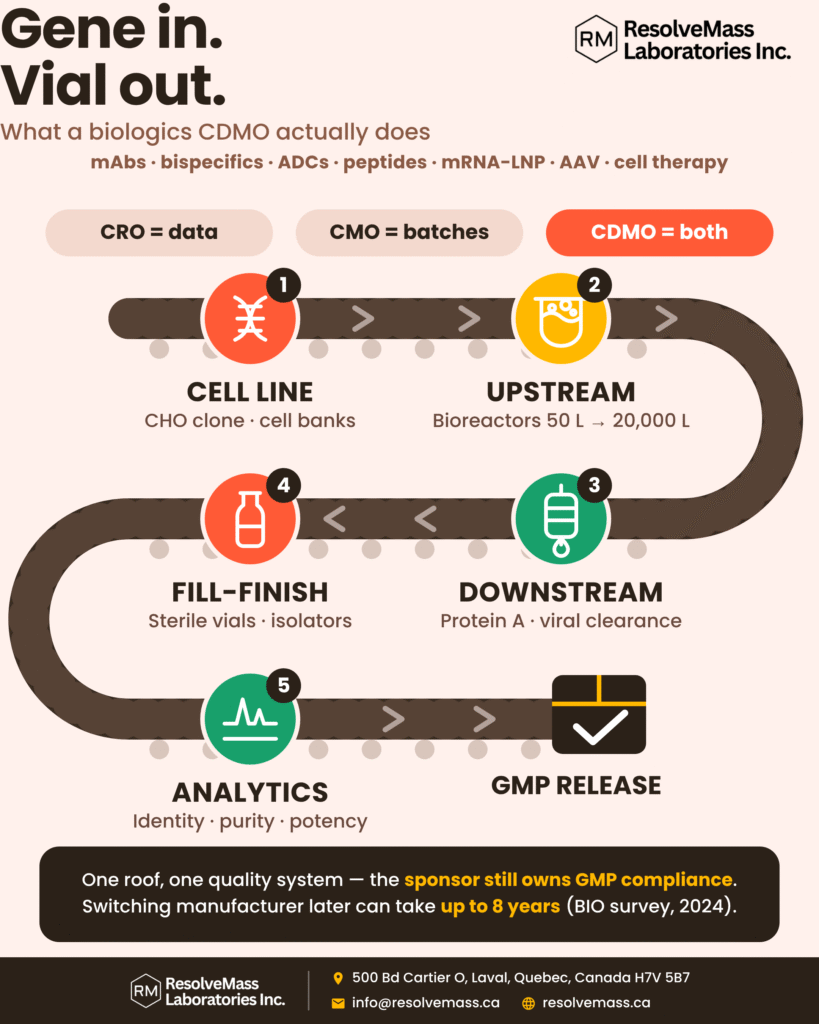
What is a Biologics Contract Development and Manufacturing Organization (CDMO) in practical biopharmaceutical operations? A biologics CDMO serves as an outsourced Chemistry, Manufacturing, and Controls (CMC) partner responsible for designing, validating, and scaling the living-cell production, purification, analytical control, and sterile fill-finish processes necessary to advance macromolecular therapeutics from gene sequence development to commercial supply. Unlike small-molecule synthesis, biologics generally exceed 900 Daltons (Da), with molecular weights frequently ranging from 10,000 to 150,000 Da. These complex molecules are produced using living host cells, including Chinese hamster ovary (CHO) cell lines and microbial expression systems.
Therapeutic proteins possess intricate three-dimensional structures, post-translational modifications (PTMs), such as glycosylation, and inherent microheterogeneity. Consequently, even minor variations in bioreactor shear conditions, nutrient feeding strategies, or purification pH can influence product potency, stability, and potential patient immunogenicity. Industry experience highlights the importance of effective CMC execution in advancing clinical development. According to a CDMO vendor overview from Lonza, more than 40% of Investigational New Drug (IND) clinical holds are associated with CMC-related challenges. By combining cell line engineering, upstream and downstream bioprocessing, orthogonal analytical characterization, and aseptic manufacturing within integrated current Good Manufacturing Practice (cGMP) quality systems, a biologics CDMO helps minimize technology transfer risks and accelerate the journey toward regulatory approval.
Share via:
Quick Summary:
- A biologics CDMO is an outsourced CMC partner that develops, validates and scales living-cell production, purification, analytical control and sterile fill-finish — carrying a molecule from gene sequence to commercial supply, which matters because biologics are large (roughly 10,000–150,000 Da), structurally complex and sensitive to small process changes.
- It sits between a CRO (generates preclinical and clinical data) and a CMO (manufactures from a finished process): the CDMO builds and optimises the process and makes clinical and commercial batches, which closes the “tech transfer gap” between lab and plant. Whichever model is used, the sponsor keeps legal responsibility for GMP compliance and product quality.
- Supported modalities span mAbs and bispecifics, Fc-fusions and recombinant enzymes, ADCs and AOCs, therapeutic peptides, and nucleic acid, viral vector and cell therapies — each with its own expression platform, purification chemistry and degradation pathways.
- Upstream covers cell line development (usually CHO, with master and working cell banks) and bioreactor strategy: batch, fed-batch (the industry standard for mAbs, typically 3–10 g/L) or perfusion (continuous harvest, smaller footprint, 24/7 operation), at scales from 50 L single-use vessels to 20,000 L stainless steel.
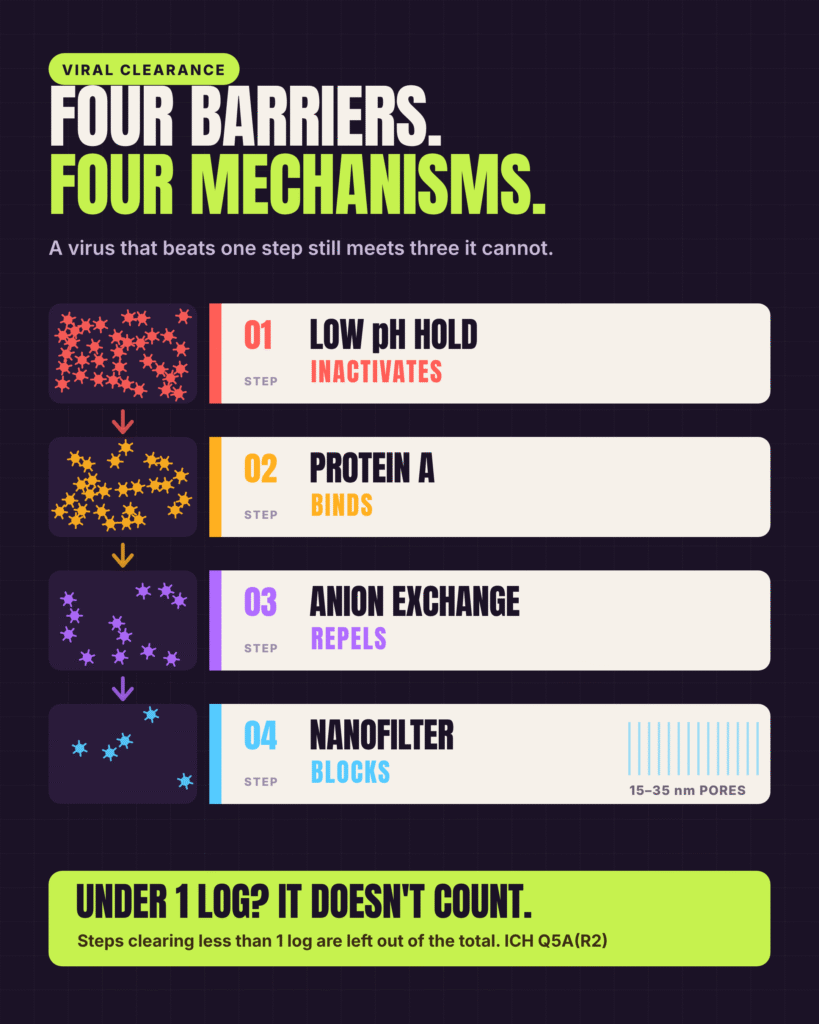
- Downstream recovers and purifies the product through clarification, Protein A capture, low-pH viral inactivation, polishing chromatography, virus-retentive nanofiltration and UF/DF — with orthogonal viral clearance validated by scale-down spiking studies under ICH Q5A(R2). Rising titers have made downstream, not upstream, the bottleneck.
- Drug product work turns bulk substance into stable liquid or lyophilised formulations filled into vials or prefilled syringes, now under much stricter EU GMP Annex 1 expectations, which has pushed the industry toward isolators and RABS on aseptic lines. Running alongside is an orthogonal analytical programme — peptide mapping, HRMS, NMR, CE-SDS, iCIEF, forced degradation, ICH M10 bioanalysis and extractables/leachables — since no single method characterises a protein’s full heterogeneity (ICH Q6B).
- Technology transfer typically runs about 9–15 months, and 12–24 months for commercial or licensed products, moving through knowledge transfer, facility fit, analytical method transfer, engineering runs, PPQ batches and the ICH Q5E comparability filing. Because moving an approved product later can take years, sponsors should start CDMO outreach 12–18 months before the first GMP batch and nail down IP, failed-batch liability, capacity reservation and exit terms up front.
What Is a Biologics CDMO vs. CRO, CMO, and CRDMO?
A biologics CDMO combines process development and cGMP manufacturing within a unified operational and quality governance framework. It effectively bridges the gap between a Contract Research Organization (CRO) and a Contract Manufacturing Organization (CMO). A CRO primarily generates preclinical and clinical research data, whereas a CMO manufactures drug materials using an established and finalized production process. In contrast, a CDMO develops, refines, and optimizes a scalable manufacturing process before producing clinical and commercial batches.
| Outsourcing Model | Core Operational Focus | Primary Deliverable | Regulatory Framework | Optimal Engagement Stage |
|---|---|---|---|---|
| CRO | Preclinical studies, clinical trial execution, biostatistics, and bioanalysis | Clinical study reports, safety/PK datasets, and regulatory dossiers | GCP and GLP | Discovery through Phase IV |
| CMO | Large-scale drug substance and drug product manufacturing using an established process | Physical GMP batches, commercial supply, and packaging | cGMP | Phase III and commercial launch |
| CDMO | Integrated formulation, cell line and process development, analytical validation, and GMP production | Optimized CMC processes, technology transfer packages, clinical materials, and commercial supply | cGMP and ICH Quality Guidelines (Q5C, Q5E, Q6B, Q10) | Preclinical / IND-enabling through commercialization |
| CRDMO | Discovery research integrated with process development and commercial manufacturing | Lead therapeutic candidates, comprehensive CMC development, and GMP supply | GLP, GCP, and cGMP | Target discovery through the commercial lifecycle |
An industry overview published by Vision Life Sciences estimates that the global pharmaceutical CDMO services market reached approximately $200 billion in 2025, compared with an annual CRO services market of approximately $85 billion. These figures reflect the continued dependence of the biopharmaceutical industry on external CMC development and manufacturing capabilities.
Choosing an integrated CDMO instead of engaging separate process development and manufacturing vendors can help eliminate the “tech transfer gap.” This gap commonly involves production delays, analytical assay variability, and information loss when an insufficiently developed process moves from a research laboratory to a commercial manufacturing facility. Irrespective of the outsourcing model selected, FDA quality agreement guidance, EU GMP Chapter 7, and ICH Q10 establish that the sponsor retains ultimate legal responsibility for cGMP compliance and overall product quality.
Explore the differences between peptide CDMO and CMO services to better understand the responsibilities associated with each outsourcing model.
Therapeutic Modalities Supported by Biologics CDMOs
Biologics CDMOs manufacture and support a broad range of large-molecule and conjugated therapeutic modalities. Their structural complexity generally makes conventional chemical manufacturing approaches insufficient. Since expression platforms, purification resins, and analytical testing requirements differ considerably across therapeutic classes, specialized CDMOs develop dedicated manufacturing and analytical platforms for individual molecular architectures.
The major therapeutic modalities supported by biologics CDMOs include:
- Monoclonal Antibodies (mAbs) and Bispecifics (BsAbs): These include recombinant immunoglobulins and engineered antibodies designed to recognize multiple targets. They are predominantly expressed using mammalian Chinese hamster ovary (CHO) cell lines.
- Fc-Fusion Proteins, Fab Fragments, and Recombinant Enzymes: These engineered protein structures require careful control of disulfide bond pairing, glycosylation profiles, and higher-order structural integrity.
- Antibody-Drug Conjugates (ADCs) and Antibody-Oligonucleotide Conjugates (AOCs): These advanced hybrid therapeutics combine targeted antibody production with linker-payload bioconjugation processes and specialized conjugation-related CMC controls.
- Therapeutic Peptides and Polypeptides: These include linear, cyclic, and chemically modified peptides that require accurate sequence confirmation, synthesis-related impurity profiling, and stability-indicating analytical methods.
- Nucleic Acid, Viral Vector, and Cell Therapies: These advanced therapeutic modalities encompass messenger RNA-lipid nanoparticle (mRNA-LNP) formulations, adeno-associated virus (AAV) and lentiviral vectors, and various cell therapy products.
Each therapeutic modality has distinct degradation and instability pathways, including oxidation, deamidation, fragmentation, and aggregation. These characteristics directly influence upstream harvest timing, formulation buffer selection, and appropriate cold-chain storage and transportation conditions.
Review the differences between peptides and small-molecule drugs to understand their distinct structural and manufacturing requirements.
Key Services and End-to-End Biologics Manufacturing Processes
End-to-end biologics CDMO operations encompass cell line engineering, upstream cultivation, downstream purification, sterile drug product fill-finish, and regulatory documentation throughout the product lifecycle. Every manufacturing unit operation is carefully designed to achieve the required Critical Quality Attributes (CQAs) while maintaining an appropriate balance between volumetric productivity and cost of goods (COG).
Cell Line Development and Upstream Bioprocessing
Upstream bioprocessing converts a target gene sequence into high-titer harvested cell culture fluid while maintaining consistent glycan profiles and protein structural integrity. During Cell Line Development (CLD), CDMOs establish stable expression pools and clonal cell lines, commonly using CHO glutamine synthetase (GS) platforms or microbial fermentation systems. These activities are followed by the qualification of Master Cell Banks (MCBs) and Working Cell Banks (WCBs).
To accelerate first-in-human development timelines, peer-reviewed case studies involving major biopharmaceutical companies and CDMO programs have documented the use of transposase-based semi-targeted integration and non-clonal cell pools. These approaches have been applied at scales ranging from 200 L to 2,000 L to support toxicology studies and Phase I clinical supply while clonal stability assessments continue simultaneously.
| Upstream Operation Mode | Typical Run Duration | Peak Cell Density (million cells/mL) | Typical Titer / Productivity | Operational Trade-Offs |
|---|---|---|---|---|
| Batch | 3–7 days | 5–10 | 0.5–1.5 g/L | Relatively straightforward to operate; however, rapid nutrient depletion and waste accumulation can restrict productivity. |
| Fed-Batch | 10–21 days | 15–30 | 3–10 g/L (3–8 g/L commonly achieved at large CDMOs; up to 9.1 g/L under intensified conditions) | Widely established as the industry standard for mAb production because of predictable scale-up performance. However, vessel turnaround periods of 3–7 days can reduce annual equipment utilization. |
| Perfusion | 30–90 days | 50–100+ | 1.0–2.3 g/L/day at steady state | Continuous harvesting helps preserve sensitive biologics and reduces the required reactor footprint. However, this approach requires ATF or TFF-based cell retention systems and continuous 24/7 operations. |
Bioprocess engineering models published by BioprocessTools demonstrate how the selection of an upstream production strategy affects manufacturing facility requirements and overall productivity. For example, a 500 L perfusion bioreactor operating at a productivity of 1.5 g/L/day over a 60-day production campaign can generate approximately 45 kg of product. This output is comparable to six to nine fed-batch campaigns conducted in a 2,000 L bioreactor operating at a titer of 5 g/L.
Intensified fed-batch manufacturing strategies also incorporate N-1 seed-train perfusion to inoculate production bioreactors at substantially higher cell densities of 3–10 million cells/mL, compared with conventional inoculation densities of approximately 0.3–0.5 million cells/mL. This approach can reduce the overall production batch duration and improve manufacturing efficiency.
Bioreactor capacities generally range from 50 L to 2,000 L single-use bioreactors (SUBs), which provide flexibility for clinical manufacturing, to larger stainless-steel or other commercial-scale vessels ranging from 4,000 L to 20,000 L. Successful scale-up across different vessel geometries requires careful control of oxygen mass transfer (kLa), power-per-volume (P/V), heat removal capacity, and mixing characteristics. Maintaining these parameters helps prevent unfavorable process gradients that could negatively affect product quality and consistency.
Explore the peptide API scale-up process to understand the technical considerations involved in expanding peptide manufacturing capacity.
Downstream Purification and Viral Clearance
Downstream processing (DSP) involves recovering and purifying biologic products from cell debris, host cell proteins (HCPs), residual host cell DNA (hcDNA), endotoxins, protein aggregates, and potential viral contaminants. As upstream manufacturing titers have increased, with vendor-reported intensified fed-batch processes achieving values as high as 9.1 g/L, downstream processing capacity has emerged as a significant manufacturing bottleneck. Addressing this challenge requires high-capacity chromatography resins, membrane adsorbers, and intensified filtration systems.
For commercial manufacturing capacity calculations, an overall downstream recovery assumption of approximately 70% is frequently used for monoclonal antibody (mAb) drug substance production.
| Downstream Unit Operation | Separation Mechanism | Primary Impurities Cleared | Process Performance & Viral Clearance Benchmarks |
|---|---|---|---|
| Clarification (Centrifugation & Depth Filtration) | Size exclusion and electrostatic adsorption | Whole cells, cellular debris, chromatin complexes, HCP, and hcDNA | Charged depth filters, including quaternary amine-based filters, used after the capture step can improve HCP clearance and reduce hcDNA concentrations to below detection limits. |
| Capture (Protein A Affinity Chromatography) | High-specificity binding to the IgG Fc region | Media components, bulk HCP, and hcDNA | Resin columns remain the conventional standard. However, a comparative study published in BioProcess International demonstrated that single-use Protein A membranes could complete processing cycles in less than 10 minutes, compared with approximately 133 minutes per cycle for conventional resin columns. |
| Low-pH Viral Inactivation | Acidic holding followed by neutralization | Enveloped viruses, including retroviruses | This dedicated chemical inactivation step is used for viral safety. An intermediate pH holding step at 5.1–5.5, followed by depth filtration, can additionally achieve more than 150-fold HCP reduction. |
| Polishing (CEX, AEX, HIC, Multimodal, CHT) | Electrostatic charge, hydrophobic interactions, or mixed-mode binding | Aggregates, fragments, charge variants, leached Protein A, endotoxins, and HCP | CEX generally provides less than 3 LRV of parvovirus clearance, although overloaded POROS XS studies have demonstrated 6.09 LRV for MLV and 2.62 LRV for MVM. AEX contributes to the clearance of both retroviruses and parvoviruses. |
| Virus-Retentive Nanofiltration | Size exclusion using membranes with 15–35 nm pores | Enveloped viruses and small non-enveloped viruses, including parvovirus/MVM | This operation can achieve more than 6 LRV of parvovirus clearance. Current-generation filters report a median value of 5.8 LRV. Processing is generally conducted at constant pressure, with prefilters used to minimize membrane fouling. |
| Ultrafiltration / Diafiltration (UF/DF) | Tangential flow filtration (TFF) using membranes with defined molecular weight cut-offs | Residual salts, process buffers, and low-molecular-weight excipients | Concentrates purified drug substance and facilitates buffer exchange into the final formulation buffer. |
Regulatory authorities require orthogonal viral clearance validation using worst-case, scale-down spiking studies conducted in accordance with ICH Q5A(R2). Under ICH requirements, individual purification unit operations demonstrating less than a 1 log reduction value (LRV) are excluded from the cumulative viral safety factor calculation across the entire purification train.
Formulation, Sterile Fill-Finish, and Containment
Sterile drug product manufacturing transforms purified bulk drug substance into stable liquid or lyophilized formulations. These formulations are subsequently filled into vials or prefilled syringes (PFS) for Phase I–III clinical trials and commercial distribution.
Formulation scientists carefully evaluate excipient compatibility, control viscosity in high-concentration subcutaneous biologic formulations, and optimize lyophilization cycles. These activities help prevent protein aggregation and potency deterioration while maintaining the intended product quality throughout the specified shelf life.
The revised expectations under EU GMP Annex 1 have substantially increased the requirements for sterile manufacturing facilities operated by biologics CDMOs. Across the industry, manufacturing practices have increasingly shifted toward closed isolator systems and Restricted Access Barrier Systems (RABS) integrated into high-speed aseptic filling lines. These containment technologies physically separate operators from critical filling areas, reducing the risk of contamination caused by human-borne particulates and microorganisms.
Explore the formulation of lyophilized peptide injectables to understand the formulation and stability considerations involved in developing these products.
What Is a Biologics CDMO Required to Validate in Analytical Characterization?
A biologics CDMO must establish and validate a comprehensive orthogonal analytical and bioanalytical testing program to confirm product identity, purity, potency, structural comparability, and container-closure safety throughout every stage of development. Since no individual analytical technique can independently characterize the complete microheterogeneity of a protein therapeutic, ICH Q6B expectations emphasize the use of complementary analytical methods to investigate primary amino acid sequences, higher-order structural conformation, and biological activity.
Structural, Purity, and Reference Standard Characterization
Analytical techniques such as peptide mapping by LC-MS/MS, high-resolution mass spectrometry (HRMS), nuclear magnetic resonance (NMR) and quantitative NMR (qNMR), HPLC/UHPLC, capillary electrophoresis sodium dodecyl sulfate (CE-SDS), imaged capillary isoelectric focusing (iCIEF), circular dichroism (CD), and differential scanning calorimetry (DSC) are used to evaluate amino acid sequences, glycosylation patterns, charge heterogeneity, aggregation, and thermal unfolding characteristics.
Forced Degradation and Stability-Indicating Methods
Controlled degradation studies involving thermal, pH, oxidative, photolytic, and mechanical stress conditions are performed to investigate product stability. These studies typically target approximately 5–20% degradation to identify degradation pathways, including oxidation, deamidation, and fragmentation. The findings support the development and validation of stability-indicating release methods in accordance with ICH Q5C and Q6B requirements.
GLP/ICH M10 Large-Molecule Bioanalysis
Preclinical and clinical pharmacokinetic (PK), pharmacodynamic (PD), biomarker, and anti-drug antibody (ADA) immunogenicity studies require reliable bioanalytical platforms. These commonly include ligand-binding assays (LBA) and hybrid immunocapture LC-MS/MS approaches. Method validation must address selectivity, parallelism, dilution linearity, drug tolerance, and hook effects.
Extractables and Leachables (E&L) Testing
Biologics frequently come into contact with single-use bioreactor bags, transfer tubing, sterilizing filters, and elastomeric closures during manufacturing and storage. Therefore, GMP-compliant E&L assessments are essential for identifying volatile, semivolatile, nonvolatile, and elemental leachables. Analytical techniques such as GC-MS, LC-MS/MS, HRMS, ICP-MS, and FTIR are used in accordance with USP requirements, ISO 10993-18, and FDA toxicological evaluation criteria.
A robust analytical infrastructure is one of the most important indicators of a biologics CDMO’s technical capabilities and reliability. ResolveMass Laboratories Inc., located in Laval, Quebec, Canada, supports biologics, biosimilar, and peptide development programs through PhD-level analytical scientists and specialized instrumentation, including HRMS, LC-MS/MS, NMR/qNMR, CE-SDS, iCIEF, ICP-MS, and FTIR platforms.
The laboratory operates under a Health Canada GMP Drug Establishment Licence (No. 3-002945-A), US FDA registration (Establishment Identifier No. 3042696771), and ISO 9001:2015 certification. Its GLP/ISO 17025-aligned validation frameworks are consistent with ICH Q2(R2) and ICH M10 expectations. Through these capabilities, the laboratory provides audit-ready reference standard characterization, forced degradation studies, bioanalytical testing, E&L profiling, and GMP analytical release services.
Review impurity control strategies under ICH Q3A to understand the principles used to manage impurities during pharmaceutical development.
Technology Transfer, Timelines, and Regulatory Compliance
Biologics technology transfer generally requires approximately 9 to 15 months from initiation to completion, according to industry planning guides. However, complex mid-stage development programs and commercial manufacturing transfers can extend the overall timeline to approximately 12 to 24 months.
In comparison, integrated DNA-to-IND programs using established CDMO manufacturing platforms have demonstrated the ability to shorten initial clinical development timelines. Traditional schedules of approximately 12–24 months have been reduced to around 6 to 9.5 months for monoclonal and bispecific antibody programs.
According to its 2025 investor presentation, WuXi Biologics reported that typical DNA-to-IND CMC package pricing ranged from US$5–8 million, excluding third-party toxicology studies. However, actual development and manufacturing budgets depend on several factors, including therapeutic modality, production titer, analytical assay requirements, and overall process complexity.
Technology Transfer Phases and Deliverables
| Tech Transfer Phase | Typical Benchmark Duration | Core Technical & Regulatory Deliverables | Primary Bottleneck / Risk |
|---|---|---|---|
| 1. Knowledge Transfer | Months 0–3 | Technology Transfer Dossier (TTD), manufacturing batch history, raw material specifications, and Quality Agreement | Incomplete process development documentation can make root-cause investigations difficult. |
| 2. Facility Fit & Gap Closure | Months 2–6 | Equipment mapping, risk-ranked gap register covering bioreactor P/V, TFF area, and WFI capacity, along with necessary facility modifications | Lower P/V values in SUBs or smaller UF/DF skids may require sparging adjustments or two-pass validation. |
| 3. Analytical Method Transfer | Months 3–8 (6–12 months for potency assays) | Comparative testing, co-validation, or independent validation in accordance with PDA Technical Report 57 | Cell-based potency bioassays, HCP assays, and glycan testing may demonstrate inter-site variability. |
| 4. Engineering Runs | Months 6–12 | Non-GMP or at-risk scale confirmation to verify yield, glycosylation, CIP/SIP, and intermediate hold times | Automation/DCS translation errors and intermediate hold-time failures can affect process performance. |
| 5. PPQ Campaign | Months 10–15 | Three to five consecutive GMP Process Performance Qualification batches | Deviation investigations and batch record reconciliation may delay batch release. |
| 6. Regulatory Filing | Months 12–18 | ICH Q5E comparability package, 3–6 months of accelerated and real-time stability data, and FDA PAS or EMA Type II variation documentation | Pre-approval inspections (PAI) and the need to defend statistical comparability can create regulatory challenges. |
The phased timeline outlined above represents a general bioprocess engineering benchmark. However, technology transfers involving commercial or licensed products can frequently require 18 to 24 months when planned manufacturing site changes are involved. Furthermore, a 2024 Biotechnology Innovation Organization (BIO) survey covering 124 companies, as cited by Reuters, reported that transferring an approved product to another manufacturer can take as long as eight years.
For this reason, biopharmaceutical sponsors should begin CDMO outreach and requests for proposals (RFPs) at least 12 to 18 months before their intended first GMP manufacturing batch. Early engagement provides sufficient time for technical assessments, facility qualification, analytical method transfer, and quality system alignment.
Review the peptide CDMO capabilities available in Canada to understand the regional manufacturing and development considerations involved in partner selection.
Commercial manufacturing agreements and separate quality agreements should clearly establish intellectual property (IP) ownership for process improvements, financial responsibility for failed batches, capacity reservation conditions, and technology transfer-out provisions. These agreements should also include appropriate notice periods and exit protections, particularly in relation to US BIOSECURE Act restrictions anticipated around late 2028 for companies receiving US federal contracts or grants.
Compare Canadian and US peptide CDMO options when assessing manufacturing locations and outsourcing requirements.
Conclusion
Understanding What Is a Biologics CDMO involves evaluating much more than bioreactor infrastructure or the use of single-use manufacturing bags. It requires examining the integrated technical capabilities involved in cell line stability, upstream process intensification, orthogonal viral clearance, Annex 1-compliant aseptic containment, and validated analytical characterization.
Since transferring biologics manufacturing operations between facilities can introduce significant regulatory challenges, increase development costs, and potentially extend timelines by several years, conducting comprehensive due diligence before selecting a CDMO is essential. Sponsors should carefully assess facility compatibility, potency assay transfer capabilities, ICH comparability requirements, and quality governance systems to protect clinical development schedules and ensure an uninterrupted supply of therapeutic products.
Explore peptide CDMO services in the United States to understand the available development and manufacturing considerations.
For biopharmaceutical teams requiring PhD-led structural characterization, reference standard qualification, forced degradation studies, GLP/ICH M10 bioanalysis, extractables and leachables (E&L) testing, or Health Canada GMP-compliant analytical release services supported by FDA-registered and ISO 9001:2015-certified quality systems, connect directly with the scientific team at ResolveMass Laboratories Inc.:
https://resolvemass.ca/contact/
Frequently Asked Questions
A biologics CDMO provides both development and manufacturing services, whereas a CRO primarily focuses on research, testing, and preclinical or clinical development activities. A CMO generally concentrates on manufacturing products using established processes supplied by the sponsor. In contrast, a CDMO can support process development, analytical method development, scale-up, technology transfer, and commercial manufacturing. This broader involvement allows sponsors to work with one partner across multiple stages of product development.
A company should consider a biologics CDMO when its manufacturing process still requires development, optimization, or scale-up before commercial production. CDMOs provide technical expertise, specialized equipment, analytical capabilities, and regulatory support throughout these activities. A CMO may be more appropriate when the process is already established and the primary requirement is manufacturing capacity. The decision depends on the product’s development stage, process complexity, internal resources, and long-term manufacturing requirements.
The timeline depends on the molecule, expression system, process complexity, analytical requirements, and regulatory strategy. Conventional monoclonal antibody programs may require approximately 12 to 24 months to progress from DNA sequence availability to an IND-ready package. Under accelerated development strategies, certain mAb and bispecific antibody programs may reach this stage in approximately 6 to 9.5 months. These timelines are estimates and may change depending on process readiness, testing requirements, and sponsor-specific objectives.
Technology transfer for biologics commonly requires around 9 to 15 months, depending on process maturity and the receiving facility’s capabilities. More complex products or processes may require 12 to 24 months because of additional analytical development, equipment qualification, process characterization, and validation activities. The transfer process also involves documentation review, training, engineering runs, and comparability assessments. Careful planning and communication between the sending and receiving teams can help reduce delays and maintain product quality.
Analytical method transfer can become challenging when the sending and receiving laboratories use different instruments, procedures, reagents, or testing conditions. Potency assays, host cell protein (HCP) testing, and glycan characterization methods may require additional optimization to demonstrate consistent performance. Differences in analyst experience, reference standards, and system suitability criteria can also affect results. Following established guidance, such as PDA Technical Report 57, helps laboratories plan transfer activities and evaluate method performance systematically.
Biologics CDMOs commonly use fed-batch and perfusion processes, with the selection depending on the molecule and production objectives. Fed-batch cultures may typically run for 10 to 21 days, with reported productivity ranges of approximately 3 to 10 g/L. Perfusion processes can operate continuously for 30 to 90 days, with productivity expressed as approximately 1 to 2.3 g/L/day. Manufacturing capacities may range from 50 L to 20,000 L, depending on facility design, process requirements, and commercial demand.
Biologics CDMOs use multiple viral clearance and inactivation steps to reduce the risk of viral contamination in biological products. Common approaches include Protein A chromatography, low-pH viral inactivation, anion-exchange chromatography (AEX), cation-exchange chromatography (CEX), and virus nanofiltration. These operations are selected and evaluated according to the product’s characteristics and the manufacturing process. Viral safety strategies are developed in alignment with applicable regulatory expectations, including ICH Q5A(R2).
A quality agreement should clearly define the responsibilities of the sponsor and the CDMO throughout manufacturing, testing, storage, and product release activities. It should address deviation management, change control, investigations, batch documentation, data integrity, audits, complaints, and regulatory inspections. The agreement should also establish procedures for handling out-of-specification results, product recalls, and subcontracted activities. Its provisions should align with applicable requirements, including FDA expectations, EU GMP Chapter 7, and ICH Q10, while recognizing that the sponsor retains its regulatory responsibilities.
Sponsors should assess whether a biologics CDMO has suitable analytical instruments, qualified personnel, validated methods, and appropriate quality systems. Important capabilities may include HRMS, LC-MS/MS, NMR/qNMR, HPLC, CE-SDS, and iCIEF for evaluating identity, purity, potency, and product-related impurities. The audit should also review stability testing under ICH Q5C, relevant GLP and ICH M10 requirements, and extractables and leachables (E&L) assessments aligned with applicable USP and ISO 10993-18 expectations. Instrument qualification, calibration, electronic data integrity, documentation practices, and laboratory controls should also be examined before selecting a CDMO.
Reference:
- ResearchGate. Intensified Downstream Processing of Monoclonal Antibodies Using Membrane Technology. https://www.researchgate.net/publication/346053399_Intensified_Downstream_Processing_of_Monoclonal_Antibodies_Using_Membrane_Technology
- PubMed Central (PMC2958570). Downstream Processing Technologies for Monoclonal Antibodies. https://pmc.ncbi.nlm.nih.gov/articles/PMC2958570/
- Tan, K. W., Ji, P., Zhou, H., Zhang, S., & Zhou, W. (2024). Further accelerating biologics development from DNA to IND: The journey from COVID-19 to non-COVID-19 programs. Antibody Therapeutics, 7(1), 96–104. https://doi.org/10.1093/abt/tbae001
- Liu, H. F., Ma, J., Winter, C., & Bayer, R. (2010). Recovery and purification process development for monoclonal antibody production. mAbs, 2(5), 480–499. https://doi.org/10.4161/mabs.2.5.12645
- Storbeck, C. (2024, February 22). ICH Q5A(R2): Viral safety of biotechnology products derived from cell lines of human or animal origin [Presentation]. U.S. Food and Drug Administration. https://www.fda.gov/media/177719/download
- International Council for Harmonisation of Technical Requirements for Pharmaceuticals for Human Use. (1999). Specifications: Test procedures and acceptance criteria for biotechnological/biological products (ICH Q6B). European Medicines Agency. https://www.ema.europa.eu/en/documents/scientific-guideline/ich-q-6-b-test-procedures-and-acceptance-criteria-biotechnologicalbiological-products-step-5_en.pdf
Get In Touch With Us
About The Author