

Introduction
A situation in which a biosimilar comparative efficacy study is still required typically arises when high molecular complexity, a local site of action, or an incompletely characterized mechanism of action prevents modern analytical technologies from eliminating all residual clinical uncertainty. Historically, global regulatory authorities required Phase III comparative clinical efficacy studies (CES) as the default confirmatory step for biosimilar applications submitted through abbreviated statutory pathways, such as the 351(k) pathway under the U.S. Public Health Service Act. However, significant updates to global regulatory frameworks, including the U.S. Food and Drug Administration (FDA) October 2025 draft guidance and the European Medicines Agency (EMA) March 2026 reflection paper, have established that Phase III clinical efficacy trials are no longer expected by default for well-characterized therapeutic proteins.
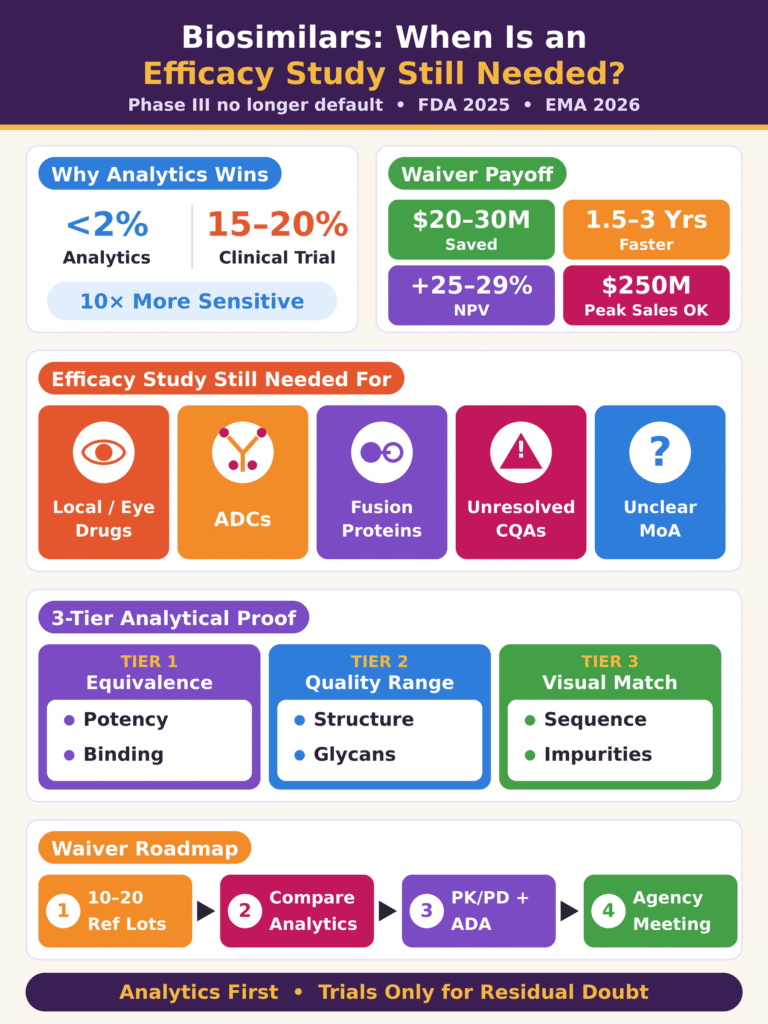
This regulatory shift reflects the scientific reality that state-of-the-art biophysical analytical techniques can detect structural variations below 2%, whereas clinical efficacy studies generally operate within broad equivalence margins of 15% to 20% and are frequently affected by target saturation or clinical trial variability. For conventional monoclonal antibodies and simple therapeutic proteins manufactured using clonal cell lines, a robust comparative analytical assessment (CAA), combined with comparative pharmacokinetics (PK) and immunogenicity evaluations, is sufficient to establish biosimilarity.
Despite these regulatory advancements, comparative efficacy trials remain necessary for certain classes of biotherapeutics. When assessing complex molecules, such as antibody-drug conjugates (ADCs), heavily glycosylated fusion proteins, or locally acting intravitreal formulations, analytical characterization alone may not fully predict clinical performance. Understanding the precise distinction between candidates eligible for clinical trial waivers and complex biologics that require confirmatory clinical studies is essential for biopharmaceutical developers seeking to optimize capital allocation, streamline regulatory timelines, and reduce time-to-market.
Share via:
Quick Summary:
- Phase III is no longer the default: The FDA’s October 2025 draft guidance and the EMA’s March 2026 reflection paper say well-characterized biosimilars no longer need comparative efficacy studies (CES) by default.
- Analytics are more sensitive than clinical trials: Modern biophysical methods detect structural differences below 2%. Clinical trials use 15–20% equivalence margins and can be masked by target saturation, so analytics are about 10× more sensitive.
- Waivers bring major savings: Skipping Phase III can save about $20–30 million per program, shorten development by 1.5–3 years and raise risk-adjusted NPV by 25–29%. Products with peak sales of $250 million or less can then become commercially viable.
- Some products still need an efficacy study:
- Locally acting and intravitreal products
- Antibody-drug conjugates (ADCs)
- Complex or heavily glycosylated fusion proteins
- Candidates with unresolved Tier 1 or Tier 2 differences in critical quality attributes (CQAs)
- Products whose mechanism of action is not fully understood across extrapolated indications
- Waivers rest on a three-tier analytical framework: Tier 1 uses statistical equivalence testing for potency and binding. Tier 2 uses quality ranges for higher-order structure, glycans, aggregation and charge variants. Tier 3 uses visual comparison for sequence and impurities.
- A structured roadmap supports a waiver request: Sponsors profile 10–20 reference-product lots, run a comparative analytical assessment, and conduct comparative PK/PD and immunogenicity (ADA) studies. They then present the package to regulators early for feedback.
- The bottom line is analytics first: Molecular complexity, route of administration and remaining analytical uncertainty decide whether a trial is needed. The financial benefit of a waiver still has to be judged program by program.
The Regulatory Paradigm Shift: Analytical Superiority Over Phase III Trials
Global regulatory agencies increasingly recognize high-resolution analytical characterization as the primary and most sensitive approach for establishing biosimilarity. Consequently, clinical efficacy trials are being repositioned as confirmatory studies intended to address residual scientific uncertainty. This transition aligns regulatory guidance across major authorities, including the FDA, EMA, UK Medicines and Healthcare products Regulatory Agency (MHRA), World Health Organization (WHO), and India’s Central Drugs Standard Control Organisation (CDSCO).
Under this modernized approach, when a proposed biosimilar demonstrates comprehensive physicochemical equivalence, comparable target binding, and matching clinical PK and immunogenicity profiles, Phase III comparative efficacy trials may be considered redundant. Comparative clinical efficacy trials have inherently limited discriminatory sensitivity because they are conducted at therapeutic doses at which target receptors may become saturated. This can obscure subtle functional or structural differences between the biosimilar and the reference product. In contrast, advanced biophysical characterization evaluates functional attributes across dynamic ranges, providing substantially greater sensitivity for identifying structural variations.
Strengthen your analytical strategy with comprehensive biosimilar characterization services designed to support detailed structural and functional comparisons.
Eliminating the default requirement for Phase III comparative clinical trials fundamentally changes the economics of biosimilar drug development. Financial modeling indicates that obtaining a clinical efficacy study waiver can reduce development costs by approximately 20 million to 30 million per program and shorten development timelines by 1.5 to 3 years. Importantly, this reduction in development time can improve risk-adjusted Net Present Value (NPV) by 25% to 29% and lower the minimum peak sales threshold for commercial viability from 300 million to 250 million or less. These changes can make the development of lower-volume niche biologics financially viable.
| Commercial and Operational Metric | Traditional Pathway (Phase III CES Required) | Streamlined Analytical Pathway (Phase III CES Waived) | Economic and Strategic Impact |
|---|---|---|---|
| Development Timeline | 6 to 9 years | 4 to 6 years | Saves 1.5 to 3 years |
| Phase III Trial Capital Expenditure | 20 million to 28 million | 0 (replaced by PK/PD and immunogenicity studies) | Average savings of approximately 25 million per program |
| Minimum Peak Sales Viability | 300 million | 250 million or less | Enables market access for lower-volume biologics |
| Risk-Adjusted Program NPV | Baseline benchmark | Increase of 25% to 29% | Significantly improves portfolio ROI |
| Analytical Resolution vs. Clinical Sensitivity | Clinical margins: 15%–20% equivalence | Biophysical resolution: 1%–2% structural variation | Approximately 10 times greater sensitivity for detecting molecular differences |
Key Scenarios: When Is a Biosimilar Comparative Efficacy Study Still Required?
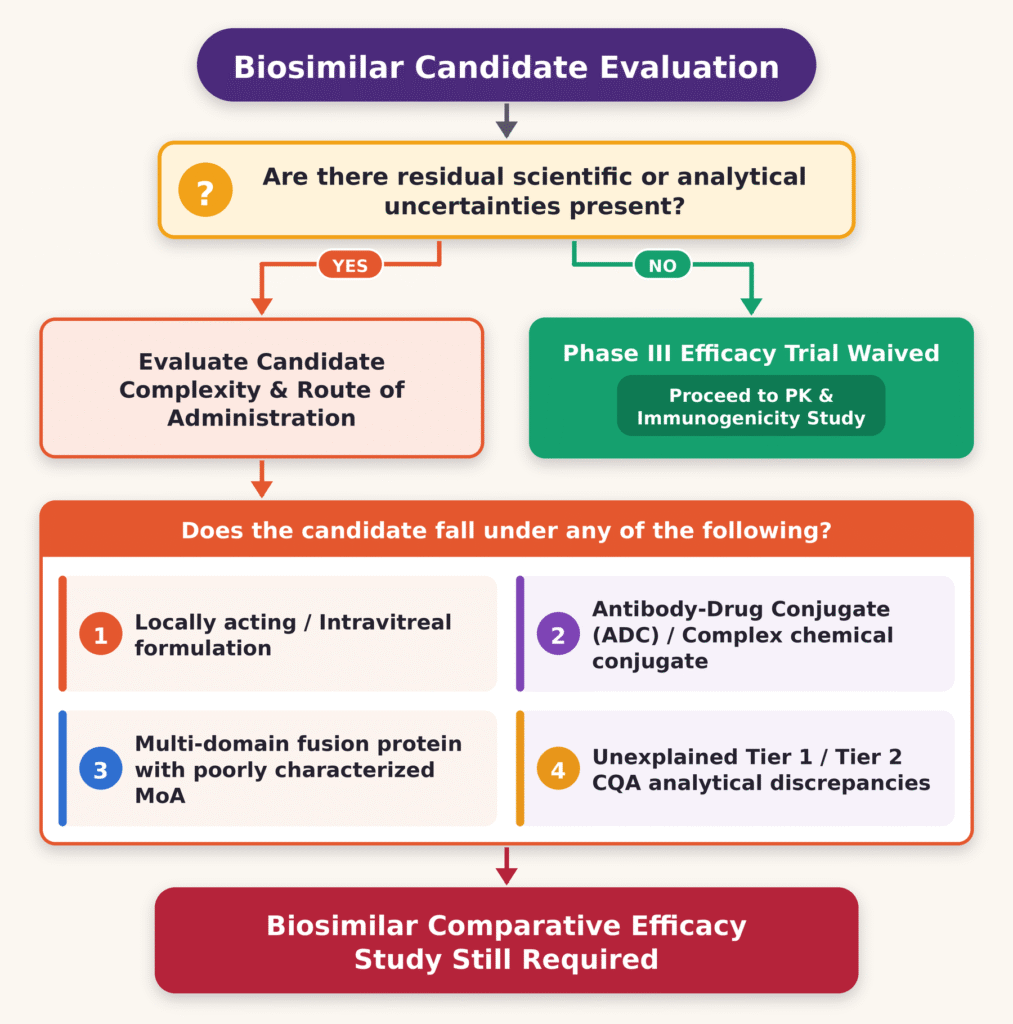
A determination that a biosimilar comparative efficacy study is still required is generally made when molecular heterogeneity, non-systemic administration routes, or incompletely characterized biological mechanisms prevent analytical data and pharmacokinetic equivalence from excluding clinically meaningful differences. Regulatory agencies assess requests for clinical study waivers through a totality-of-evidence framework and may require comparative clinical trials under five major scientific scenarios.
1. Locally Acting and Intravitreal Biologics
Locally acting biological products, particularly intravitreally administered anti-VEGF therapies such as ranibizumab and aflibercept, represent a major category in which comparative clinical PK studies may provide insufficient information to predict therapeutic equivalence. Because these drugs are administered directly into the ocular compartment and exert their therapeutic effects locally, their systemic plasma concentrations are generally negligible and may not correlate with local receptor occupancy or clearance at the site of action. Consequently, systemic PK bioequivalence cannot independently exclude differences in local tissue retention or duration of effect. This limitation may lead regulators to require comparative clinical efficacy trials that use clinically relevant endpoints.
2. Antibody-Drug Conjugates (ADCs) and Complex Chemical Conjugates
Antibody-Drug Conjugates (ADCs) are complex biotherapeutics that combine monoclonal antibodies with potent cytotoxic payloads through chemical linkers. Variability in the drug-to-antibody ratio (DAR), payload distribution, positional isomerism, and linker stability in human plasma introduces additional layers of complexity beyond those associated with conventional therapeutic antibodies. In vitro bioassays may not fully establish how subtle differences in DAR distribution or linker degradation influence in vivo bystander killing, systemic toxicity, and off-target exposure. These uncertainties can prompt regulatory authorities to require comparative clinical efficacy and safety studies.
3. Fusion Proteins and Poorly Characterized Biological Structures
Multi-domain fusion proteins, including Fc-fusion proteins, and heavily glycosylated biologics can exhibit complex structural and functional characteristics. These molecules may demonstrate substantial structural heterogeneity, intricate multi-pathway signaling mechanisms, and extensive post-translational modifications, such as variable sialylation or branching N-glycosylation. Such characteristics can directly influence systemic clearance, tissue distribution, and target avidity. When the molecule’s complete mechanism of action (MoA) involves simultaneous interactions with multiple surface receptors across different tissues, and these interactions have not been fully characterized, in vitro assays may be insufficient to exclude clinically meaningful differences. In these circumstances, confirmatory clinical trials may be necessary.
Explore the analytical considerations involved in biosimilar comparability studies to help assess structural, functional, and quality differences between a proposed biosimilar and its reference product.
4. Residual Analytical Uncertainty in Critical Quality Attributes (CQAs)
When a comparative analytical assessment identifies unexplained discrepancies between a proposed biosimilar and its reference product, a request for a clinical trial waiver may be rejected. Differences that exceed predefined statistical acceptance criteria for Tier 1 attributes, such as biological potency and target-binding affinity, or Tier 2 attributes, including higher-order structure, aggregation rates, and charge variants, can introduce uncertainty regarding in vivo performance. If advanced biophysical characterization cannot establish that these structural variations are clinically insignificant, regulatory authorities may require a comparative clinical efficacy trial to evaluate their potential effects.
Learn how to identify and assess critical quality attributes (CQAs) in biosimilars to support risk-based analytical comparisons and informed regulatory decisions.
5. Incomplete Elucidation of Structure-Function Relationships Across Extrapolated Indications
For legacy biologics or emerging therapeutic classes in which the precise contribution of individual structural domains to clinical efficacy remains incompletely understood, analytical similarity may not be sufficient to replace patient trials. For example, the relative contributions of antibody-dependent cellular cytotoxicity (ADCC), complement-dependent cytotoxicity (CDC), and direct apoptosis to clinical remission may differ between oncology and autoimmune indications. In such cases, matching target binding alone may not provide sufficient justification for extrapolating indications without additional confirmatory clinical trial data.
| Biologic Category / Risk Scenario | Primary Analytical and Biological Challenge | Regulatory Expectation for Phase III CES | Primary Clinical Endpoint / Evaluation Pathway |
|---|---|---|---|
| Standard Monoclonal Antibodies (mAbs) | Well-characterized structure, clonal cell origin, and established MoA | May be waived if Tier 1 and Tier 2 analytical results and PK/PD evidence adequately support biosimilarity | Comparative PK/PD and immunogenicity trial, as appropriate |
| Locally Acting / Intravitreal Products | Systemic PK does not reflect local tissue exposure or receptor occupancy | Required when residual uncertainty cannot be resolved | Clinical trial with ocular endpoints, where justified |
| Antibody-Drug Conjugates (ADCs) | Payload DAR distribution, positional isomerism, and linker stability in plasma | May be required when analytical and nonclinical evidence is insufficient | Comparative clinical efficacy, safety, and toxicity evaluation, as appropriate |
| Complex Fusion Proteins | Multi-domain receptor interactions and hyper-glycosylation variability | Case-by-case; may be required if the MoA is incompletely characterized | Confirmatory patient efficacy and safety trial, if necessary |
| Candidates with Unresolved CQA Variations | Differences in Tier 1 potency or Tier 2 higher-order structure (HOS) that remain clinically unresolved | May be required when discrepancies cannot be adequately justified | Targeted equivalence study focusing on affected endpoints, where appropriate |
De-risking Biosimilar Development via Orthogonal Analytical Characterization
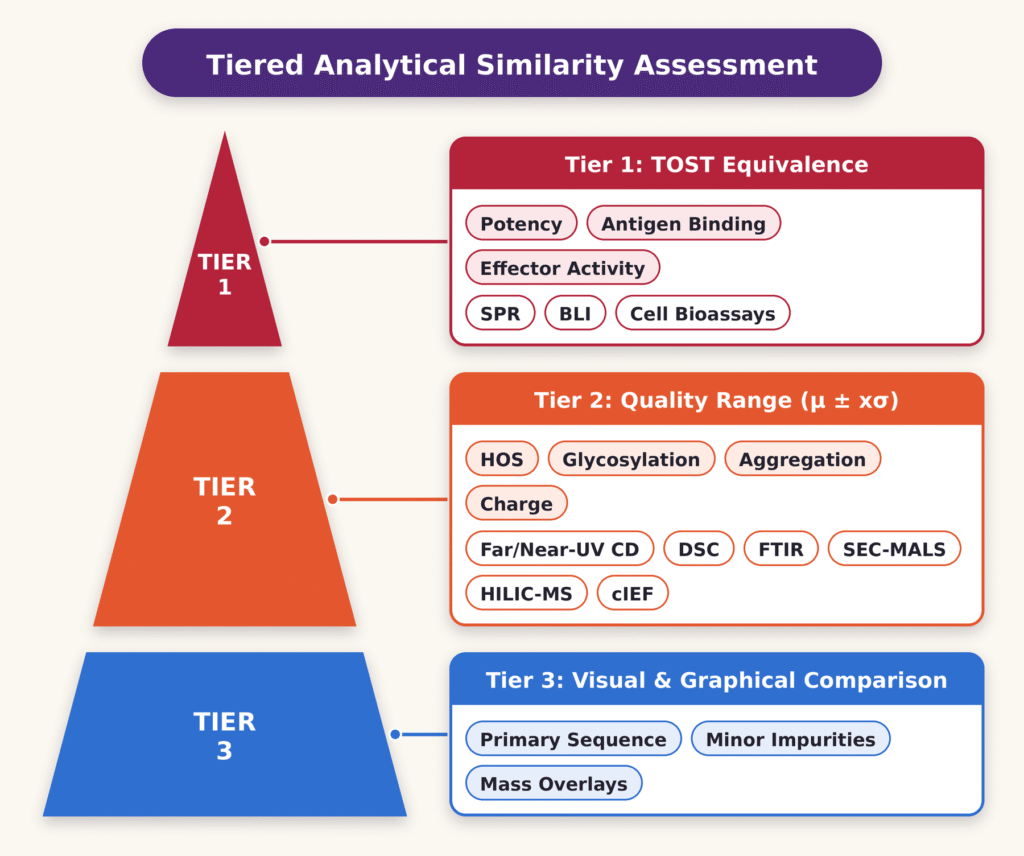
Obtaining a Phase III clinical trial waiver requires sponsors to conduct a comparative analytical assessment using orthogonal analytical platforms to eliminate residual structural and functional uncertainty. Regulatory statistical frameworks, including the FDA’s three-tiered risk hierarchy, classify Critical Quality Attributes (CQAs) according to their clinical relevance and relationship to the product’s mechanism of action.
Tier 1: Two One-Sided Tests (TOST) Equivalence
Tier 1 covers high-risk quality attributes directly associated with biological potency and clinical efficacy, including target antigen binding, receptor affinity, and primary effector functions such as ADCC and CDC. Equivalence is assessed using Two One-Sided Tests (TOST), which require the 90% or 95% confidence interval of the biosimilar mean to fall entirely within predefined equivalence margins established for the reference product, expressed in the original framework as ±xσ. The appropriate confidence interval and statistical criteria depend on the applicable regulatory guidance and prespecified study design. Key analytical techniques include Surface Plasmon Resonance (SPR), Bio-Layer Interferometry (BLI), and cell-based biological assays.
Tier 2: Quality Range Analysis
Tier 2 includes quality attributes that can influence half-life, aggregation rates, and structural integrity. These attributes include secondary and tertiary higher-order structure (HOS), N-glycan profiles, charge variants, and size variants. They are assessed using Quality Ranges established through multi-lot analysis of the reference product, represented mathematically as μ ± xσ. The applicable acceptance criteria should be justified for the specific attribute and regulatory framework rather than assumed to be universal. Advanced analytical techniques, including Far/Near-UV Circular Dichroism (CD), Differential Scanning Calorimetry (DSC), Fourier-Transform Infrared Spectroscopy (FTIR), Size-Exclusion Chromatography with Multi-Angle Light Scattering (SEC-MALS), Hydrophilic Interaction Liquid Chromatography with Mass Spectrometry (HILIC-MS), and capillary Isoelectric Focusing (cIEF), enable high-resolution characterization.
Tier 3: Graphical and Visual Comparisons
Tier 3 addresses lower-risk attributes, minor process-related impurities, primary sequence identity, and general mass distributions. Evaluation relies on visual overlays, side-by-side electrophoretic profiles, and high-resolution mass spectrometry-based peptide mapping to confirm qualitative identity and structural consistency without requiring rigid statistical margin testing for every attribute.
| Statistical Tier | Critical Quality Attributes (CQAs) Assessed | Primary and Orthogonal Analytical Platforms | Statistical Acceptance Criteria |
|---|---|---|---|
| Tier 1: Equivalence Testing | Biological potency, target receptor binding, and primary effector activity (ADCC/CDC) | Surface Plasmon Resonance (SPR), Bio-Layer Interferometry (BLI), and cell-based bioassays | The confidence interval specified by the study protocol falls entirely within the prespecified TOST equivalence margins, represented here as ±xσ where applicable. |
| Tier 2: Quality Range | Higher-Order Structure (HOS), glycosylation, aggregation, and charge variants | Far/Near-UV CD, DSC, FTIR, SEC-MALS, HILIC-MS, and cIEF | Compare biosimilar lot values against the justified reference-product quality range, represented here as μ ± xσ. |
| Tier 3: Visual Comparison | Primary sequence, minor impurities, and mass distribution overlays | LC-MS/MS peptide mapping, SDS-PAGE, and agitation/stress profile overlays | Graphical overlays and qualitative structural concordance |
By using high-resolution analytical platforms, contract research organizations such as ResolveMass Laboratories Inc. help developers establish comprehensive analytical data packages. Demonstrating analytical similarity early in development can reduce program risks and help sponsors present sufficient scientific evidence during pre-IND agency meetings to support requests for clinical efficacy study waivers.
Explore proteomics approaches for biosimilars to learn how complementary protein-level analytical methods can support sequence confirmation, impurity assessment, and comparative characterization.
Strategic Roadmap for Biosimilar Waiver Eligibility
Obtaining a Phase III clinical trial waiver requires a structured development strategy that establishes analytical equivalence and resolves scientific uncertainty before clinical trials are initiated. Biopharmaceutical developers should follow a stepwise comparability framework to address regulatory expectations and support a scientifically justified waiver request.
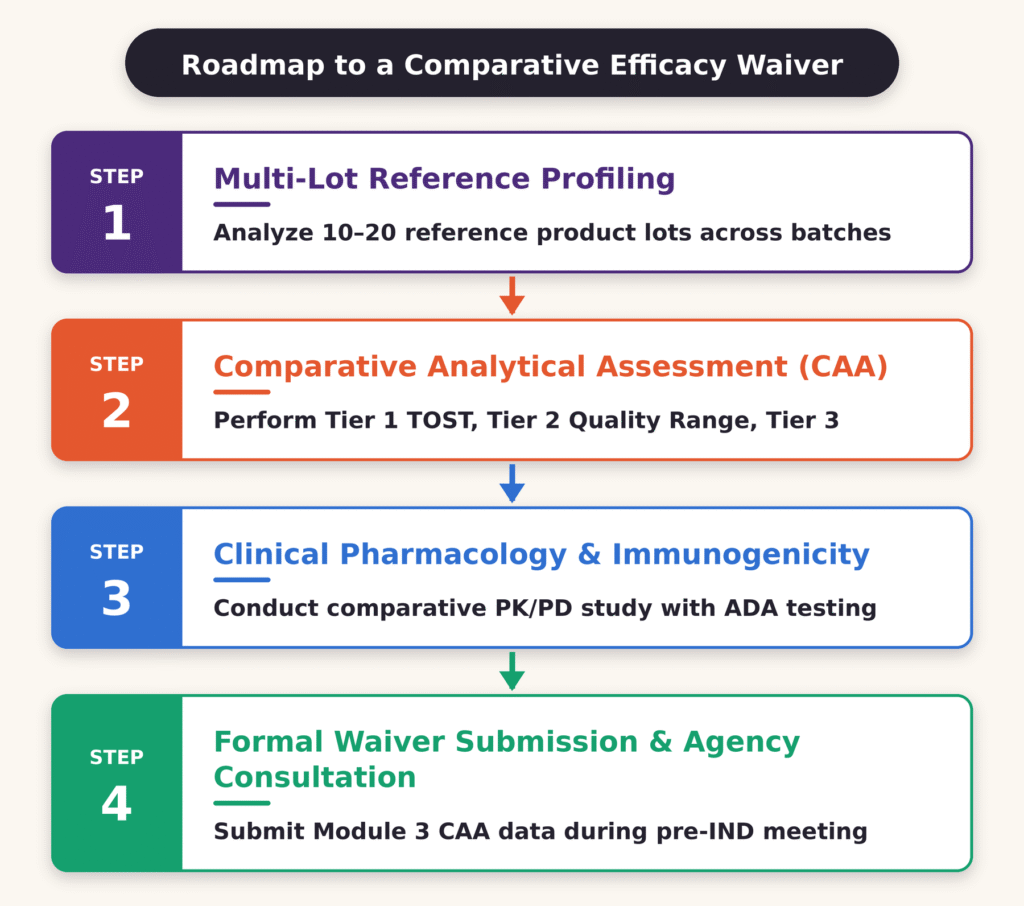
Step 1: Multi-Lot Reference Product Profiling
Analyze 10 to 20 reference product lots collected across multiple manufacturing dates and shelf-life stages to establish baseline variability for Tier 1 and Tier 2 quality attributes. The number of lots and sampling strategy should be justified according to the product, attribute, available reference material, and applicable regulatory guidance.
Step 2: Comprehensive Analytical Assessment (CAA)
Conduct head-to-head testing of the primary sequence, higher-order structure, post-translational modifications, and biological function using validated orthogonal assays. The objective is to identify potential differences, determine their clinical relevance, and establish whether the overall analytical evidence supports biosimilarity.
Discover how a structured comparability exercise in biosimilar development can help evaluate product similarity, investigate analytical differences, and build a robust evidence package.
Step 3: Clinical Pharmacology and Immunogenicity Design
Perform a comparative PK/PD trial in a suitable population and use validated anti-drug antibody (ADA) assays to evaluate whether the biosimilar and reference product exhibit comparable immunogenicity profiles. The study design should be sufficiently sensitive to detect meaningful differences in exposure, pharmacodynamic response, or immune responses where relevant.
Step 4: Proactive Regulatory Engagement
Present the complete Module 3 analytical package and relevant comparative PK data during formal consultations with regulatory agencies, such as FDA meetings under the applicable biosimilar regulatory framework or EMA Scientific Advice procedures. Sponsors should seek prospective regulatory feedback on the proposed evidence package and the scientific justification for omitting a comparative efficacy study before entering late-stage development.
Prepare for regulatory discussions with an end-to-end biosimilar analytical package for a regulatory submission that brings together key analytical evidence to support a comprehensive submission strategy.
| Step / Development Gate | Operational and Scientific Objective | Regulatory Benchmark | Risk Mitigation Strategy |
|---|---|---|---|
| 1. Target Profiling | Multi-lot analysis of the reference product using 10 or more lots, where justified | Establish baseline statistical quality ranges for Tier 1 and Tier 2 CQAs | Align host cell line selection and culture parameters with the originator’s relevant product-quality attributes, including glycan profiles |
| 2. Comparative Analytics | Head-to-head biophysical testing across Tiers 1–3 | Meet the applicable equivalence criteria and justify quality-range comparisons | Use orthogonal analytical platforms, such as HDX-MS, SEC-MALS, and HILIC-MS, where appropriate |
| 3. Clinical Pharmacology | Comparative PK/PD and immunogenicity trial, as appropriate | Evaluate PK equivalence using prespecified acceptance criteria, which may include an 80%–125% confidence interval for relevant exposure ratios | Apply sensitive, multi-tiered ADA assays to evaluate comparable immunogenicity |
| 4. Agency Consultation | Submit a formal request for regulatory advice on the proposed clinical development strategy | Provide the Module 3 CAA data package and supporting evidence to justify the proposed waiver | Prepare scientific justifications for minor analytical differences and explain their potential clinical relevance |
Conclusion
Determining whether a biosimilar comparative efficacy study is still required depends on molecular complexity, the route of administration, and the extent of analytical uncertainty. Modernized regulatory frameworks from the FDA, EMA, MHRA, and WHO increasingly prioritize high-resolution biophysical characterization over Phase III clinical efficacy trials for well-characterized biologics. Transitioning to an analytical-first development framework can help developers reduce development costs, shorten timelines, and improve access to biosimilar medicines. The financial benefits, however, depend on the specific program and should be evaluated against its development and regulatory requirements.
Support your biosimilar development program with biosimilar analytical characterization services to help assess critical quality attributes and generate analytical evidence for comparability and regulatory planning.
For complex biotherapeutics, locally acting products, and candidates with unresolved analytical discrepancies, comparative clinical efficacy studies may remain essential to establish therapeutic equivalence and support patient safety. Successfully navigating these requirements demands robust analytical comparability packages that can withstand regulatory scrutiny. To assess your biosimilar candidate’s analytical similarity strategy or develop an orthogonal characterization program, contact the technical team through the Contact ResolveMass Laboratories Inc. page.
Frequently Asked Questions
Recent regulatory developments support a more flexible approach to biosimilar development, in which Phase III comparative efficacy trials are not automatically necessary for every candidate. When robust analytical comparisons, pharmacokinetic and pharmacodynamic (PK/PD) findings, and immunogenicity assessments adequately establish similarity, a waiver may be justified. The final decision depends on the applicable guidance and product-specific evidence.
Advanced analytical techniques can identify subtle differences in protein structure, glycosylation, aggregation, charge distribution, and biological activity. Clinical efficacy trials may be less sensitive to these differences because of patient variability, therapeutic target saturation, and variability in clinical endpoints. Consequently, comprehensive analytical characterization is central to determining biosimilarity.
Intravitreal biologics are administered directly into the eye, where their therapeutic effects depend on local tissue exposure and activity. Drug concentrations in systemic circulation may not accurately represent ocular distribution, receptor occupancy, or clearance. If analytical and other available evidence cannot resolve these uncertainties, regulators may request comparative clinical studies using appropriate ocular endpoints.
ADCs combine an antibody, a cytotoxic payload, and a chemical linker, creating several structural attributes that can influence product performance. Variations in drug-to-antibody ratio (DAR), payload distribution, attachment sites, and linker stability may affect efficacy, toxicity, and off-target exposure. If analytical and nonclinical studies cannot adequately predict the consequences of these differences, additional clinical evidence may be necessary.
Tier 1 CQAs, including biological potency and target-binding activity, may be assessed using Two One-Sided Tests (TOST) equivalence testing. This approach evaluates whether the confidence interval for the relevant biosimilar-reference product comparison falls entirely within predefined equivalence limits. The statistical model, confidence level, and acceptance margins must be established in accordance with the study design and applicable regulatory expectations.
Avoiding an unnecessary Phase III comparative efficacy trial can reduce development expenditure and shorten the time required to reach regulatory submission. Potential savings may amount to tens of millions of dollars per program, while earlier completion can improve resource allocation and commercial planning. Actual benefits depend on the product, remaining clinical requirements, and overall development strategy.
Differences in Tier 2 attributes, such as glycosylation patterns, charge variants, or aggregation levels, are evaluated according to their magnitude, variability, and potential clinical significance. Sponsors should compare these findings with reference-product data and provide supporting functional or structural evidence where necessary. Unresolved differences that could affect product quality, safety, or efficacy may prevent acceptance of the proposed biosimilarity package.
Yes, immunogenicity remains an important component of biosimilar evaluation even when a dedicated comparative efficacy trial is not conducted. Sponsors assess anti-drug antibody (ADA) responses and, when appropriate, neutralizing antibodies to determine whether immune responses differ between the biosimilar and reference product. The testing strategy should reflect the product’s characteristics, clinical context, and applicable regulatory requirements.
Sponsors should develop a comprehensive comparability package that includes reference-product characterization, head-to-head testing of relevant CQAs, and orthogonal analytical methods covering structural and functional properties. Comparative PK/PD and immunogenicity evidence should be incorporated as appropriate to address residual uncertainty. Early consultation with regulatory agencies can help determine whether the proposed evidence is sufficient to justify omitting a comparative clinical efficacy study.
Reference:
- Niazi, S. K. (2025). Scientific justification and policy recommendations to the US Food and Drug Administration for waiving comparative efficacy studies. Pharmaceuticals, 18(6), Article 779. https://doi.org/10.3390/ph18060779
- U.S. Food and Drug Administration. (n.d.). Scientific considerations in demonstrating biosimilarity to a reference product: Updated recommendations. https://www.fda.gov/regulatory-information/search-fda-guidance-documents/scientific-considerations-demonstrating-biosimilarity-reference-product-updated-recommendations
- Ranbhor, R., & Kulkarni, P. (2026). Net present value impact of FDA’s Phase 3 waivers on monoclonal antibody biosimilar development. Biologics: Targets and Therapy, 20, 581013. https://doi.org/10.2147/BTT.S581013
- Kore, V. S., Lohiya, G. K., Bambal, M. N., & Pakhidde, S. R. (2026). Global regulatory pathways for biosimilars: A comparative review of USFDA, EMA, and CDSCO guidelines. International Journal of Newgen Research in Pharmacy & Healthcare, 4(1), 95–106. https://doi.org/10.61554/ijnrph.v4i1.2026.211
- Goto, K., Hariu, A., & Kuribayashi, R. (2025). Survey on the role of comparative efficacy studies required for biosimilar monoclonal antibody approval in Japan to justify the quality attribute differences between biosimilars and their reference products based on the Pharmaceuticals and Medical Devices Agency (PMDA) assessments. Pharmaceutical Medicine, 39(6), 477–491. https://doi.org/10.1007/s40290-025-00583-w
- Kirsch-Stefan, N., Guillen, E., Ekman, N., Barry, S., Knippel, V., Killalea, S., Weise, M., & Wolff-Holz, E. (2023). Do the outcomes of clinical efficacy trials matter in regulatory decision-making for biosimilars? BioDrugs, 37(6), 855–871. https://doi.org/10.1007/s40259-023-00631-4
Get In Touch With Us
About The Author