
Introduction
Designing a regulatory-ready bioequivalence (BE) study for Generic Orforglipron Development requires careful consideration of several critical factors, including an elimination half-life ranging from 29 to 49 hours, high intra-subject pharmacokinetic (PK) variability (assumed to be 40% CV in pivotal bridging trials), and dose-limiting gastrointestinal adverse events associated with a low-solubility, sodium-carbonate-buffered tablet formulation. Following the U.S. Food and Drug Administration (FDA) approval of Eli Lilly’s Foundayo (orforglipron, NDA 220934) on April 1, 2026, and the European Medicines Agency (EMA) CHMP positive opinion adopted on October 15, 2026, generic manufacturers must address the distinct characteristics of the Reference Listed Drug (RLD). Foundayo is a once-daily, non-peptide, small-molecule glucagon-like peptide-1 (GLP-1) receptor agonist. Unlike oral peptide semaglutide, which requires strict fasting conditions and water-volume restrictions to prevent gastrointestinal degradation, orforglipron is resistant to proteolytic cleavage and does not carry labeled food or water restrictions.
Explore the technical considerations involved in generic peptide semaglutide development.
In the absence of orforglipron-specific Product-Specific Guidance (PSG) in EMA’s 2026 PSG outlook or the retrieved FDA NDA review documentation, Abbreviated New Drug Application (ANDA) sponsors and global generic developers must establish their BE protocols using three authoritative regulatory and scientific references. These include the harmonized ICH M13A and M13B immediate-release (IR) bioequivalence frameworks, the clinical pharmacology and chemistry reviews for NDA 220934, and the methodological precedent established by Eli Lilly’s capsule-to-tablet bridging trial (NCT06440980).
Share via:
Quick Summary:
- Reference drug: Foundayo (orforglipron), Eli Lilly’s once-daily oral small-molecule GLP-1 agonist, was approved by the FDA on April 1, 2026 (NDA 220934). There is no orforglipron-specific product guidance yet, so generic sponsors must rely on ICH M13A/M13B, the NDA reviews, and Lilly’s capsule-to-tablet bridging trial (NCT06440980).
- Formulation risk: The drug is a practically insoluble crystalline calcium salt that depends on sodium carbonate for dissolution. Under ICH M13A this makes it a high-risk product, so both fasting and fed BE studies are advisable, even though the label allows dosing without regard to meals. Nitrosamine risk should also be assessed early.
- Study design choice: Sponsors can run a single-dose, low-strength crossover (0.8 or 2.5 mg) supported by biowaivers for the other strengths. The alternative is a 7-day multiple-dose escalation design up to 17.2 mg, following NCT06440980. A single un-titrated 17.2 mg dose is poorly tolerated in GLP-1-naive volunteers.
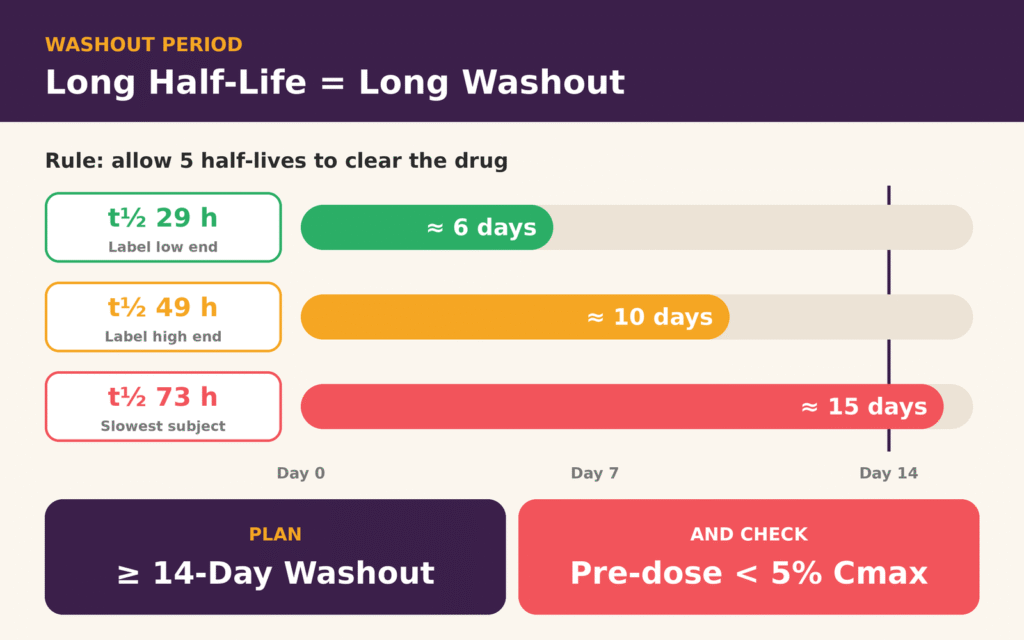
- Washout: With a 29–49 hour half-life, and individual values up to 73.4 hours, single-dose studies need a washout of at least 14 days. Alternatively, sponsors can confirm that pre-dose levels are below 5% of Cmax.
- High variability: Because intra-subject CV is around 40%, replicate crossover designs (three-way partial or four-way full) are preferred over a standard 2×2 design. These allow reference-scaled BE when Swr ≥ 0.294; below that threshold, the standard 0.80–1.25 limits apply.
- Clinical safeguards: Protocols should exclude people with an MTC/MEN 2 history, pancreatitis, gastroparesis, or hepatic impairment, and restrict strong CYP3A4 modulators. Hydration should be monitored. Any PK period with vomiting at or before twice the median Tmax should be excluded from the primary analysis.
- Bioanalysis: A validated LC-MS/MS method for parent orforglipron in plasma is required, benchmarked to the 0.100–100 ng/mL range. Sensitivity must be confirmed for low-dose single-dose studies, and the method should include matrix-effect, stability, and ISR controls.
Reference Listed Drug Specifications and Formulation Risks in Generic Orforglipron Development
Foundayo (orforglipron) is an immediate-release, film-coated oral tablet available in six strengths: 0.8 mg, 2.5 mg, 5.5 mg, 9 mg, 14.5 mg, and 17.2 mg, with all strengths expressed on a free acid active-moiety basis. The formulation uses a crystalline hemicalcium salt that exhibits practical insolubility in aqueous environments. Since Foundayo incorporates sodium carbonate to improve solubility and achieve a geometric mean absolute oral bioavailability of 77%, generic formulations must closely reproduce the drug’s solid-state characteristics and microenvironmental pH modulation to maintain comparable dissolution and absorption performance.
Explore the technical approaches used in formulation development for generic drug development.
Originally discovered by Chugai Pharmaceutical Co., Ltd. and licensed to Eli Lilly in 2018, orforglipron (LY3502970) is a polycyclic heterocycle with the molecular formula C48H48F2N10O5 and a free acid molecular weight of 882.97 g/mol. In the commercial drug product, the active pharmaceutical ingredient (API) is present as crystalline orforglipron calcium, with a 2:1 ratio of free acid active moiety to calcium and a molecular weight of 902.00 g/mol. Although publicly available FDA chemistry and multidisciplinary reviews do not specify a formal numerical Biopharmaceutics Classification System (BCS) class or permeability designation, the FDA Chemistry Review clearly identifies low water solubility across aqueous media as the primary consideration influencing the formulation design.
| Parameter | Foundayo (NDA 220934) Specification | Bioequivalence Design Implication |
|---|---|---|
| API Salt Form & Ratio | Crystalline orforglipron calcium (2:1 free acid to calcium; MW 902.00 g/mol) | Solid-state equivalence and salt-form control are necessary to prevent variations in dissolution performance. |
| Approved Tablet Strengths | 0.8 mg, 2.5 mg, 5.5 mg, 9 mg, 14.5 mg, and 17.2 mg (free acid basis) | The six-strength portfolio requires strategic strength selection and consideration of ICH M13B biowaivers. |
| Key Excipients | Sodium carbonate, microcrystalline cellulose, magnesium stearate, and film coat | Sodium carbonate supports solubility; Q1/Q2 or functionally equivalent buffering is important. |
| QC Dissolution Method | USP Apparatus 2 (Paddle), 50 rpm, pH 6.8 phosphate buffer with SDS | Surfactant-assisted testing at pH 6.8 reflects poor aqueous solubility; dissolution profiling at multiple pH conditions is also necessary. |
| Absolute Bioavailability | 77% geometric mean (following a 0.8 mg oral dose) | A substantial fraction of the drug becomes available for systemic absorption once solubilized, with minimal first-pass loss relative to peptides. |
| Time to Peak (Tmax) | 4 to 8 hours post-dose | The prolonged absorption window requires extended sampling around the expected peak concentration. |
| Elimination Half-Life (t1/2) | 29 to 49 hours (up to 73.4 hours observed individually) | Single-dose studies require an adequately extended washout period, while multiple-dose studies can use 7-day dosing periods. |
| Dose Proportionality | Dose-proportional exposure across tablet strengths | Supports single-strength BE testing and potential biowaivers for additional strengths under ICH M13A/B. |
| Metabolism & Excretion | Hepatic CYP3A4 oxidative metabolism; 87% fecal and less than 1% urinary recovery | Parent drug concentration in plasma is the primary analytical endpoint, with minimal impact from renal clearance. |
| U.S. Patent Listing | Patent database records (GreyB PharSight) list USRE50455, expiring September 26, 2037 | Early ANDA and Paragraph IV planning requires careful formulation engineering to avoid patent infringement. |
Review approaches for comparative testing between generic products and RLDs.
Why Low Solubility and Sodium Carbonate Buffering Trigger High-Risk ICH M13A Considerations
Although Foundayo’s prescribing information permits administration without regard to meals, its dependence on sodium carbonate to overcome practical aqueous insolubility introduces high-risk formulation considerations under ICH M13A. This supports conducting both fasting and fed BE studies to establish comparable performance under different prandial conditions. Under ICH M13A, drug products whose formulation characteristics or solubility-enhancing excipients may increase the likelihood of differences in in vivo performance between fasting and fed conditions are considered high-risk products. Such products generally require BE demonstration under both fasting and fed conditions, with the fed study incorporating a high-fat, high-calorie meal.
Clinical pharmacology findings demonstrate that food produces a consistent but moderate reduction in systemic exposure. According to the FDA prescribing information, administration of an investigational 37.5 mg tablet with food following multiple doses reduced steady-state AUC0–24h by 19% and Cmax by 26% compared with administration under fasting conditions. However, Tmax and t1/2 remained unchanged. Earlier Phase 1 food-effect studies reported comparable findings. A single 3 mg oral dose administered in the fed state resulted in a 24% reduction in AUC0–∞ and a 23% reduction in Cmax. Similarly, steady-state administration of 16 mg reduced the geometric least-squares mean AUC0–24 by 17.6% and Cmax by 20.9%.
Although these food-related changes are not considered clinically meaningful in terms of efficacy, regulatory BE assessments must establish that the test-to-reference ratios remain within the required equivalence limits under both fasting and fed conditions. Changes in the buffering excipient ratio or particle size of a generic tablet may disproportionately influence dissolution under fed conditions. Consequently, conducting a dual fasting and fed BE study represents a prudent approach to meeting regulatory expectations and minimizing formulation-related risks.
Before finalizing clinical trial batches, formulation chemists must also incorporate nitrosamine risk assessments into their development strategy. Since orforglipron contains nitrogenous heterocyclic structures within its tetrahydro-pyrazolopyridine core, potential amine nitrosation pathways require careful evaluation. This includes selecting low-nitrite compendial excipients, assessing possible nitrosamine formation during stability storage, and determining how sodium carbonate-induced changes in microenvironmental pH may influence nitrosamine formation. Addressing these considerations during formulation development is an essential Chemistry, Manufacturing, and Controls (CMC) measure for ANDA readiness.
Strengthen your development strategy through regulatory support for generic drug development.
Selecting the Optimal Bioequivalence Study Design: Single-Dose Versus Multiple-Dose Escalation
Generic sponsors must determine whether to conduct a single-dose crossover study using a lower, well-tolerated strength, supported by ICH M13B strength biowaivers, or adopt a multiple-dose, dose-escalation crossover design based on NCT06440980 to evaluate steady-state exposure up to the highest 17.2 mg strength. Administering an un-titrated 17.2 mg single dose to healthy volunteers who are GLP-1-naive presents considerable gastrointestinal tolerability concerns. Such an approach may increase the likelihood of vomiting-related study withdrawals and compromise the reliability of the resulting PK profiles.
Foundayo’s prescribing information specifies a gradual dosage escalation schedule to reduce gastrointestinal adverse reactions. Treatment begins with 0.8 mg once daily for at least 30 days, followed by 2.5 mg for a minimum of 30 days and then 5.5 mg. Depending on the patient’s requirements, the dosage may subsequently be increased to 9 mg, 14.5 mg, or 17.2 mg.
Despite gradual dose escalation, Phase 3 ATTAIN-1 findings across investigational capsule doses of 6 mg, 12 mg, and 36 mg demonstrated considerable gastrointestinal adverse events. Diarrhea occurred in 21.0% to 23.1% of participants, compared with 9.6% in the placebo group. Vomiting was reported in 13.0% to 24.0% of participants, compared with 3.5% receiving placebo. Adverse-event-related treatment discontinuations ranged from 5.3% to 10.3%.
Under ICH M13A, the highest strength is generally selected for BE evaluation when the drug demonstrates dose-proportional pharmacokinetics. However, selecting a lower strength is justifiable when administering the highest single dose presents unacceptable safety or tolerability concerns for healthy volunteers.
| Design Dimension | Option A: Single-Dose Low-Strength Crossover (e.g., 0.8 mg or 2.5 mg) | Option B: Multiple-Dose Escalation Crossover (Up to 17.2 mg, NCT06440980 Model) |
|---|---|---|
| Regulatory Rationale | Supported by the ICH M13A tolerability exception and dose-proportional tablet PK across strengths. | Directly evaluates steady-state BE up to the highest 17.2 mg strength through gradual dose escalation. |
| Target Population | Healthy, non-smoking adult volunteers. | Healthy adults with overweight or obesity (BMI 27–40 kg/m²). |
| Dosing & Washout | A single dose per study period, with washout determined according to the 29–49-hour t1/2 and individual values reaching 73.4 hours. | Consecutive 7-day daily dosing periods at each dose level, without washout between escalating tiers. |
| Primary PK Endpoints | AUC0–t, AUC0–∞ (or truncated AUC where permitted), and Cmax. | Steady-state AUC0–24,ss and Cmax,ss, measured on Day 7 of each dosing period. |
| GI Tolerability Risk | Lower acute gastrointestinal burden at 0.8 mg or 2.5 mg, reducing the likelihood of vomiting-related exclusions. | Considerable overall TEAE incidence (89%), including constipation (54%) and nausea (44%), despite dose titration. |
| Biowaiver Dependency | High, as the approach depends on ICH M13B proportional formulation requirements and comparative dissolution results for higher strengths. | Lower when multiple strengths are evaluated in vivo, supporting high-risk IR BE expectations across the strength range. |
| Operational Footprint | Shorter clinical study duration and lower clinical supply requirements. | Longer inpatient and outpatient schedule (9–15 weeks in NCT06440980), requiring larger participant retention buffers. |
When a sponsor selects Option A, involving a single-dose, low-strength study, the washout period must be determined conservatively to prevent carryover. Based on Foundayo’s labeled elimination half-life of 29 to 49 hours, five half-lives correspond to approximately 145 to 245 hours, or 6.0 to 10.2 days. However, Phase 1 findings documented individual terminal half-lives of up to 73.4 hours. In such cases, five half-lives correspond to 367 hours, or approximately 15.3 days. Therefore, incorporating a washout period of at least 14 days, or confirming that pre-dose concentrations remain below 5% of Cmax, helps minimize the possibility of carryover in participants with slower drug elimination.
Alternatively, if regulatory feedback under ICH M13A indicates that in vivo evaluation at the highest 17.2 mg strength is necessary, Option B can follow the approach used in Eli Lilly’s NCT06440980 protocol. This design involves consecutive 7-day daily dosing periods to achieve steady-state exposure, which is reached in approximately one week, without an intervening washout period between escalating dose levels. Serial 24-hour PK samples are collected on Day 7 of each dosing period. Under ICH M13A, overlapping washout periods in multiple-dose studies may be acceptable when steady state has been achieved and carryover from the previous formulation has been eliminated before the relevant PK sampling.
Managing High Intra-Subject Variability and Statistical Power in Generic Orforglipron Development
Orforglipron exhibits substantial within-participant pharmacokinetic variability, with Eli Lilly’s bridging study using an assumed intra-subject coefficient of variation (CV) of 40% for statistical powering. Consequently, Generic Orforglipron Development protocols should consider replicate crossover designs instead of relying on a conventional two-period, two-sequence (2×2) crossover study.
When Cmax variability approaches or exceeds 30% to 40%, standard unscaled 2×2 crossover designs have a greater likelihood of incorrectly concluding that bioequivalence has not been demonstrated. Avoiding this outcome may require an impractically large participant population, increasing the clinical and operational burden of the study.
Replicate Crossover Structure and Mixed-Scaling Rules for Generic Orforglipron Development
A three-way partial replicate crossover design, using sequences such as R-T-R, T-R-R, or R-R-T, or a four-way full replicate crossover design, allows direct estimation of the reference product’s within-participant standard deviation (Swr). This measurement is essential for applying reference-scaled bioequivalence analysis when the reference formulation demonstrates high intra-subject variability.
In NCT06440980, Eli Lilly evaluated six reference capsule doses (1, 3, 6, 12, 24, and 36 mg) against six dose-adjusted commercial tablet strengths (0.8, 2.5, 5.5, 9, 14.5, and 17.2 mg). The study used a three-way partial replicate crossover design in which participants completed two 7-day dosing periods with the reference formulation and one 7-day dosing period with the test formulation at each dose level.
The statistical analysis plan (SAP) should establish a linear mixed-effects model using log-transformed AUC and Cmax values. Treatment sequence, period, and formulation should be incorporated as fixed effects, while participant should be included as a random effect. The analysis should also incorporate mixed-scaling criteria based on the methodological approach used in NCT06440980.
Reference-Scaled Threshold (Swr ≥ 0.294): When the reference within-subject standard deviation reaches or exceeds 0.294, reference-scaled bioequivalence evaluation should be applied. In NCT06440980, bioequivalence required the geometric mean ratio (GMR) point estimate to remain within 0.80 to 1.25. Additionally, the 90% confidence interval (CI) had to fall within [0.8^(Swr/0.25), 1.25^(Swr/0.25)]. For regional submissions, including ANDAs, the statistical approach must be adapted to the applicable FDA linearized RSABE criterion where required.
Unscaled Bioequivalence Threshold (Swr < 0.294): When reference within-subject variability is below 0.294, conventional two one-sided t-tests (TOST) should be used. Under this approach, the 90% CI of the GMR must fall entirely within the standard acceptance limits of 0.80 to 1.25.
Nonparametric Tmax Evaluation: Median Tmax should be evaluated using the Hahn–Meeker method and the Wilcoxon signed-rank test to assess differences in the time required to reach peak plasma concentrations.
For statistical power calculations, NCT06440980 targeted approximately 150 evaluable PK participants per cohort to achieve at least 90% power across all six strengths. These calculations assumed an intra-subject CV of 40% and an expected GMR of 1.09.
To accommodate potential participant withdrawals, Eli Lilly enrolled 429 participants across two cohorts. Cohort 1 included 216 participants and followed a full 9-week inpatient schedule. Cohort 2 included 213 participants and involved a 6-week outpatient dose-escalation phase followed by a 9-week inpatient period. The study generated evaluable PK data from 398 participants, while 373 participants completed the study. Fifteen participants, representing 4% of the enrolled population, discontinued because of adverse events.
Generic development programs evaluating a single tablet strength through a replicate crossover design can determine the required sample size according to the statistical power needed for that specific strength. Nevertheless, the study should include an appropriate attrition allowance. The 4% adverse-event-related discontinuation rate observed in NCT06440980 provides a useful reference, although additional provisions may be necessary to account for vomiting-related exclusions and other potential withdrawals.
Clinical Population Selection, GI Tolerability Controls, and Protocol Safeguards
Bioequivalence protocols for orforglipron must carefully balance healthy-volunteer selection with Foundayo’s boxed warning, gastrointestinal precautions, and hepatic clearance characteristics. They must also establish strict criteria for excluding PK data affected by vomiting.
Clinical findings indicate that mild, moderate, severe, and end-stage renal impairment, covering an eGFR range of 27.8 to 156 mL/min/1.73 m², does not have a clinically relevant effect on orforglipron PK. In contrast, moderate hepatic impairment (Child-Pugh B) and severe hepatic impairment (Child-Pugh C) increase AUC0–∞ by 1.7-fold and 4.6-fold, respectively. Therefore, comprehensive hepatic screening is considerably more important than minor variations in renal function when determining participant eligibility.
Inclusion Criteria, Safety Exclusions, and the Vomiting PK Rule
Clinical protocols should recruit medically screened adults in accordance with ICH M13A requirements. They should also explicitly establish that any PK period affected by vomiting at or before twice the median Tmax must be excluded from the primary BE analysis.
Based on Foundayo’s NDA labeling, ICH M13A recommendations, and the operational criteria used in NCT06440980, sponsors should incorporate the following clinical safeguards into their protocols.
Subject Demographics & Baseline Screening: Enroll healthy, non-smoking adults between 18 and 65 years of age who have no history of alcohol or drug abuse. For multiple-dose escalation studies involving doses up to 17.2 mg, the participant selection criteria may follow the NCT06440980 approach by including healthy adults with overweight or obesity (BMI ≥27 to ≤40 kg/m²) and HbA1c below 6.5%.
Label-Derived Contraindications & Washouts: Exclude candidates with a personal or family history of medullary thyroid carcinoma (MTC), Multiple Endocrine Neoplasia syndrome type 2 (MEN 2), previous pancreatitis, severe gastroparesis, or hypersensitivity to formulation excipients. Candidates should also have discontinued previous GLP-1 analogs for at least 3 months and avoided weight-loss remedies for a minimum of 14 days before screening.
For additional context on peptide-based GLP-1 development, review liraglutide generic development services.
Hepatic & CYP3A4 Restrictions: Individuals with hepatic impairment should be excluded from the study. Concomitant use of strong CYP3A4 modulators should also be restricted during clinical confinement, considering that orforglipron primarily undergoes hepatic CYP3A4-mediated oxidative metabolism.
Standardized Dosing & Meal Controls: For fasting study arms, participants should maintain an overnight fast of at least 10 hours before administration. In fed study arms, a standardized high-fat, high-calorie meal should begin 30 minutes before dosing and be completed within 30 minutes, in accordance with ICH M13A requirements. Tablets must be administered whole without breaking, crushing, or chewing them. Participants should remain seated during administration and take the tablet with 150–250 mL of room-temperature water, such as 240 mL.
Vomiting PK Exclusion Rule: The protocol should explicitly specify that PK data from any study period involving vomiting at or before twice the median Tmax will be excluded from the primary BE analysis. Since Foundayo has a Tmax of approximately 4 to 8 hours, continuous post-dose monitoring for at least 16 hours is important to ensure that emesis events are accurately documented.
Hydration & Missed-Dose Rules: Nausea (44% in NCT06440980), constipation (54%), diarrhea, and vomiting may contribute to fluid depletion and increase the risk of acute kidney injury. Therefore, active hydration monitoring should be incorporated into the clinical protocol. For multiple-dose studies, dose interruption and restart procedures should also follow the prescribing information, which requires dose re-titration when seven or more consecutive doses are missed.
Bioanalytical LC-MS/MS Method Validation for Generic Orforglipron Development
Bioanalytical execution in Generic Orforglipron Development primarily involves establishing a validated liquid chromatography–tandem mass spectrometry (LC-MS/MS) method for measuring parent orforglipron concentrations in human plasma. The analytical method should be benchmarked against the validated dynamic range of 0.100 to 100.000 ng/mL established in NCT06440980.
Orforglipron undergoes oxidative metabolism primarily through CYP3A4, with its metabolites predominantly eliminated through the intestinal route. Following administration of a 2.5 mg oral dose, approximately 87% was recovered in feces as metabolites, while less than 1% was recovered in urine. Since the parent compound is the primary circulating analyte, measuring parent orforglipron in plasma is sufficient to meet regulatory BE requirements without routinely requiring metabolite quantification.
In Eli Lilly’s bridging study, plasma orforglipron samples were prepared using protein precipitation, separated through high-performance liquid chromatography (HPLC), and analyzed using a triple-quadrupole mass spectrometer (SCIEX API 6500). During validation, the method achieved inter-batch precision and accuracy of ≤9%. Study quality control (QC) results demonstrated a relative error of less than 1% and a %RSD below 15%.
For generic sponsors conducting single-dose studies at lower strengths, particularly 0.8 mg or 2.5 mg, bioanalytical teams must determine whether an LLOQ of 0.100 ng/mL provides adequate sensitivity. The method must reliably characterize the terminal elimination phase across multiple half-lives while minimizing excessive extrapolation of AUC.
| Bioanalytical Parameter | NCT06440980 Benchmark | Generic ANDA Validation Target |
|---|---|---|
| Target Analyte & Matrix | Parent orforglipron in human plasma. | Parent orforglipron (free acid) in a validated plasma matrix. |
| Sample Preparation | Protein precipitation. | Protein precipitation or SPE using a stable isotope-labeled internal standard. |
| Analytical Platform | HPLC coupled with SCIEX API 6500 MS/MS. | A validated triple-quadrupole LC-MS/MS platform. |
| Assay Range & LLOQ | 0.100 to 100.000 ng/mL. | ≤0.100 ng/mL, with enhanced low-end sensitivity verified for single-dose 0.8 mg PK evaluation. |
| Precision & Accuracy | Inter-batch precision and accuracy ≤9%; study QC %RSD below 15%; relative error below 1%. | FDA, EMA, and ICH-compliant validation covering selectivity, accuracy, precision, recovery, dilution, matrix effects, stability, and ISR. |
| PK Sampling Schedule | Day 7: 0, 0.5, 1, 2, 4, 6, 8, 12, 16, and 24 hours under steady-state conditions. | Dense sampling around the 4–8-hour Tmax, with extended terminal sampling for single-dose studies to characterize t1/2. |
Careful control of phospholipid-induced matrix effects, bench-top stability, and long-term frozen plasma stability is essential for maintaining bioanalytical reliability. Good Laboratory Practice (GLP) Incurred Sample Reanalysis (ISR) should also be performed to minimize the possibility of bioanalytical audit findings and confirm the reproducibility of study results.
Explore analytical services for generic drug development to understand the analytical testing and validation capabilities involved in generic pharmaceutical programs.
Specialized contract research laboratories, such as ResolveMass Laboratories Inc., support ANDA sponsors in addressing these analytical challenges. Their capabilities include GLP-compliant LC-MS/MS bioanalytical method validation, nitrosamine impurity risk assessments, and confirmatory testing, helping generic developers establish reliable analytical strategies for regulatory submissions.
Review the considerations involved in manufacturing scale-up for generic drugs when planning the transition from laboratory development to commercial production.
Conclusion
Successful Generic Orforglipron Development depends on establishing an ICH M13A/M13B-compliant bioequivalence strategy that accounts for Foundayo’s low-solubility calcium-salt formulation, 29-to-49-hour elimination half-life, and substantial intra-subject PK variability.
Formulation development must focus on reproducing the RLD’s sodium-carbonate-assisted dissolution characteristics across physiologically relevant pH conditions to minimize differences between fasting and fed-state performance. From a clinical perspective, sponsors should consider replacing conventional 2×2 crossover designs with three-way or four-way replicate crossover studies incorporating appropriate reference-scaled acceptance limits. They must also carefully evaluate the advantages of a well-tolerated, low-strength single-dose study against those of a 7-day multiple-dose escalation trial.
In addition, strict vomiting-related PK exclusion criteria, appropriate participant screening, adequate washout periods, and validated sub-ng/mL LC-MS/MS bioanalytical methods are essential for generating reliable BE data. Integrating these clinical, statistical, formulation, and analytical considerations early in development can help reduce regulatory uncertainty and support a more efficient ANDA submission strategy.
To discuss GLP bioanalytical LC-MS/MS method validation, nitrosamine impurity profiling, or analytical support for your oral GLP-1 ANDA program, contact the scientific team at ResolveMass Laboratories Inc.
Frequently Asked Questions
Eli Lilly’s Foundayo (NDA 220934) serves as the U.S. Reference Listed Drug (RLD) for generic orforglipron development. It is an immediate-release, film-coated tablet available in six strengths: 0.8 mg, 2.5 mg, 5.5 mg, 9 mg, 14.5 mg, and 17.2 mg, with each strength expressed on a free-acid active-moiety basis.
Foundayo uses crystalline orforglipron calcium, a 2:1 hemicalcium salt, because orforglipron has very limited practical solubility in aqueous environments. Sodium carbonate is incorporated into the formulation to improve the drug’s solubilization and dissolution characteristics. This formulation approach supports its reported geometric mean absolute oral bioavailability of 77%.
Generic developers should consider conducting BE studies under both fasting and fed conditions because food can influence orforglipron exposure. Clinical studies have reported reductions in AUC ranging from 17.6% to 24% and decreases in Cmax ranging from 20.9% to 26% following food administration. These findings, combined with the formulation’s solubility-enhancing characteristics, support evaluating both prandial conditions under the applicable ICH M13A requirements.
Orforglipron has an elimination half-life of approximately 29 to 49 hours, although individual terminal half-life measurements have reached 73.4 hours. A single-dose crossover study should account for at least five elimination half-lives to minimize residual drug concentrations between treatment periods. Depending on the elimination profile being considered, this may require approximately 10 to 15 days of washout.
The choice depends on the study objectives, participant tolerability, and regulatory expectations. A single-dose crossover using 0.8 mg or 2.5 mg may reduce acute gastrointestinal tolerability concerns, while a multiple-dose escalation approach modeled on NCT06440980 can evaluate steady-state exposure at higher strengths. The latter uses consecutive 7-day dosing periods and gradual dose escalation up to 17.2 mg.
A replicate crossover design is an important consideration because the NCT06440980 bridging study used an assumed intra-subject coefficient of variation (CV) of 40% for sample-size calculations. Repeated administration of the reference formulation allows researchers to estimate its within-subject standard deviation (Swr). This information supports reference-scaled bioequivalence assessment when the applicable variability threshold of Swr ≥ 0.294 is reached.
Vomiting can interfere with drug absorption and compromise the reliability of plasma concentration measurements. Therefore, the clinical protocol should establish predefined rules for handling affected PK periods, including exclusion from the primary BE analysis when vomiting occurs at or before twice the median Tmax. Since orforglipron generally reaches peak plasma concentrations within 4 to 8 hours, careful monitoring during the first 8 to 16 hours after administration is particularly important.
A validated liquid chromatography–tandem mass spectrometry (LC-MS/MS) method is suitable for quantifying parent orforglipron in human plasma. The NCT06440980 study used protein precipitation, HPLC separation, and a SCIEX API 6500 mass spectrometer, achieving a validated concentration range of 0.100 to 100.000 ng/mL. Generic developers must confirm that the selected LLOQ provides adequate sensitivity, particularly when evaluating lower strengths and characterizing the terminal elimination phase.
Routine BE assessment primarily focuses on measuring parent orforglipron concentrations in plasma rather than conducting separate active metabolite assays or recruiting participants with renal impairment. Orforglipron undergoes hepatic CYP3A4-mediated oxidative metabolism, with approximately 87% recovered through fecal excretion and less than 1% through urine. Available clinical findings also indicate that renal impairment does not produce a clinically relevant change in its pharmacokinetic profile.
Reference:
- U.S. Food and Drug Administration (FDA). FDA Approves First New Molecular Entity Under National Priority Voucher Program (April 1, 2026). https://www.fda.gov/news-events/press-announcements/fda-approves-first-new-molecular-entity-under-national-priority-voucher-program
- U.S. FDA Center for Drug Evaluation and Research (CDER). FOUNDAYO (orforglipron) Tablets Full Prescribing Information (NDA 220934, April 2026). https://www.accessdata.fda.gov/drugsatfda_docs/label/2026/220934Orig1s000lbl.pdf
- U.S. FDA CDER. Chemistry Review for NDA 220934 (FOUNDAYO / orforglipron) (2026). https://www.accessdata.fda.gov/drugsatfda_docs/nda/2026/220934Orig1s000ChemR.pdf
- European Medicines Agency (EMA). CHMP Summary of Positive Opinion for Foundayo (orforglipron), EMA/CHMP/229918/2026 (October 16, 2026). https://www.ema.europa.eu/en/medicines/human/EPAR/foundayo
and https://www.ema.europa.eu/en/news/new-oral-glp-1-medicine-weight-management-type-2-diabetes - U.S. FDA / ICH. M13A Bioequivalence for Immediate-Release Solid Oral Dosage Forms (October 2024) and Draft/Informational Materials. https://www.fda.gov/regulatory-information/search-fda-guidance-documents/m13a-bioequivalence-immediate-release-solid-oral-dosage-forms
, https://www.fda.gov/media/165049/download
, and https://database.ich.org/sites/default/files/ICH_M13A_Step2_InformationalPresentation_2023_0120_0.pdf - EMA & ECA Academy. Investigation of Bioequivalence – ICH M13A/M13B Implementation and Product-Specific Bioequivalence Guidelines Expected in 2026 (2025–2026). https://www.ema.europa.eu/en/scientific-guidelines/investigation-bioequivalence
and https://www.gmp-compliance.org/gmp-news/ema-provides-an-outlook-on-the-product-specific-bioequivalence-guidelines-expected-in-2026
Get In Touch With Us
About The Author