
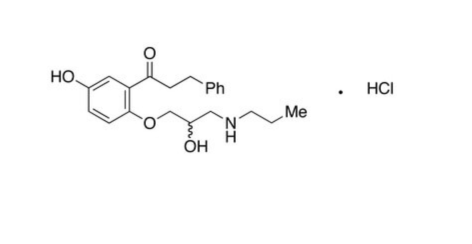
5-Hydroxy-4-Methoxy Propafenone HCl | CAS 102059-09-6
5-Hydroxy-4-Methoxy Propafenone Hydrochloride (CAS No. 102059-09-6) is a well-characterized metabolite and analytical reference standard associated with the metabolism of propafenone hydrochloride, a Class IC antiarrhythmic drug widely prescribed for the treatment of supraventricular and ventricular cardiac arrhythmias. This compound plays an important role in pharmaceutical research, drug metabolism studies, pharmacokinetic investigations, bioanalytical method development, metabolite profiling, and regulatory submissions requiring metabolite characterization.
As regulatory agencies such as the FDA, Health Canada, EMA, and ICH continue to emphasize comprehensive metabolite identification during drug development, high-quality reference standards like 5-Hydroxy-4-Methoxy Propafenone HCl are increasingly valuable for ensuring accurate analytical results and regulatory compliance.
Product Overview
5-Hydroxy-4-Methoxy Propafenone HCl is one of the oxidative metabolites generated during hepatic metabolism of propafenone. Propafenone undergoes extensive Phase I biotransformation primarily through cytochrome P450 enzymes, producing several hydroxylated and dealkylated metabolites. While 5-hydroxypropafenone is the major active metabolite, 5-Hydroxy-4-Methoxy Propafenone represents another characterized oxidative metabolite identified during metabolic profiling studies.
Researchers use this metabolite reference standard to support:
- Drug metabolism studies
- Pharmacokinetic investigations
- LC-MS/MS method development
- Metabolite identification
- Bioequivalence studies
- Therapeutic drug monitoring research
- Reference standard qualification
- Pharmaceutical impurity profiling
The hydrochloride salt provides improved stability and handling characteristics suitable for analytical laboratory applications.
Chemical Properties
| Property | Details |
|---|---|
| Chemical Name | 5-Hydroxy-4-Methoxy Propafenone Hydrochloride |
| CAS Number | 102059-09-6 |
| Molecular Formula | C<sub>21</sub>H<sub>28</sub>ClNO<sub>5</sub> |
| Molecular Weight | 409.90 g/mol |
| Chemical Class | Propafenone metabolite; Antiarrhythmic drug metabolite |
| IUPAC Name | 1-[2-Hydroxy-3-(propylamino)propoxy]-3-(4-methoxy-5-hydroxyphenyl)-1-propanone hydrochloride |
| Appearance | White to off-white crystalline powder |
Importance in Drug Metabolism Studies
Understanding drug metabolism is essential during pharmaceutical development because metabolites may contribute to efficacy, toxicity, or altered pharmacological activity. Regulatory agencies expect sponsors to identify significant metabolites and assess their safety when appropriate.
Propafenone is extensively metabolized in the liver through CYP-mediated pathways, particularly involving CYP2D6, CYP3A4, and CYP1A2. Multiple oxidative metabolites have been reported during metabolic investigations, including hydroxylated derivatives such as 5-Hydroxy-4-Methoxy Propafenone, making authentic reference materials essential for accurate metabolite confirmation and quantification.
Using qualified metabolite standards enables laboratories to:
- Confirm metabolite identity
- Verify chromatographic retention time
- Optimize mass spectrometric transitions
- Improve quantitative accuracy
- Support metabolite structural elucidation
- Validate analytical methods
Applications in Bioanalytical Laboratories
Modern pharmaceutical laboratories increasingly rely on high-resolution analytical techniques for metabolite characterization. 5-Hydroxy-4-Methoxy Propafenone HCl is suitable for a wide variety of analytical workflows including:
- LC-MS/MS quantitative analysis
- LC-HRMS metabolite identification
- UHPLC method development
- HPLC reference analysis
- Pharmacokinetic sample analysis
- Clinical research studies
- Drug metabolism investigations
- Toxicokinetic studies
- Metabolite fingerprinting
- Biomarker research
Because metabolite concentrations are often significantly lower than parent drug concentrations, authentic reference standards are essential for developing highly sensitive analytical methods capable of reliable detection and quantification.
Role in Pharmaceutical Research
Pharmaceutical companies require metabolite reference standards throughout multiple stages of drug development. These compounds support:
- Discovery research
- Lead optimization
- Preclinical metabolism studies
- Clinical pharmacokinetic investigations
- Bioequivalence studies
- Generic drug development
- Regulatory documentation
- Stability investigations
- Quality control testing
Researchers also employ these standards during metabolite identification studies to establish fragmentation pathways using tandem mass spectrometry and high-resolution accurate mass measurements.
Analytical Method Development
Accurate bioanalytical methods depend on qualified reference materials. 5-Hydroxy-4-Methoxy Propafenone HCl supports development and validation of analytical methods in accordance with current FDA and ICH bioanalytical method validation recommendations.
Typical analytical platforms include:
- LC-MS/MS
- UHPLC-MS/MS
- LC-QTOF
- Orbitrap LC-HRMS
- HPLC-UV (where applicable)
- Triple Quadrupole LC-MS
Reference standards help establish:
- Calibration curves
- System suitability
- Retention time confirmation
- Mass transition optimization
- Recovery studies
- Matrix effect evaluation
- Precision and accuracy
- Method robustness
Benefits of High-Purity Reference Standards
Using high-quality analytical reference materials improves confidence in experimental results and minimizes variability during analytical testing.
Key advantages include:
- Reliable analytical performance
- Consistent chromatographic behavior
- Accurate metabolite identification
- Improved quantitative reproducibility
- Enhanced regulatory acceptance
- Reduced analytical uncertainty
- Support for validated analytical methods
High-purity standards are especially important for bioanalytical laboratories performing regulated studies under GLP, GMP, or GCP environments.
Regulatory Significance
Regulatory agencies increasingly expect comprehensive metabolite characterization during drug development. Metabolite reference standards help pharmaceutical sponsors generate reliable data supporting:
- IND submissions
- NDA submissions
- ANDA submissions
- Clinical pharmacology studies
- Bioequivalence studies
- Drug-drug interaction investigations
- Pharmacokinetic reports
- Metabolite safety assessments
Authentic standards improve confidence in metabolite identification while facilitating reproducible analytical methods that meet regulatory expectations.
Quality and Research Support
At ResolveMass Laboratories Inc., we understand the critical role of reliable reference materials in pharmaceutical research and analytical science. Our expertise in analytical chemistry, mass spectrometry, metabolite characterization, and pharmaceutical testing enables us to support researchers with high-quality reference standards for drug metabolism and bioanalytical applications.
Our scientific capabilities include:
- Reference standard characterization
- LC-MS/MS analytical support
- High-resolution mass spectrometry
- Pharmaceutical impurity profiling
- Metabolite identification
- Structural characterization
- Method development and validation
- Custom analytical services
Why Choose ResolveMass Laboratories Inc.?
ResolveMass Laboratories Inc. combines advanced analytical instrumentation with extensive scientific expertise to support pharmaceutical, biotechnology, academic, and CRO clients worldwide. Our commitment to quality, technical excellence, and regulatory compliance ensures dependable analytical solutions for complex pharmaceutical research.
Whether you are developing a new bioanalytical method, conducting pharmacokinetic studies, investigating drug metabolism pathways, or preparing regulatory submissions, our experienced scientists can provide the analytical support and high-quality reference materials needed to advance your research with confidence.
Learn more about Deuterated Chemicals through,
- Deuterated Polymers: A Cornerstone Guide to Synthesis, Applications, and Future Trends
- Availability of All the Deuterated Chemicals at ResolveMass Laboratories Inc.
- ResolveMass Laboratories: Leading Deuterated Chemical Synthesis Company in the United States.
- Deuterated Internal Standards for LC-MS: Selection & Custom Synthesis
- How to Choose the Right Deuterated Labelled Chemical Synthesis Company in Canada
- How to Choose the Right Deuterium Labelled Compounds Supplier for Your Lab
- Deuterium-Labelled Compounds — Synthesis, Applications & Ordering
- Custom Synthesis of Deuterated Chemicals




Reviews
There are no reviews yet.