

OVERVIEW
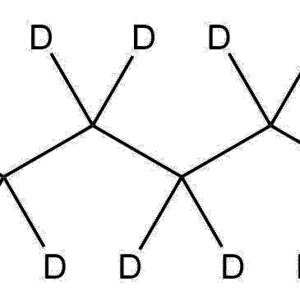
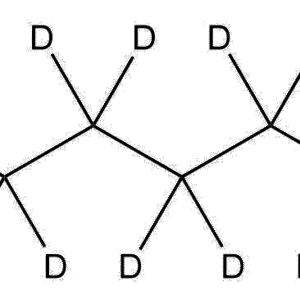
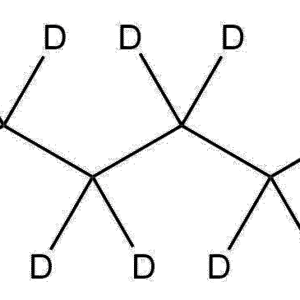
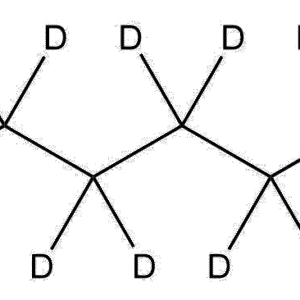
Deuterated Isoprene-d5 is a selectively deuterated analogue of isoprene in which five hydrogen atoms are replaced with deuterium (²H). This isotopically labeled monomer is widely used in polymer science, mechanistic studies, reaction tracing, biophysical research, and advanced analytical applications requiring high chemical specificity. The incorporation of deuterium significantly enhances the interpretability of spectroscopic and chromatographic methods, enabling researchers to distinguish labeled materials from native hydrogen-containing analogues with exceptional clarity.
Because isoprene is a foundational building block in elastomers, biomolecules, and industrial polymers, its deuterated form plays a critical role in understanding polymerization kinetics, chain transfer reactions, microstructure development, degradation behavior, and metabolic pathways. Deuterated Isoprene-d5 provides chemists and materials scientists with a powerful tracer molecule that supports both fundamental research and applied development across pharmaceutical, environmental, and advanced material domains.
CHEMICAL INFORMATION
Chemical Name: Isoprene-d5
Synonyms: 2-Methyl-1,3-butadiene-d5; Deuterated Isoprene
Molecular Formula: C₅D₅H₃
Isotopic Labeling: 5 × ²H (deuterium)
Molecular Weight: 73.15 g/mol
Functional Class: Deuterium-labeled monomer
The presence of five deuterium atoms enables enhanced signal resolution and reduced spectral overlap in NMR, FTIR, MS, and Raman analyses. Its isotopic signature offers a clear differentiation from unlabeled substrates, making it ideal for tracking polymerization routes, reaction intermediates, and molecular transformations.
KEY FEATURES
-
Isotopically Enriched: High-purity deuterium labeling improves analytical reliability and quantitative accuracy.
-
Structurally Equivalent to Native Isoprene: Allows direct comparison of polymerization behavior and kinetic parameters.
-
Optimized for Mechanistic Studies: Supports investigations into propagation, chain transfer, termination, and stereoselectivity.
-
Suitable for Advanced Spectroscopy: Provides enhanced NMR clarity and precise mass shifts for LC–MS/GC–MS studies.
-
Versatile Research Utility: Applicable across polymer chemistry, environmental tracing, biomedical studies, and metabolic pathway analysis.
APPLICATIONS
Polymerization Mechanism Studies
Deuterated Isoprene-d5 is frequently used to probe the mechanistic pathways of isoprene polymerization under anionic, cationic, radical, and coordination catalysis. Deuterium incorporation provides insight into rate-determining steps, chain propagation behavior, and microstructural control (cis-1,4; trans-1,4; 3,4-addition). This is especially valuable for designing synthetic rubber systems, optimizing catalytic conditions, and developing energy-efficient polymerization processes.
Tracer Studies in Materials Science
Due to its isotopic signature, Isoprene-d5 can be incorporated into block copolymers, elastomers, or graft structures to track diffusion, molecular mixing, and phase behavior. Small-angle neutron scattering (SANS) studies often rely on deuterated monomers to enhance contrast, enabling precise visualization of nanoscale morphology in complex polymer systems.
Spectroscopic Analysis and Structural Elucidation
In NMR spectroscopy, replacing hydrogen with deuterium reduces proton-related interference, enhancing peak separation and facilitating conformational analysis. In MS-based workflows, the predictable mass shift provides unambiguous identification and quantification, even in complex mixtures. This makes Isoprene-d5 suitable for validating polymer degradation pathways, studying impurity profiles, and performing fundamental analytical chemistry research.
Metabolic and Environmental Fate Studies
Isoprene is a biologically relevant volatile organic compound produced and metabolized by various organisms. Deuterated Isoprene-d5 provides researchers with a non-radioactive, safe, and effective tracer to map metabolic routes, enzymatic transformations, environmental dispersion patterns, and atmospheric oxidation processes.
ADVANTAGES OF USING DEUTERATED ISOPRENE-D5
-
Improved Quantitative Tracking: Enhanced MS response and distinguishable isotopic peaks ensure accurate detection in multicomponent systems.
-
Minimal Structural Perturbation: Deuterium substitution maintains chemical behavior similar to native isoprene.
-
Enhanced Model Precision: Enables high-fidelity modeling of polymer degradation, monomer reactivity ratios, and crosslinking behavior.
-
Compatibility with Modern Analytical Workflows: Works seamlessly with high-resolution NMR, FTIR mapping, SANS, LC-MS, GC-MS, and in-situ spectroscopic monitoring.
Learn more through,
Deuterated Polymers: A Cornerstone Guide to Synthesis, Applications, and Future Trends
Availability of All the Deuterated Chemicals at ResolveMass Laboratories Inc.
ResolveMass Laboratories: Leading Deuterated Chemical Synthesis Company in the United States.
Deuterated Internal Standards for LC-MS: Selection & Custom Synthesis
How to Choose the Right Deuterated Labelled Chemical Synthesis Company in Canada
How to Choose the Right Deuterium Labelled Compounds Supplier for Your Lab
Deuterium-Labelled Compounds — Synthesis, Applications & Ordering
Custom Synthesis of Deuterated Chemicals
Reviews
There are no reviews yet.