Introduction
The pharmaceutical industry continues to evolve as researchers seek safer and more effective therapeutic solutions. A major focus of this progress is the development of advanced drug delivery systems that can improve how medicines reach their target sites, enhance treatment effectiveness, reduce side effects, and support better patient compliance. One promising approach in this area is Custom Dendrimer Synthesis for Controlled Drug Delivery, which uses highly branched, tree-like macromolecules known as dendrimers to transport therapeutic agents with exceptional precision and control. These unique nanostructures offer tunable architecture, high drug loading capacity, and targeted delivery potential. At Resolvemass Laboratories, we specialize in Custom Dendrimer Synthesis for Controlled Drug Delivery, designing dendrimers tailored to specific pharmaceutical applications using our advanced custom synthesis and analytical expertise.
Explore our full range of laboratory solutions: View our Comprehensive Service List
Share via:
Article Summary
- Dendrimers are highly branched nanostructures used as advanced carriers for controlled and targeted drug delivery.
- Controlled drug delivery systems help maintain stable drug levels, improving treatment effectiveness and reducing side effects.
- Nanotechnology-based carriers like dendrimers enhance drug stability, solubility, and targeting ability.
- Custom dendrimer synthesis allows precise design of structures for specific drug delivery needs.
- Advanced characterization and testing ensure safety, quality, and regulatory compliance.
- Dendrimer technology holds strong potential for future precision medicine and next-generation therapeutics.
The Importance of Controlled Drug Delivery
Traditional drug delivery methods, such as oral or intravenous administration, often face significant challenges. These include fluctuating drug levels, poor bioavailability, and short half-lives, leading to suboptimal therapeutic outcomes and increased side effects. For instance, oral drugs can be subjected to the first-pass metabolism in the liver, reducing the effective concentration of the drug that reaches the systemic circulation. Intravenous drugs, on the other hand, often exhibit rapid absorption and elimination, causing peaks and troughs in drug concentration that can lead to periods of subtherapeutic exposure or toxic side effects.
Controlled drug delivery systems are designed to address these issues by releasing the drug at a controlled rate, maintaining therapeutic drug levels for extended periods, and targeting specific sites within the body. This approach not only enhances patient compliance by reducing the frequency of drug administration but also improves the overall efficacy of the treatment by ensuring a more consistent therapeutic effect. By minimizing the peaks and troughs in drug concentration, controlled drug delivery systems can reduce the risk of side effects and improve the therapeutic index of the drug.
Advantages of Nanotechnology in Modern Drug Delivery
Nanotechnology has significantly transformed the landscape of pharmaceutical delivery systems by enabling precise control over drug transport and release mechanisms. Nanocarriers such as dendrimers, liposomes, polymeric nanoparticles, and micelles provide innovative platforms for transporting therapeutic compounds with enhanced stability and targeting capabilities. These nanoscale systems are particularly valuable when delivering drugs that suffer from poor solubility, rapid degradation, or limited bioavailability within the body.
Dendrimers stand out among nanocarriers due to their highly controllable architecture and abundant surface functionalities. Their predictable structure enables researchers to design systems that can interact selectively with biological molecules or cellular receptors. By integrating nanotechnology principles with dendrimer synthesis, scientists can develop advanced delivery platforms capable of improving treatment outcomes while minimizing systemic toxicity.
Need specialized macromolecular structures for your research? Learn more about our Custom Polymer Synthesis
What Are Dendrimers?
Dendrimers are a unique class of synthetic macromolecules characterized by their highly branched, tree-like structure. They consist of three distinct architectural components: a central core, repetitive branching units, and numerous surface functional groups. The core acts as the focal point from which the branches emanate, growing outward in a symmetrical fashion through successive generations. Each generation of branching units doubles the number of terminal functional groups, resulting in a spherical shape with a high degree of uniformity and monodispersity.
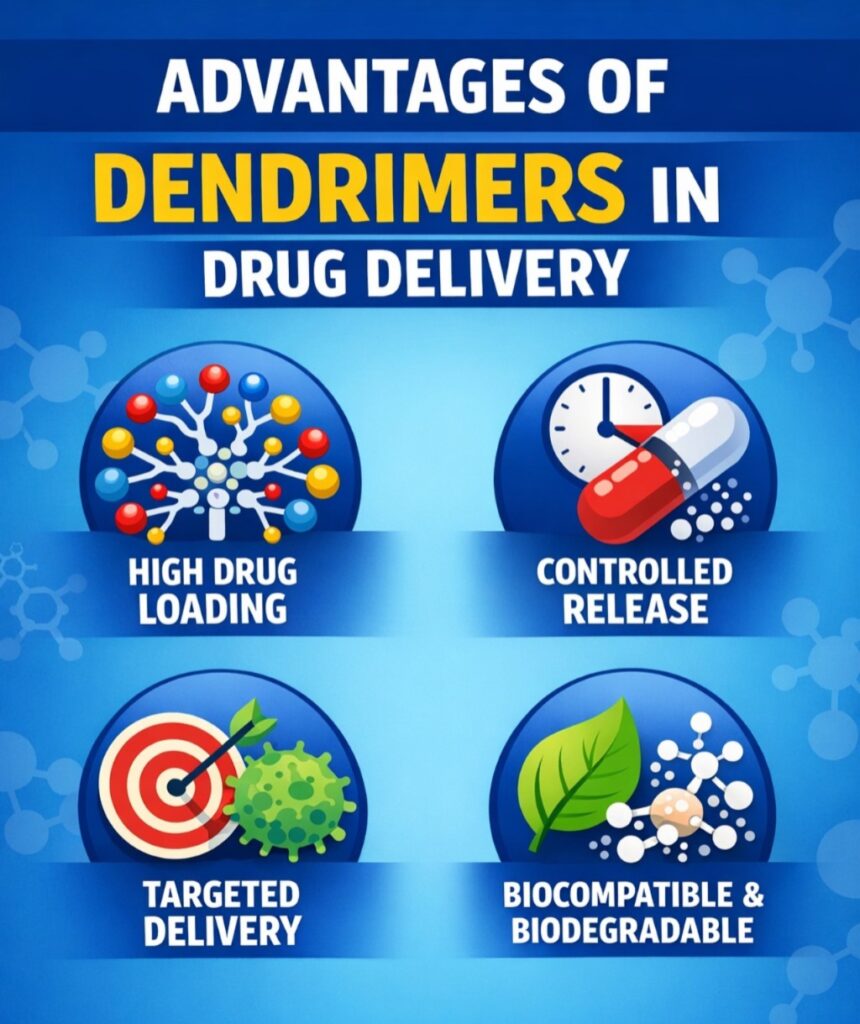
The unique architecture of dendrimers offers several advantages for drug delivery:
- High Drug Loading Capacity: The internal cavities and numerous surface functional groups of dendrimers provide ample space for encapsulating or conjugating a large number of drug molecules. This high drug loading capacity is particularly beneficial for delivering potent drugs that require precise dosing.
- Controlled Release: The drug release profile can be finely tuned by modifying the dendrimer’s structure, surface functionality, and the nature of the drug-dendrimer interaction. This allows for the design of drug delivery systems that can release the drug over a specified period, ranging from hours to months.
- Targeted Delivery: Dendrimers can be functionalized with targeting moieties such as ligands, antibodies, or peptides to deliver drugs specifically to the desired site of action, minimizing off-target effects. For example, dendrimers can be designed to recognize and bind to specific receptors on cancer cells, ensuring that the drug is concentrated at the tumor site.
- Biocompatibility and Biodegradability: Properly designed dendrimers are biocompatible and can be engineered to degrade into non-toxic byproducts within the body. This makes them suitable for long-term therapeutic applications without causing adverse immune responses.
Generational Architecture and Structural Precision of Dendrimers
Dendrimers are often categorized based on their “generation,” which refers to the number of repeated branching cycles used during synthesis. Each generation adds an additional layer of branching units, increasing the molecule’s size, surface functionality, and structural complexity. Early generations typically exhibit open structures with accessible internal cavities, while higher generations tend to form more compact, globular architectures. This precise generational control allows researchers to fine-tune dendrimer properties such as solubility, drug encapsulation capacity, and interaction with biological environments.
The generational design also influences the pharmacokinetic behavior of dendrimer-based drug carriers. Lower-generation dendrimers may diffuse rapidly and penetrate tissues more easily, whereas higher-generation dendrimers often provide increased drug loading capacity and stronger interactions with therapeutic molecules. By selecting the appropriate generation during synthesis, scientists can balance molecular size, stability, and functionality to create optimized carriers for different therapeutic applications.
Custom Dendrimer Synthesis for Controlled Drug Delivery
Custom dendrimer synthesis involves designing and fabricating dendrimers with tailored properties to meet specific drug delivery requirements. This process includes several key steps:
Designing the Dendrimer Structure
The first step in custom dendrimer synthesis is designing the dendrimer’s structure to achieve the desired properties. This includes selecting an appropriate core, branching units, and surface functional groups. For instance, a dendrimer intended for delivering hydrophobic drugs might have a hydrophobic core to enhance drug encapsulation, while one designed for targeting cancer cells might have surface ligands that bind specifically to cancer cell receptors. The design process also considers the dendrimer’s generation number, which determines the size and number of surface functional groups, as well as the type of bonding (covalent or non-covalent) used for drug attachment.
Synthesis of Dendrimers
Dendrimers are synthesized using iterative synthetic procedures that involve the repetitive addition of monomer units to the growing molecule. Two primary methods are used for dendrimer synthesis:
- Divergent Synthesis: This method starts from the core and proceeds outward by adding branching units step by step. Each step doubles the number of reactive sites, leading to an exponential growth of the dendrimer. Divergent synthesis allows for the precise control of the dendrimer’s size and structure but can be labor-intensive and may result in incomplete reactions if not carefully monitored.
- Convergent Synthesis: This method involves the synthesis of dendrimer branches or wedges, which are then attached to the core in the final step. This approach allows for better control over the final structure and purity of the dendrimer, as each branch can be synthesized and purified separately before being combined. Convergent synthesis also reduces the risk of side reactions and can result in higher yields of the desired dendrimer.
At Resolvemass Laboratories, we employ both divergent and convergent synthesis methods, selecting the most appropriate approach based on the specific requirements of the drug delivery application. Our expertise in these techniques allows us to produce dendrimers with high precision and consistency.
Functionalization of Dendrimers
The surface functional groups of dendrimers can be modified to achieve specific properties, such as enhanced drug loading, controlled release, and targeted delivery. Functionalization may involve attaching ligands, antibodies, or other targeting moieties to the dendrimer’s surface. Additionally, the surface groups can be modified to alter the dendrimer’s solubility, biocompatibility, and interaction with the drug.
For example, a dendrimer designed for cancer therapy might be functionalized with folic acid to target cancer cells overexpressing folate receptors. Alternatively, the dendrimer’s surface can be modified with polyethylene glycol (PEG) chains to improve its circulation time in the bloodstream and reduce immune recognition. Surface modification can also enhance the dendrimer’s ability to cross biological barriers, such as the blood-brain barrier, for targeted delivery to the brain.
Enhance drug solubility and stability with specialized hosts: Explore our Cyclodextrin Solutions
Stimuli-Responsive Dendrimers for Smart Drug Release
A promising development in dendrimer-based drug delivery is the design of stimuli-responsive systems that release therapeutic agents in response to specific environmental triggers. These triggers may include changes in pH, temperature, enzyme concentration, or redox conditions commonly found in diseased tissues. For example, tumor microenvironments often exhibit slightly acidic conditions, which can be exploited to trigger drug release from pH-sensitive dendrimer carriers.
Such responsive systems enable more precise control over drug activation and localization within the body. By incorporating sensitive chemical linkers or responsive polymers into the dendrimer structure, researchers can ensure that drugs remain stable during circulation but are released rapidly at the intended target site. This targeted activation not only enhances therapeutic effectiveness but also reduces unwanted systemic exposure to potent drugs.
Characterization and Quality Control
Thorough characterization of the synthesized dendrimers is crucial to ensure they meet the desired specifications. Our state-of-the-art analytical facilities enable us to perform comprehensive characterization using techniques such as Nuclear Magnetic Resonance (NMR) spectroscopy, Gel Permeation Chromatography (GPC), Dynamic Light Scattering (DLS), and Mass Spectrometry (MS). These analyses provide detailed information on the dendrimer’s molecular weight, size distribution, surface functionality, and purity.
NMR spectroscopy is used to determine the chemical structure and composition of the dendrimer, ensuring the correct monomers have been incorporated. GPC provides information on the molecular weight distribution, which is crucial for predicting the dendrimer’s behavior in biological systems. DLS measures the size and polydispersity of the dendrimer particles, which can affect their stability and biodistribution. MS is employed to confirm the presence of specific functional groups and assess the overall purity of the dendrimer.
Require precise isotopic labeling for analytical tracking? Request Custom Synthesis of Deuterated Chemicals
Regulatory Considerations for Dendrimer-Based Therapeutics
As dendrimer-based drug delivery systems advance toward clinical applications, regulatory considerations become increasingly important. Regulatory agencies require detailed information regarding the synthesis process, physicochemical properties, stability, toxicity, and reproducibility of dendrimer formulations. Comprehensive characterization data help ensure that the material meets safety standards and performs consistently across manufacturing batches.
Standardized testing protocols also play a critical role in establishing the reliability of dendrimer technologies. Parameters such as particle size, surface charge, and drug release kinetics must be carefully evaluated under controlled conditions. By adhering to regulatory guidelines and maintaining rigorous quality assurance practices, research laboratories and pharmaceutical companies can accelerate the translation of dendrimer-based systems from laboratory research to clinical and commercial applications.
Drug Loading and Formulation
Once the dendrimer has been synthesized and characterized, the next step is loading the drug into the dendrimer’s structure. Drug loading can be achieved through various methods, including physical encapsulation within the dendrimer’s internal cavities, chemical conjugation to the surface functional groups, or a combination of both. The choice of method depends on the nature of the drug and the desired release profile.
For instance, hydrophobic drugs can be physically encapsulated within the hydrophobic core of the dendrimer, while hydrophilic drugs can be chemically conjugated to the hydrophilic surface groups. The drug loading efficiency and release kinetics can be optimized by adjusting the dendrimer’s structure and the conditions used for drug loading. Our team at Resolvemass Laboratories works closely with clients to develop customized formulations that meet their specific therapeutic needs.
Overcoming Biological Barriers in Drug Delivery
One of the most significant challenges in pharmaceutical therapy is the presence of biological barriers that limit drug transport within the body. These barriers include the gastrointestinal tract, cellular membranes, and specialized protective structures such as the blood-brain barrier. Conventional drug molecules often struggle to cross these barriers efficiently, which reduces therapeutic effectiveness and limits treatment options for certain diseases.
Dendrimers offer unique advantages in overcoming these obstacles due to their nanoscale size and customizable surface chemistry. By engineering surface ligands or transport-enhancing groups, dendrimers can interact with biological membranes and facilitate drug transport across otherwise restrictive barriers. This capability opens new possibilities for delivering drugs to previously inaccessible tissues, including the brain and intracellular compartments.
In Vitro and In Vivo Testing
To evaluate the performance of the dendrimer-based drug delivery system, rigorous in vitro and in vivo testing is conducted. In vitro testing involves assessing the drug release profile, stability, and biocompatibility under simulated physiological conditions. For example, drug release studies may be performed in buffer solutions or cell culture media to mimic the conditions in the body. Stability testing evaluates the dendrimer’s resistance to degradation or aggregation over time.
In vivo studies are carried out to examine the dendrimer’s pharmacokinetics, biodistribution, therapeutic efficacy, and safety in animal models. These tests are crucial for optimizing the formulation and ensuring its readiness for clinical or commercial use. In vivo studies provide valuable data on how the dendrimer-drug conjugate behaves in a living organism, including its absorption, distribution, metabolism, and excretion. They also help identify any potential side effects or toxicity associated with the formulation.
Future Prospects of Dendrimer-Based Drug Delivery
The future of dendrimer technology in drug delivery is closely linked with advances in nanomedicine, biotechnology, and personalized medicine. Researchers are exploring multifunctional dendrimers that can simultaneously carry therapeutic agents, diagnostic molecules, and imaging probes. Such multifunctional systems have the potential to enable “theranostic” applications, where diagnosis and treatment occur within a single integrated platform.
Additionally, emerging approaches involve combining dendrimers with other nanomaterials or biomolecules to create hybrid delivery systems with enhanced performance. These innovations may lead to more precise disease targeting, reduced drug toxicity, and improved patient outcomes. As research continues to progress, dendrimer-based carriers are expected to play a significant role in next-generation pharmaceutical therapies.
Case Study: PAMAM Dendrimers for Targeted Delivery of Anticancer Drugs
One of our recent projects involved the development of Poly(amidoamine) (PAMAM) dendrimers for the targeted delivery of anticancer drugs. The objective was to enhance the drug’s efficacy while minimizing its side effects. We designed PAMAM dendrimers with a hydrophobic core for encapsulating the anticancer drug and functionalized the surface with folic acid to target cancer cells over.
Conclusion
Custom dendrimer synthesis represents a powerful and versatile approach for developing advanced drug delivery systems capable of addressing many limitations associated with conventional therapies. Their highly controlled architecture, high drug loading capacity, and customizable surface functionalities make dendrimers an exceptional platform for targeted and controlled drug delivery. Through precise structural design and functionalization, dendrimers can be engineered to release drugs in a controlled manner while minimizing off-target effects.
With continued research and technological advancement, dendrimer-based systems are expected to play an increasingly important role in modern pharmaceutical development. By integrating innovative synthesis strategies, rigorous characterization methods, and comprehensive biological testing, researchers and pharmaceutical companies can unlock the full potential of dendrimers for therapeutic applications. Organizations such as Resolvemass Laboratories remain at the forefront of this field, providing custom dendrimer synthesis solutions that support the development of safer, more effective, and highly targeted drug delivery platforms.
For more information about our custom dendrimer synthesis services and how we can assist in your drug delivery projects, please visit Resolvemass laboratories & contact us
Frequently Asked Questions
Custom dendrimer synthesis allows scientists to design dendrimers with specific structural features tailored to the drug being delivered. Parameters such as generation size, surface functionality, and core composition can be optimized for drug loading, release rate, and targeting ability. This flexibility enables the development of delivery systems suited for different therapeutic applications.
Dendrimers can carry a wide variety of therapeutic agents, including small-molecule drugs, peptides, nucleic acids, and anticancer compounds. Hydrophobic drugs can be encapsulated within internal cavities, while hydrophilic molecules can be attached to surface groups. This versatility makes dendrimers suitable for both conventional pharmaceuticals and advanced biologics.
Controlled drug release is achieved by adjusting how the drug interacts with the dendrimer structure. Drugs may be physically trapped within the dendrimer or chemically linked through bonds that break under specific conditions. By modifying these interactions, researchers can regulate how quickly the drug is released in the body.
Many dendrimers are designed to be biocompatible and biodegradable, meaning they can break down into harmless components after performing their function. Researchers carefully evaluate toxicity, stability, and biological interactions during development. Proper surface modification and rigorous testing help ensure their safety for pharmaceutical applications.
Compared with conventional drug carriers, dendrimers offer precise molecular structure, high drug loading capacity, and easy surface modification. These properties allow better targeting of specific tissues or cells while reducing unwanted effects on healthy tissues. Additionally, dendrimers can improve the solubility and stability of certain drugs.
Dendrimers are expected to play a growing role in nanomedicine and personalized therapies. Researchers are developing multifunctional dendrimers that can deliver drugs, track treatment progress, and even assist in diagnosis. As synthesis and characterization technologies advance, dendrimer-based systems may become key tools in next-generation drug delivery strategies.
Reference:
- Yoon, H. J., Kim, J.-H., Seo, G. H., & Park, H. (2021). Risk of cancer following the use of N-nitrosodimethylamine (NDMA) contaminated ranitidine products: A nationwide cohort study in South Korea. Journal of Clinical Medicine, 10(1), 153. https://doi.org/10.3390/jcm10010153
- Meenakshi, R., Chella Kumari, S. D., Ramesh Kumar, K., Mirunalini, G., Arun Kumar, G., & Vidya, U. L. (2025). Dendrimers: A review on synthesis, characterisation and application in drug delivery. International Journal of Pharmacy and Pharmaceutical Research, 31(2). https://ijppr.humanjournals.com/wp-content/uploads/2025/02/6.Meenakshi-R-Dr.-S.-Daisy-Chella-Kumari-Ramesh-Kumar-K-Mirunalini-G-Arun-Kumar-G-Vidya-UL.pdf
- Swanson, D. R., & Baker, J. R. (2015). Dendrimer compositions and methods of synthesis (U.S. Patent No. 8,945,508). U.S. Patent and Trademark Office. https://patents.google.com/patent/US8945508B2/en