


Introduction:
Cyclodextrin-Based Dendrimers: Applications in Cancer Therapy represent a cutting-edge approach in nanomedicine designed to address the limitations of conventional cancer treatments. By combining the inclusion capability of cyclodextrins with the highly branched architecture of dendrimers, these systems offer enhanced drug delivery, improved bioavailability, and targeted therapy.
Cancer therapy often struggles with issues such as poor drug solubility, systemic toxicity, and lack of specificity. Cyclodextrin-based dendrimers provide a promising solution by enabling site-specific delivery and controlled drug release, making them highly valuable in modern pharmaceutical R&D.
Summary:
- Cyclodextrin-Based Dendrimers: Applications in Cancer Therapy focus on enhancing drug solubility, stability, and targeted delivery.
- These hybrid nanocarriers combine cyclodextrins (CDs) and dendrimers to improve therapeutic efficiency.
- They enable controlled drug release, reduced toxicity, and higher tumor targeting.
- Widely explored for delivering anticancer drugs, genes, and imaging agents.
- Challenges include complex synthesis, scalability, and regulatory approval.
- Advanced analytical and formulation strategies can overcome these barriers.
1: What Are Cyclodextrin-Based Dendrimers?
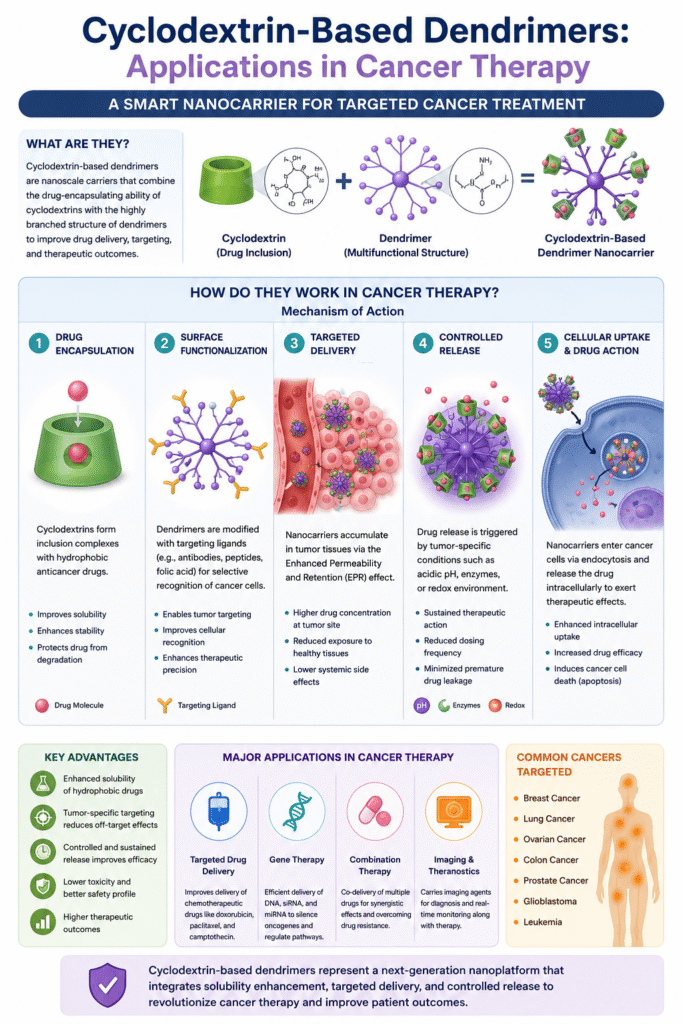
Cyclodextrin-based dendrimers are nanoscale drug delivery systems that combine the inclusion properties of cyclodextrins with the highly branched structure of dendrimers.
Key Components
1. Cyclodextrins (CDs)
- Natural cyclic oligosaccharides
- Possess a hydrophobic cavity and hydrophilic outer surface
- Enhance solubility of poorly water-soluble drugs
2. Dendrimers
- Synthetic, highly branched polymers
- Provide multiple functional groups for drug attachment and targeting
Why This Hybrid Design Works
- Increased drug loading capacity
- Enhanced stability and solubility
- Improved targeting efficiency
2: How Do Cyclodextrin-Based Dendrimers Work in Cancer Therapy?
Cyclodextrin-based dendrimers work by encapsulating or conjugating anticancer drugs and delivering them selectively to tumor tissues through advanced nanoscale targeting mechanisms. These hybrid nanocarriers improve drug solubility, enhance cellular uptake, and enable controlled release within cancer cells, thereby increasing therapeutic effectiveness while minimizing damage to healthy tissues.
The combination of cyclodextrins and dendrimers creates a multifunctional platform capable of carrying therapeutic agents, targeting cancer cells, and releasing drugs in response to specific tumor microenvironment conditions.
Mechanism of Action
1. Drug Encapsulation
Cyclodextrins possess a unique hydrophobic internal cavity that can encapsulate poorly water-soluble anticancer drugs through inclusion complex formation. Many chemotherapy agents have low aqueous solubility, which limits their bioavailability and therapeutic efficiency. Cyclodextrins help overcome this challenge by enhancing drug dissolution and stability.
Key benefits of drug encapsulation include:
- Improved solubility of hydrophobic anticancer drugs
- Enhanced bioavailability and circulation time
- Protection of drugs from premature degradation
- Reduced systemic toxicity
Common drugs encapsulated include:
- Doxorubicin
- Paclitaxel
- Camptothecin
- Methotrexate
2. Surface Functionalization
Dendrimers contain multiple terminal functional groups that can be chemically modified with targeting ligands such as antibodies, peptides, folic acid, or aptamers. These ligands enable selective recognition of cancer cells that overexpress specific receptors.
Surface functionalization improves:
- Tumor-specific targeting
- Cellular recognition
- Drug accumulation at diseased sites
- Therapeutic precision
For example:
- Folate-conjugated dendrimers target folate receptors commonly overexpressed in certain cancers.
- Antibody-functionalized systems can recognize tumor-associated antigens with high specificity.
3. Targeted Delivery
Cyclodextrin-based dendrimers can preferentially accumulate in tumor tissues through the Enhanced Permeability and Retention (EPR) effect. Tumors often possess leaky vasculature and poor lymphatic drainage, allowing nanoparticles to penetrate and remain within tumor tissues more effectively than in normal tissues.
Advantages of targeted delivery include:
- Higher drug concentration at tumor sites
- Reduced exposure to healthy tissues
- Lower systemic side effects
- Improved therapeutic outcomes
This targeted approach is especially valuable in reducing the toxic effects commonly associated with conventional chemotherapy.
4. Controlled Release
One of the major advantages of cyclodextrin-based dendrimers is their ability to provide controlled and stimuli-responsive drug release. Tumor microenvironments often differ from healthy tissues in terms of pH, enzyme concentration, and redox conditions.
Drug release can be triggered by:
- Acidic tumor pH
- Tumor-specific enzymes
- Temperature changes
- Redox-sensitive environments
Controlled release offers several benefits:
- Sustained therapeutic action
- Reduced dosing frequency
- Improved drug stability
- Minimized premature drug leakage
This mechanism ensures that the majority of the therapeutic payload is released directly within or near cancer cells.
5. Cellular Uptake
After reaching tumor tissues, cyclodextrin-based dendrimers are internalized by cancer cells primarily through endocytosis. Once inside the cells, the nanocarriers release the encapsulated drugs into intracellular compartments, where they exert their therapeutic effects.
Efficient cellular uptake contributes to:
- Enhanced intracellular drug concentration
- Improved anticancer activity
- Effective gene or drug delivery
- Increased apoptosis of cancer cells
The nanoscale size and surface characteristics of dendrimers play a critical role in facilitating this uptake process.
3: Key Applications in Cancer Therapy
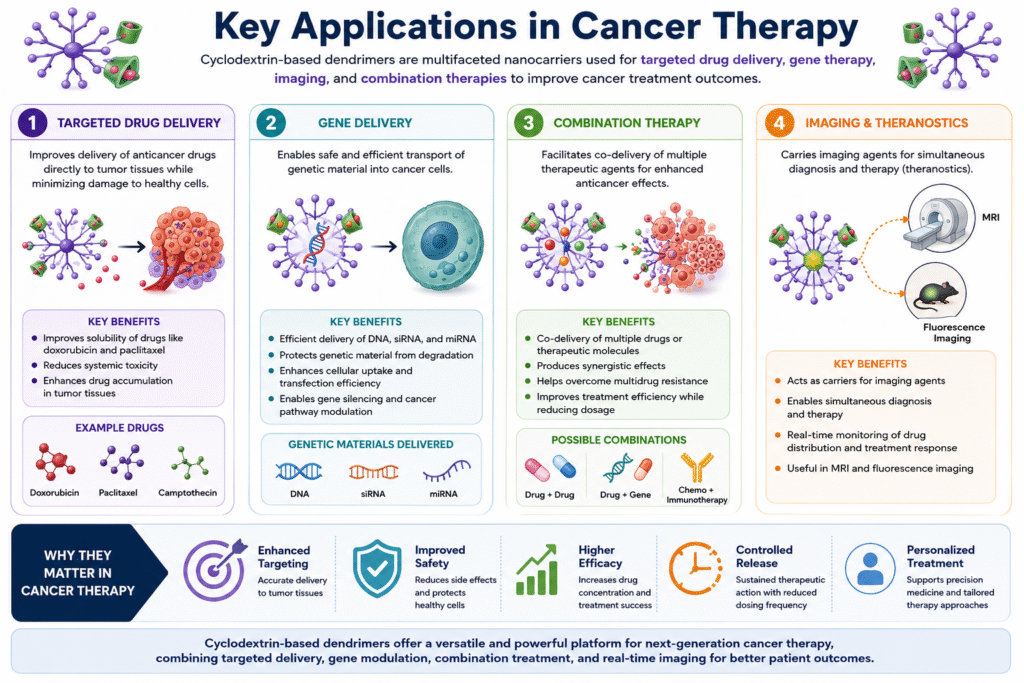
Cyclodextrin-based dendrimers are widely explored in modern oncology because of their ability to improve drug delivery efficiency, enhance targeting accuracy, and support multifunctional therapeutic approaches. These advanced nanocarriers are being investigated for applications ranging from chemotherapy delivery to gene therapy and cancer imaging.
Their multifunctional structure allows simultaneous transport of therapeutic and diagnostic agents, making them highly valuable in precision medicine and next-generation cancer treatment strategies.
1. Targeted Drug Delivery
Cyclodextrin-based dendrimers improve the delivery of anticancer drugs directly to tumor tissues while minimizing damage to healthy cells.
One of the major challenges in chemotherapy is the poor solubility and non-specific distribution of many anticancer drugs. Cyclodextrin-based dendrimers address these limitations by enhancing drug solubility, stability, and tumor targeting.
Key Benefits
- Improves solubility of hydrophobic drugs such as:
- Doxorubicin
- Paclitaxel
- Camptothecin
- Reduces systemic toxicity by limiting exposure to healthy tissues
- Enhances drug accumulation in tumor tissues through targeted delivery mechanisms
- Improves therapeutic efficacy and patient safety
Why It Matters
Traditional chemotherapy often affects both healthy and cancerous cells, leading to severe side effects. Targeted dendrimer systems help concentrate the drug at the tumor site, reducing adverse reactions and improving treatment outcomes.
2. Gene Delivery
Cyclodextrin-based dendrimers can safely transport genetic materials such as DNA, siRNA, and miRNA into cancer cells.
Gene therapy is emerging as a promising strategy for treating cancer by modifying or silencing disease-related genes. However, genetic materials are highly unstable and prone to degradation in biological environments. Cyclodextrin-based dendrimers protect these molecules and improve their intracellular delivery.
Key Advantages
- Efficient delivery of:
- DNA
- siRNA
- miRNA
- Protects nucleic acids from enzymatic degradation
- Enhances cellular uptake and transfection efficiency
- Enables gene silencing and modulation of cancer pathways
Applications in Oncology
These systems can suppress oncogenes, regulate tumor growth pathways, and improve sensitivity to chemotherapy. Their ability to deliver nucleic acids with reduced toxicity makes them highly attractive for advanced cancer therapeutics.
3. Combination Therapy
These nanocarriers enable simultaneous delivery of multiple therapeutic agents for enhanced anticancer activity.
Cancer is a complex disease that often requires multiple treatment strategies. Cyclodextrin-based dendrimers can co-deliver two or more drugs or therapeutic molecules within a single platform.
Key Benefits
- Co-delivery of:
- Multiple anticancer drugs
- Drug and gene combinations
- Chemotherapy and immunotherapy agents
- Produces synergistic therapeutic effects
- Helps overcome multidrug resistance
- Improves treatment efficiency while reducing dosage requirements
Importance of Combination Therapy
Tumor cells can develop resistance to single-drug treatments over time. Combination therapy improves the likelihood of destroying resistant cancer cells and reducing disease recurrence.
4. Imaging and Theranostics
Cyclodextrin-based dendrimers can carry imaging agents for simultaneous cancer diagnosis and treatment.
In addition to drug delivery, these nanocarriers are valuable in diagnostic imaging and theranostic applications. Theranostics combines therapy and diagnostics into a single integrated platform.
Key Applications
- Delivery of imaging agents for:
- MRI
- Fluorescence imaging
- CT imaging
- Real-time monitoring of drug distribution
- Simultaneous diagnosis and treatment
- Improved tumor visualization and treatment tracking
Advantages of Theranostic Systems
Theranostic dendrimers allow clinicians to monitor treatment response in real time, enabling personalized and adaptive cancer therapy approaches.
4: Advantages of Cyclodextrin-Based Dendrimers
Cyclodextrin-based dendrimers offer significant advantages over conventional drug delivery systems, especially in cancer therapy. Their unique hybrid structure improves drug solubility, targeting capability, and therapeutic effectiveness while reducing toxicity.
Key Benefits
- Enhanced Solubility
Improves the bioavailability of poorly water-soluble anticancer drugs by forming inclusion complexes. - High Drug Loading Capacity
Multiple surface functional groups allow attachment or encapsulation of large amounts of therapeutic agents. - Targeted Delivery
Delivers drugs directly to tumor tissues, reducing damage to healthy cells and minimizing side effects. - Controlled Drug Release
Enables sustained and stimuli-responsive release, improving treatment efficiency and reducing dosing frequency. - Better Biocompatibility
Shows lower toxicity and improved safety profile compared to conventional chemotherapy systems.
Overall, cyclodextrin-based dendrimers enhance the precision, safety, and effectiveness of modern cancer treatments.
5: Comparison with Conventional Drug Delivery Systems
| Feature | Conventional Systems | Cyclodextrin-Based Dendrimers |
|---|---|---|
| Drug Solubility | Poor | High |
| Targeting | Non-specific | Highly targeted |
| Toxicity | High | Reduced |
| Drug Release | Uncontrolled | Controlled |
| Efficiency | Moderate | High |
8: Role of Advanced Analytical Support
Advanced analytical support plays a critical role in the successful development of cyclodextrin-based dendrimers for cancer therapy. Since these nanocarriers involve complex structures and multifunctional components, precise analytical evaluation is essential to ensure their safety, quality, stability, and therapeutic performance.
Key Capabilities
- Structural Characterization
Techniques such as LC-MS, NMR, FTIR, and MALDI-TOF help confirm dendrimer structure, surface modifications, and molecular interactions. - Drug Loading and Release Profiling
Analytical methods are used to determine drug encapsulation efficiency, loading capacity, and controlled release behavior. - Stability and Degradation Studies
Evaluates the physical and chemical stability of the formulation under different storage and biological conditions. - Bioanalytical Method Validation
Ensures accurate, precise, and reproducible quantification of drugs and biomarkers in biological samples.
Importance in Cancer Therapy Development
These analytical capabilities help maintain:
- Data integrity
- Product reproducibility
- Regulatory compliance
- Safety and efficacy standards
Reliable analytical support is essential for accelerating research, supporting regulatory submissions, and improving the clinical success of cyclodextrin-based dendrimer formulations.
Conclusion:
Cyclodextrin-Based Dendrimers: Applications in Cancer Therapy provide a transformative approach to addressing the limitations of traditional cancer treatments. By enhancing drug solubility, enabling targeted delivery, and reducing toxicity, these systems significantly improve therapeutic outcomes.
Although challenges such as scalability and regulatory approval remain, ongoing advancements in nanotechnology and pharmaceutical sciences are accelerating their development. With continued research and expert analytical support, these nanocarriers hold immense potential to redefine cancer therapy.
Frequently Asked Questions:
Cyclodextrins are used because they can encapsulate hydrophobic drugs within their internal cavity, improving drug solubility and bioavailability. Many anticancer drugs have poor water solubility, which limits their effectiveness. Cyclodextrins protect these drugs from degradation and improve their stability in biological systems. When combined with dendrimers, they create multifunctional delivery systems with enhanced therapeutic performance. This combination significantly improves the efficiency of cancer drug delivery.
Cyclodextrin-based dendrimers can deliver a wide range of therapeutic agents, including chemotherapy drugs and genetic materials. Common anticancer drugs include doxorubicin, paclitaxel, camptothecin, and methotrexate. These systems are also used for delivering DNA, siRNA, and miRNA in gene therapy applications. Their high drug-loading capacity allows simultaneous delivery of multiple agents. This versatility makes them valuable for advanced and combination cancer therapies.
The major advantages include enhanced drug solubility, targeted delivery, controlled release, and reduced systemic toxicity. Their branched structure provides multiple binding sites for drug loading and surface modification. These nanocarriers improve drug accumulation at tumor sites while minimizing off-target effects. They also offer better biocompatibility compared to conventional chemotherapy systems. Overall, they enhance the precision and safety of cancer treatment.
Targeted drug delivery is a strategy that directs therapeutic agents specifically to tumor tissues or cancer cells. This approach reduces exposure of healthy tissues to toxic chemotherapy drugs. Cyclodextrin-based dendrimers achieve targeting through surface ligands and the Enhanced Permeability and Retention (EPR) effect. Targeted delivery improves treatment effectiveness and reduces side effects such as toxicity and organ damage. It is considered one of the most important advancements in modern oncology.
Yes, these nanocarriers are highly effective for gene delivery applications in cancer therapy. They can transport genetic materials such as DNA, siRNA, and miRNA safely into cancer cells. The dendrimer structure protects nucleic acids from enzymatic degradation during circulation. These systems improve cellular uptake and gene transfection efficiency. Gene therapy using dendrimers can help silence cancer-causing genes and regulate tumor growth pathways.
Theranostics refers to the combination of therapy and diagnostics within a single platform. Cyclodextrin-based dendrimers can carry both therapeutic drugs and imaging agents simultaneously. This allows clinicians to diagnose, monitor, and treat cancer using the same system. They are commonly explored for MRI, fluorescence imaging, and targeted drug delivery. Theranostic systems support personalized medicine and real-time treatment monitoring.
Analytical characterization is essential for ensuring the quality, stability, and safety of cyclodextrin-based dendrimers. Techniques such as LC-MS, NMR, FTIR, and MALDI-TOF help confirm structural integrity and drug loading efficiency. Stability studies evaluate how formulations behave under storage and biological conditions. Bioanalytical validation ensures accurate and reproducible results during development. These studies are critical for regulatory compliance and successful clinical application.
Reference
- Păduraru DN, Niculescu AG, Bolocan A, Andronic O, Grumezescu AM, Bîrlă R. An updated overview of cyclodextrin-based drug delivery systems for cancer therapy. Pharmaceutics. 2022 Aug 22;14(8):1748.https://www.mdpi.com/1999-4923/14/8/1748
- Zhang D, Lv P, Zhou C, Zhao Y, Liao X, Yang B. Cyclodextrin-based delivery systems for cancer treatment. Materials Science and Engineering: C. 2019 Mar 1;96:872-86.https://www.sciencedirect.com/science/article/pii/S0928493118309470
- Li X, Liu J, Qiu N. Cyclodextrin-based polymeric drug delivery systems for cancer therapy. Polymers. 2023 Mar 11;15(6):1400.https://www.mdpi.com/2073-4360/15/6/1400
- Swaminathan S, Cavalli R, Trotta F. Cyclodextrin‐based nanosponges: a versatile platform for cancer nanotherapeutics development. Wiley Interdisciplinary Reviews: Nanomedicine and Nanobiotechnology. 2016 Jul;8(4):579-601.https://wires.onlinelibrary.wiley.com/doi/abs/10.1002/wnan.1384

