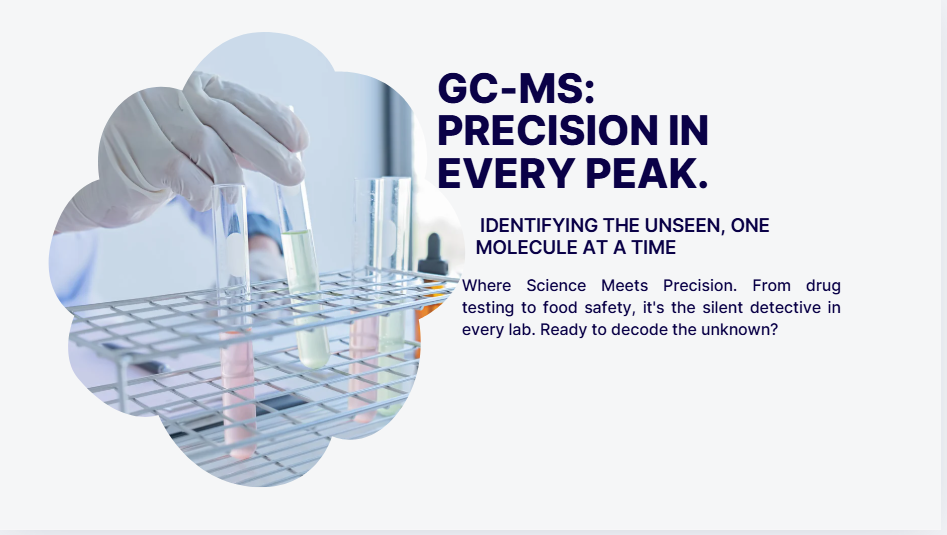
Gas Chromatography Mass Spectrometry (GC-MS) is a powerful analytical technique widely used in various scientific fields, including pharmaceuticals, environmental analysis, food safety, and forensic science. It combines two sophisticated techniques: Gas Chromatography (GC) for separating compounds and Mass Spectrometry (MS) for identifying them at a molecular level. The synergy of GC and MS enables precise, reliable, and highly sensitive chemical analysis.
This article explores the principles, working mechanisms, and key applications of GC-MS, making it easier to understand why this technique is indispensable for modern analytical laboratories.
Video Guide: Understanding Gas Chromatography–Mass Spectrometry (GC-MS)
Principles of GC-MS
1. Gas Chromatography (GC) – Separation of Compounds
Gas Chromatography is an analytical technique used to separate volatile compounds within a mixture. The process follows these steps:
- Injection: The sample, often in liquid form, is injected into the system where it is vaporized.
- Carrier Gas Flow: An inert gas (such as helium, nitrogen, or hydrogen) carries the vaporized sample through the chromatographic column.
- Column Separation: The column is coated with a stationary phase that interacts differently with each compound, leading to separation based on volatility and affinity.
- Detector Response: Compounds exit the column at different times, creating chromatographic peaks that correspond to individual components.
2. Mass Spectrometry (MS) – Identification of Compounds
Once compounds are separated in the GC column, they enter the mass spectrometer, where they are ionized, fragmented, and analyzed based on their mass-to-charge ratio (m/z). The MS process consists of:
- Ionization: Molecules are bombarded with electrons, causing them to fragment into ions.
- Mass Analyzer: The ions are separated based on their m/z ratio using quadrupole, time-of-flight (TOF), or ion trap analyzers.
- Detection: The detector records the ion intensities and generates a mass spectrum.
- Data Interpretation: The mass spectrum is compared with known databases for compound identification.
Instrumentation and Components of GC-MS
A standard GC-MS setup consists of the following components:
- Injector: Introduces the sample into the column.
- Gas Supply: Provides carrier gas for separation.
- Chromatographic Column: Separates compounds based on their interactions with the stationary phase.
- Ionization Source: Converts molecules into charged fragments.
- Mass Analyzer: Separates ions based on mass-to-charge ratio.
- Detector: Captures and records ion signals.
- Data Processing System: Analyzes chromatograms and mass spectra.
Applications of GC-MS
GC-MS is an essential tool in various fields due to its high specificity, accuracy, and sensitivity.
1. Pharmaceutical Analysis
- Drug formulation and quality control.
- Detection of impurities in active pharmaceutical ingredients (APIs).
- Identification of metabolites in biological samples.
2. Environmental Analysis
- Monitoring of air and water pollutants.
- Detection of pesticides and herbicides in soil.
- Analysis of volatile organic compounds (VOCs) in industrial emissions.
3. Food and Beverage Industry
- Identifying food contaminants and additives.
- Testing for residual solvents in processed foods.
- Authentication of essential oils and natural flavors.
4. Forensic Science
- Drug and toxicology screening in criminal investigations.
- Analysis of fire debris to detect accelerants.
- Detection of illicit substances in biological specimens.
5. Clinical and Biomedical Research
- Diagnosis of metabolic disorders.
- Screening for biomarkers in diseases.
- Analysis of lipids, steroids, and other bioactive molecules.
6. Petrochemical Industry
- Characterization of hydrocarbons.
- Analysis of fuel composition and quality control.
- Monitoring of refinery emissions.
Advantages of GC-MS
GC-MS offers several advantages over other analytical methods:
- High Sensitivity and Selectivity: Can detect compounds at very low concentrations.
- Robust Identification: Mass spectral libraries aid in precise identification.
- Quantitative and Qualitative Analysis: Provides both qualitative identification and quantitative measurement.
- Wide Application Range: Used in pharmaceuticals, forensics, environmental studies, and more.
Limitations of GC-MS
Despite its advantages, GC-MS has some limitations:
- Limited to Volatile Compounds: Non-volatile and thermally labile compounds require derivatization.
- Expensive Instrumentation: High setup and maintenance costs.
- Sample Preparation: Complex sample preparation may be required.
Future Trends in GC-MS
Advancements in GC-MS continue to enhance its capabilities:
- Miniaturized GC-MS Systems: Portable instruments for on-site analysis.
- High-Resolution Mass Spectrometry (HRMS): Improves identification accuracy.
- Automation and AI Integration: Speeds up data analysis and reduces human errors.
- Green Analytical Chemistry: Focus on eco-friendly carrier gases and solvent
REFERENCES
- Karasek FW, Clement RE. Basic gas chromatography-mass spectrometry: principles and techniques. Elsevier; 2012 Dec 2.
- Gerhardt KO. Gas chromatography—Mass spectrometry. InPrinciples and applications of gas chromatography in food analysis 1990 (pp. 59-85). Boston, MA: Springer US.
- Wang Z, Paré JJ. Gas chromatography (GC): Principles and applications. InTechniques and Instrumentation in Analytical Chemistry 1997 Jan 1 (Vol. 18, pp. 61-91). Elsevier.
LET’S CONNECT
Are you looking for expert GC-MS analysis services? ResolveMass Laboratories Inc. is your trusted partner for high-precision analytical solutions. Contact us today to discuss your project needs.

Does Gamma Irradiation or Autoclaving Affect PLGA Molecular Weight and Drug Release?
Introduction: PLGA molecular weight and drug release are closely connected because polymer chain length controls…
Reference Standards and Analytical Method Validation for Peptide-Oligonucleotide Conjugates
Introduction Developing robust Reference Standards and Analytical Method Validation strategies for peptide-oligonucleotide conjugates (POCs) is…
Case Study: How Charge Variant Profiling by icIEF Identified a Critical Comparability Failure in an Adalimumab Biosimilar Programme
Introduction Charge Variant Profiling by icIEF identified a critical comparability failure in an adalimumab biosimilar…

Case Study: Resolving an Out-of-Specification Impurity Result and Rescuing a Delayed Peptide Batch
Introduction Resolving an Out-of-Specification Impurity Result during therapeutic peptide manufacturing requires a systematic analytical and…

Scale-Up Challenges in Injectable Steroid Manufacturing
Introduction: Injectable steroid manufacturing scale-up is one of the most technically demanding transitions in sterile…
Sample Preparation and Extraction Techniques for Nitrosamine Analysis: SPE, LLE, and Headspace Methods
Introduction: Nitrosamine sample preparation and extraction is the single most consequential step in generating defensible,…