

Introduction: Industries that Rely on GC-MS Analysis
Industries that rely on GC-MS analysis span from healthcare to agriculture, demonstrating the versatility and critical importance of this analytical technique. Gas Chromatography-Mass Spectrometry (GC-MS) combines the separation power of gas chromatography with the detection capabilities of mass spectrometry, creating one of the most powerful analytical tools available today. At ResolveMass Laboratories Inc., we’ve witnessed firsthand how industries that rely on GC-MS analysis continue to expand as regulatory requirements become more stringent and the need for precise chemical identification grows across sectors.
The ability to identify and quantify complex mixtures of compounds with exceptional sensitivity and specificity makes GC-MS the gold standard for countless applications. Whether it’s ensuring drug safety in pharmaceuticals, detecting environmental pollutants, or verifying food authenticity, GC-MS analysis provides the accuracy and reliability that modern industries demand.
👉 Learn more about the working principle of GC-MS:
https://resolvemass.ca/working-principle-of-gc-ms/
At ResolveMass Laboratories Inc., we have extensive experience supporting industries that rely on GC-MS analysis as regulatory expectations increase and the demand for precise chemical identification grows.
👉 Overview of Gas Chromatography Mass Spectrometry (GC-MS):
https://resolvemass.ca/gas-chromatography-mass-spectrometry/
Summary
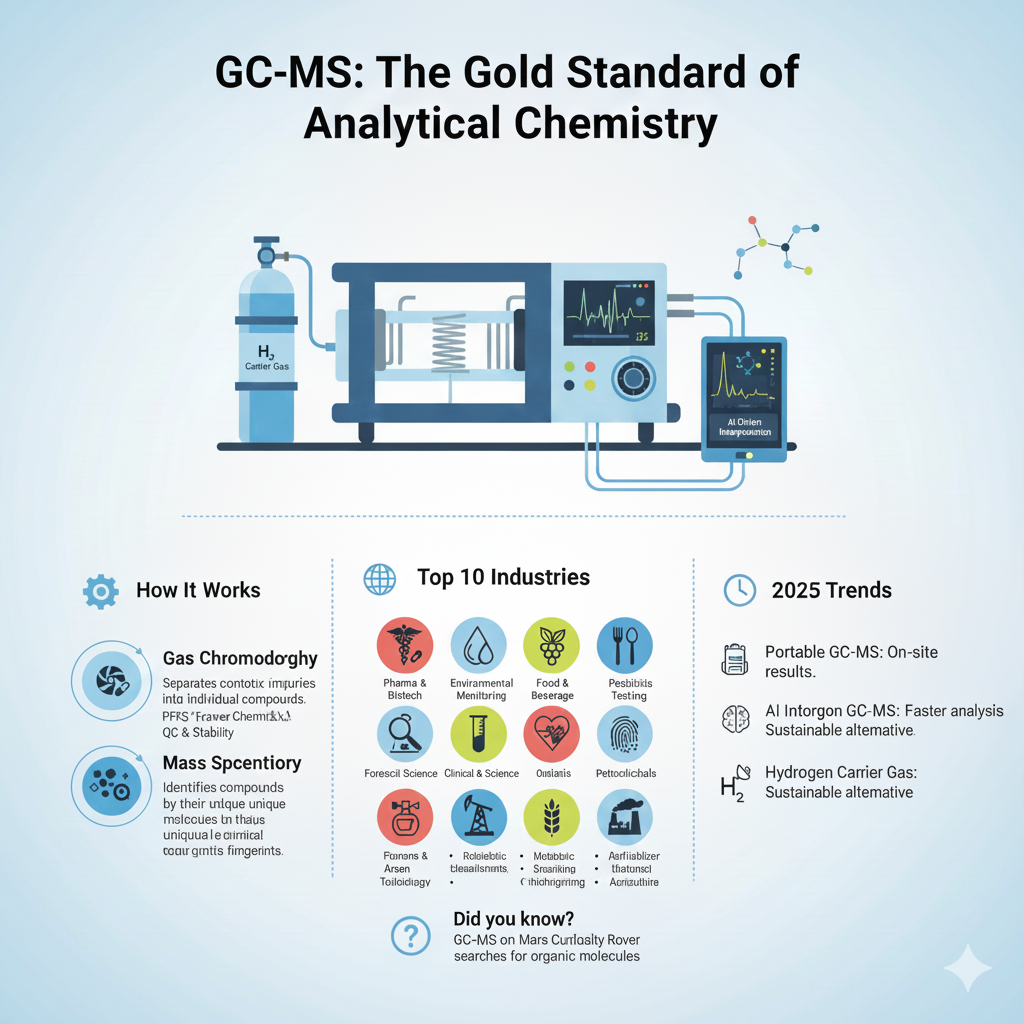
Gas Chromatography-Mass Spectrometry (GC-MS) has become an indispensable analytical tool across multiple sectors. This comprehensive guide explores the top 10 industries that rely on GC-MS analysis for quality control, safety testing, and regulatory compliance:
- Pharmaceutical Industry: Drug development, quality assurance, and metabolite identification
- Environmental Testing: Water, soil, and air quality monitoring for pollutants
- Food & Beverage: Contaminant detection, authenticity verification, and quality control
- Forensic Science: Drug identification, toxicology, and arson investigation
- Petrochemical Industry: Fuel quality testing and chemical composition analysis
- Clinical & Medical Diagnostics: Disease biomarker detection and therapeutic drug monitoring
- Agriculture: Pesticide residue analysis and soil health assessment
- Cosmetics & Personal Care: Safety testing and ingredient verification
- Cannabis Industry: Potency testing, contaminant screening, and terpene profiling
- Research & Academia: Method development and fundamental scientific research
👉 Explore a full overview of applications of GC-MS:
https://resolvemass.ca/applications-of-gcms/
1. Pharmaceutical Industry: Drug Development and Quality Control
The pharmaceutical sector relies heavily on GC-MS analysis for drug purity testing, metabolite identification, and ensuring product safety. This technique is essential throughout the entire drug lifecycle, from initial research to post-market surveillance.
Key Applications in Pharmaceuticals
- Active Pharmaceutical Ingredient (API) Verification: Confirming the identity and purity of drug compounds
- Impurity Profiling: Detecting and quantifying organic impurities and degradation products
- Residual Solvent Analysis: Ensuring manufacturing solvents are within safe limits
- Stability Testing: Monitoring drug degradation over time under various storage conditions
- Metabolite Identification: Understanding how drugs are processed in the body
👉 Dedicated service page: GC-MS Analysis for Pharmaceuticals
https://resolvemass.ca/gc-ms-analysis-for-pharmaceuticals/
👉 Deep dive into GC-MS residual solvent analysis:
https://resolvemass.ca/gcms-residual-solvent-analysis-what-you-must-know/
👉 Method optimization support:
https://resolvemass.ca/gcms-method-development-service/
Regulatory Compliance
The pharmaceutical industry faces strict regulations from agencies like the FDA, EMA, and Health Canada. GC-MS analysis provides the precision necessary to meet ICH (International Council for Harmonisation) guidelines for analytical method validation. At ResolveMass Laboratories Inc., we understand that pharmaceutical companies need not just accurate results, but also comprehensive documentation and validation to support regulatory submissions.
Why Industries That Rely on GC-MS Analysis Choose This Method: The combination of chromatographic separation and mass spectral identification provides unambiguous compound identification that other techniques cannot match.
2. Environmental Testing: Protecting Our Ecosystem
Environmental laboratories use GC-MS analysis to detect pollutants, persistent organic pollutants (POPs), and hazardous chemicals in water, soil, and air samples. This testing is crucial for monitoring environmental health and ensuring compliance with environmental protection regulations.
Environmental Monitoring Applications
| Sample Type | Common Contaminants Analyzed | Regulatory Standards |
|---|---|---|
| Water | VOCs, pesticides, PAHs, PCBs | EPA Method 8260, 8270 |
| Soil | Petroleum hydrocarbons, pesticides | EPA Method 8015, 8081 |
| Air | VOCs, SVOCs, industrial emissions | EPA Method TO-15, TO-13 |
Critical Environmental Parameters
- Volatile Organic Compounds (VOCs): Detecting gasoline components, industrial solvents, and cleaning agents
- Semi-Volatile Organic Compounds (SVOCs): Identifying pesticides, herbicides, and polychlorinated biphenyls (PCBs)
- Polyaromatic Hydrocarbons (PAHs): Monitoring combustion byproducts and industrial pollutants
- Emerging Contaminants: Detecting pharmaceutical residues and microplastics in water systems
Industries that rely on GC-MS analysis for environmental testing include municipal water treatment facilities, environmental consulting firms, and government regulatory agencies. The sensitivity of GC-MS allows detection at parts-per-billion (ppb) or even parts-per-trillion (ppt) levels, which is essential for protecting public health.
- 👉 Learn more about GC-MS analysis services:
https://resolvemass.ca/gcms-analysis-service/ - 👉 GC-MS testing availability across regions:
https://resolvemass.ca/gcms-analysis-in-united-states/
3. Food & Beverage Industry: Ensuring Safety and Authenticity
Food testing laboratories utilize GC-MS analysis to detect pesticide residues, verify product authenticity, identify contaminants, and ensure compliance with food safety standards. This protects consumers and maintains brand integrity in an increasingly quality-conscious market.
Food Safety Applications
- Pesticide Residue Analysis: Multi-residue screening for hundreds of pesticides in fruits, vegetables, and grains
- Food Authenticity Testing: Detecting adulteration in olive oil, honey, vanilla extract, and other high-value products
- Flavor and Aroma Profiling: Identifying volatile compounds that contribute to food quality
- Contaminant Detection: Finding toxins, mycotoxins, and chemical contaminants
- Packaging Migration Studies: Ensuring packaging materials don’t contaminate food products
👉 Specialized pesticide testing using GC-MS in Canada:
https://resolvemass.ca/pesticide-testing-services-using-gc-ms-in-canada/
Why Food Industries Rely on GC-MS Analysis
The complexity of food matrices makes GC-MS particularly valuable. A single sample might contain thousands of compounds, and GC-MS can separate and identify specific compounds of concern even at trace levels. For industries that rely on GC-MS analysis in the food sector, this capability is non-negotiable for meeting standards set by organizations like the FDA, CFIA (Canadian Food Inspection Agency), and international bodies like Codex Alimentarius.
4. Forensic Science: Criminal Investigation and Legal Evidence
Forensic laboratories depend on GC-MS analysis for drug identification, toxicology screening, arson investigation, and trace evidence analysis. The technique’s ability to provide definitive identification makes it admissible in court and essential for criminal justice.
Forensic Applications
- Drug Identification: Confirming the presence of controlled substances in seized materials
- Toxicology: Detecting drugs, poisons, and alcohol in biological samples (blood, urine, tissue)
- Arson Investigation: Identifying accelerants like gasoline, kerosene, or lighter fluid at fire scenes
- Explosives Analysis: Detecting residues from explosive materials
- Trace Evidence: Analyzing paint chips, fibers, and other microscopic evidence
👉 Learn more about GC-MS analytical services:
https://resolvemass.ca/gcms-analysis-service-2/
Legal Standards
Industries that rely on GC-MS analysis in forensics must maintain chain-of-custody documentation and follow strict quality control procedures. The results can determine guilt or innocence, making accuracy and reliability paramount. ResolveMass Laboratories Inc. understands that forensic analysis requires not just technical excellence but also meticulous documentation and expert testimony capabilities.
5. Petrochemical Industry: Fuel Quality and Chemical Analysis
The petrochemical sector uses GC-MS analysis for fuel composition analysis, quality control, additive verification, and detecting contaminants in petroleum products. This ensures products meet specifications and performance standards.
Petrochemical Testing Parameters
- Fuel Composition: Analyzing hydrocarbon distributions in gasoline, diesel, and jet fuel
- Additive Analysis: Verifying the presence and concentration of performance enhancers
- Contaminant Detection: Identifying sulfur compounds, oxygenates, and impurities
- Product Specifications: Ensuring compliance with ASTM standards
- Biofuel Analysis: Characterizing biodiesel and ethanol blends
👉 GC-MS method customization support:
https://resolvemass.ca/gc-ms-method-development/
The petrochemical industry requires rapid, accurate analysis to maintain production efficiency and product quality. Industries that rely on GC-MS analysis in this sector benefit from the technique’s ability to handle complex hydrocarbon mixtures and provide quantitative data essential for process optimization.
6. Clinical & Medical Diagnostics: Disease Detection and Monitoring
Medical laboratories employ GC-MS analysis for metabolomics, newborn screening, therapeutic drug monitoring, and identifying disease biomarkers. This contributes to personalized medicine and improved patient outcomes.
Clinical Applications
- Newborn Screening: Detecting inborn errors of metabolism like phenylketonuria (PKU)
- Therapeutic Drug Monitoring: Ensuring medication levels remain within therapeutic ranges
- Metabolomics: Profiling metabolic changes associated with disease states
- Steroid Hormone Analysis: Measuring cortisol, testosterone, and other hormones
- Toxicology: Detecting drugs of abuse or toxic exposures in patients
Diagnostic Advantages
For industries that rely on GC-MS analysis in healthcare, the technique offers superior specificity compared to immunoassays, reducing false positives and providing more reliable diagnostic information. The sensitivity of modern GC-MS systems allows detection of biomarkers at clinically relevant concentrations.
👉 GC-MS analysis capabilities overview:
https://resolvemass.ca/applications-of-gcms/
7. Agriculture: Crop Protection and Soil Health
Agricultural testing laboratories use GC-MS analysis to monitor pesticide residues in crops, analyze soil composition, test fertilizers, and ensure agricultural product safety. This supports sustainable farming practices and regulatory compliance.
Agricultural Testing Focus Areas
| Application | Purpose | Impact |
|---|---|---|
| Pesticide Residue Testing | Ensure safe levels in produce | Consumer safety, export compliance |
| Soil Analysis | Detect contaminants and nutrients | Crop health, environmental protection |
| Fertilizer Testing | Verify composition | Product quality, regulatory compliance |
| Herbicide Analysis | Monitor environmental persistence | Water quality protection |
Industries that rely on GC-MS analysis in agriculture face increasing pressure to demonstrate sustainable practices. GC-MS provides the analytical rigor needed to balance productivity with environmental stewardship, helping farmers and agricultural businesses meet organic certification requirements and export standards.
👉 Pesticide and agrochemical testing services:
https://resolvemass.ca/pesticide-testing-services-using-gc-ms-in-canada/
8. Cosmetics & Personal Care: Consumer Safety Testing
Cosmetics manufacturers rely on GC-MS analysis to test for prohibited substances, verify ingredient authenticity, ensure product safety, and comply with cosmetic regulations. Consumer safety and brand protection drive these testing requirements.
Cosmetics Testing Applications
- Phthalate Detection: Screening for banned plasticizers in fragrances and nail polish
- Fragrance Analysis: Identifying allergenic compounds and verifying natural ingredients
- Volatile Impurities: Detecting solvents and contamination from manufacturing
- Preservative Verification: Confirming the presence and concentration of antimicrobials
- Contaminant Screening: Finding heavy metals, pesticides, and other unwanted substances
👉 GC-MS services supporting consumer products:
https://resolvemass.ca/gcms-analysis-service/
The cosmetics industry has seen increased regulatory scrutiny globally, with the EU’s Cosmetics Regulation and similar standards worldwide requiring comprehensive safety testing. Industries that rely on GC-MS analysis for cosmetics testing can demonstrate due diligence and protect consumers from potentially harmful exposures.
9. Cannabis Industry: Quality Control and Regulatory Compliance
The rapidly growing cannabis industry relies on GC-MS analysis for potency testing, terpene profiling, pesticide screening, and contaminant detection. As legalization expands, rigorous testing has become mandatory in many jurisdictions.
Cannabis Testing Requirements
- Cannabinoid Profiling: Although better suited for HPLC, GC-MS can be used for certain cannabinoid analyses
- Terpene Analysis: Identifying and quantifying the aromatic compounds that define strain characteristics
- Pesticide Residue Testing: Multi-residue screening for agricultural chemicals
- Residual Solvent Analysis: Detecting extraction solvents like butane, propane, or ethanol
- Mycotoxin Detection: Screening for fungal contamination
👉 GC-MS analysis of plant extracts:
https://resolvemass.ca/gcms-analysis-of-plant-extract/
Industries that rely on GC-MS analysis in the cannabis sector must navigate evolving regulations while maintaining consumer safety. At ResolveMass Laboratories Inc., we’ve observed that comprehensive testing not only ensures compliance but also builds consumer confidence in a market where quality differentiation is crucial.
10. Research & Academia: Method Development and Scientific Discovery
Universities and research institutions use GC-MS analysis for method development, fundamental scientific research, teaching, and pushing the boundaries of analytical chemistry. This drives innovation that benefits all other industries.
Research Applications
- New Method Development: Creating novel analytical approaches for emerging contaminants
- Fundamental Research: Understanding chemical reactions and molecular structures
- Environmental Studies: Investigating pollution sources and environmental fate of chemicals
- Archaeological Chemistry: Dating artifacts and identifying historical materials
- Astrochemistry: Analyzing extraterrestrial samples and meteorites
Research institutions represent industries that rely on GC-MS analysis not just for routine testing but for discovery and innovation. The techniques developed in academic settings often become the standard methods adopted by regulatory agencies and commercial laboratories.
👉 Why ResolveMass is trusted for GC-MS across North America:
https://resolvemass.ca/best-gc-ms-analysis-services-in-north-america-how-to-compare-labs-for-accuracy-and-turnaround-time/
The Future of Industries That Rely on GC-MS Analysis
The role of GC-MS continues to expand as analytical requirements become more demanding. Emerging trends include:
- High-Resolution Mass Spectrometry: Providing even greater specificity and sensitivity
- Miniaturization: Portable GC-MS units for field testing
- Automation: High-throughput analysis for increased productivity
- Artificial Intelligence: Data interpretation and method optimization
- Green Chemistry: Reducing solvent use and environmental impact of analysis
Regional GC-MS Expertise
ResolveMass Laboratories Inc. provides GC-MS analysis services across key regions:
- 👉 GC-MS analysis in Montreal
https://resolvemass.ca/gcms-analysis-in-montreal/ - 👉 Why ResolveMass is the best choice in Montreal, Canada
https://resolvemass.ca/gcms-analysis-in-montreal-canada-why-resolvemass-laboratories-inc-is-your-best-choice/
Conclusion: Industries that Rely on GC-MS Analysis
Industries that rely on GC-MS analysis—from pharmaceuticals to environmental testing—depend on this technology for accuracy, safety, and regulatory compliance. As quality standards evolve, GC-MS remains the gold standard for chemical analysis across all sectors. ResolveMass Laboratories Inc. delivers expert GC-MS analysis services with the precision and reliability your industry demands.
Frequently Asked Questions:
Food and Fragrance Analysis.
Aromatic compounds such as fatty acids, esters, aldehydes, alcohols, and terpenes present in food and beverages can be easily analyzed using GC-MS. The technique can also be used to detect c spoilage or contamination of food.
GC is used to detect air pollutants, groundwater contaminants, pesticides, and industrial solvents at trace levels. Environmental laboratories rely on GC to meet regulatory requirements and assess human and ecological exposure to hazardous chemicals.
Yes. GC is widely used to analyze pesticide residues, flavor compounds, contaminants, and packaging migrants in food products. It helps ensure regulatory compliance, product authenticity, and consumer safety across global food supply chains.
Gas Chromatography is used to separate, detect, and quantify volatile and semi-volatile compounds in complex samples. In real-world settings, GC supports pharmaceutical quality control, environmental monitoring, food safety, forensic investigations, and industrial process control by delivering reliable chemical composition data.
GC is preferred because volatile compounds can be vaporized without decomposition, allowing efficient separation in the gas phase. The technique provides high resolution, sensitivity, and reproducibility, making it ideal for solvents, hydrocarbons, pesticides, and VOCs that are difficult to analyze by liquid-based techniques.
Reference
- Environmental and Forensic applications of field-portable GC-MS: An overview.Journal of the American Society for Mass Spectrometry.https://pubs.acs.org/doi/abs/10.1016/S1044-0305(01)00251-3
- A Review: Uses of Gas Chromatography-Mass Spectrometry (GC-MS)
Technique for Analysis of Bioactive Natural Compounds of Some
Plants.International Journal of Toxicological and Pharmacological Research 2017; 9(1); 81-85.https://www.researchgate.net/profile/Abeer-Fauzi/publication/316940966_A_Review_Uses_of_Gas_Chromatography-Mass_Spectrometry_GC-MS_Technique_for_Analysis_of_Bioactive_Natural_Compounds_of_Some_Plants/links/591a2400a6fdccb149f382b8/A-Review-Uses-of-Gas-Chromatography-Mass-Spectrometry-GC-MS-Technique-for-Analysis-of-Bioactive-Natural-Compounds-of-Some-Plants.pdf - A REVIEW ON GAS CHROMATOGRAPHY-MASS SPECTROMETRY.World Journal of Pharmaceutical Research.https://wjpr.s3.ap-south-1.amazonaws.com/article_issue/1620211140.pdf
- Gas Chromatography and Mass Spectroscopy (GC-MS) Technique for Food Analysis.https://link.springer.com/chapter/10.1007/978-3-030-68636-9_9
- Analytical Approaches Using GC-MS for the Detection of Pollutants in Wastewater Towards Environmental and Human Health Benefits: A Comprehensive Review.https://www.mdpi.com/2227-9040/13/7/253
About the Author


