
OVERVIEW
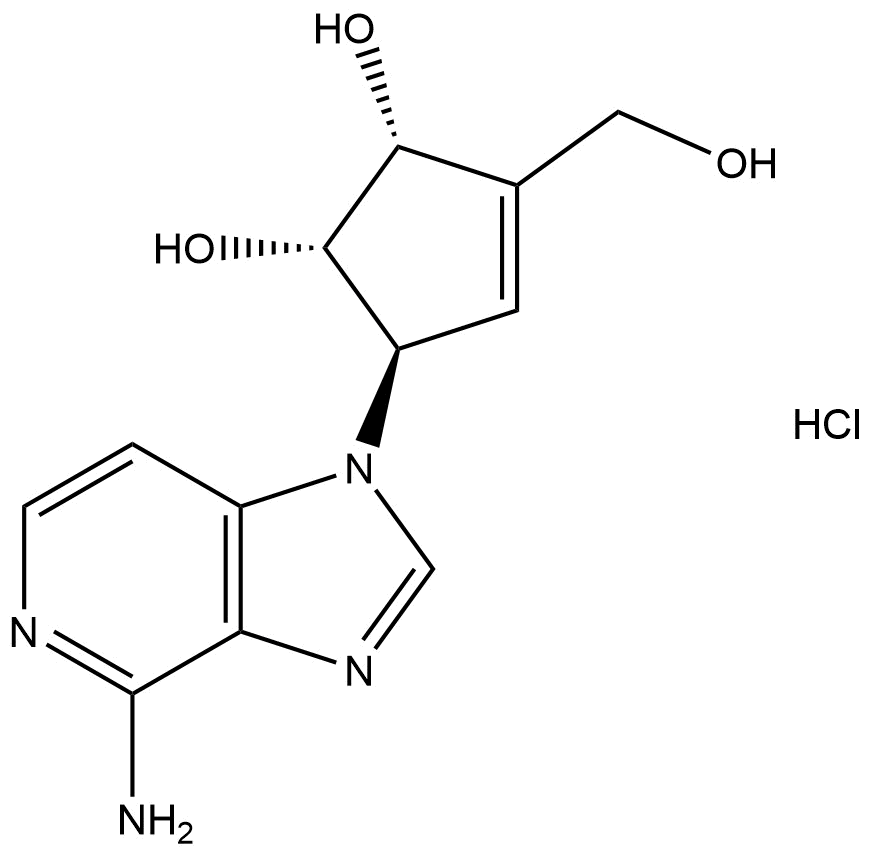
3-Deazaneplanocin A hydrochloride | CAS 120964-45-6 , commonly abbreviated as DZNep hydrochloride, is a potent small-molecule inhibitor of S-adenosylhomocysteine (SAH) hydrolase. This compound has gained significant attention in molecular biology, epigenetics, and cancer research due to its ability to interfere with histone methylation processes, particularly those mediated by the enhancer of zeste homolog 2 (EZH2) enzyme. DZNep hydrochloride is widely used as a research tool for the study of epigenetic regulation, gene expression, and apoptosis in cancer cell lines. Its hydrochloride form ensures enhanced solubility and stability, making it ideal for in vitro applications and mechanistic studies.
CHEMICAL INFORMATION
-
Chemical Name: 3-Deazaneplanocin A hydrochloride
-
CAS Number: 120964-45-6
-
Molecular Formula: C11H13N5O·HCl
-
Molecular Weight: 298.73 g/mol
-
Synonyms: DZNep hydrochloride, 3-Deazaneplanocin A HCl, DZNep·HCl
-
Appearance: White to off-white crystalline powder
-
Solubility: Soluble in water, DMSO, and other polar solvents
DZNep hydrochloride is structurally similar to adenosine analogs and exerts its bioactivity primarily through the inhibition of SAH hydrolase, resulting in global changes in methylation patterns within cells. Its specificity and potency make it a preferred agent for laboratory research involving epigenetic modulation.
MECHANISM OF ACTION
DZNep hydrochloride functions as a selective inhibitor of SAH hydrolase, an enzyme crucial in the regulation of methyltransferase activity. By inhibiting SAH hydrolase, DZNep increases intracellular levels of S-adenosylhomocysteine, which in turn suppresses methyltransferase-mediated histone methylation. One of the most notable outcomes of this inhibition is the downregulation of EZH2, a methyltransferase responsible for trimethylation of histone H3 on lysine 27 (H3K27me3).
The suppression of EZH2 leads to the reactivation of tumor suppressor genes and induction of apoptosis in cancer cells, highlighting DZNep hydrochloride’s potential as a research compound in oncology. Beyond cancer, its effects on global methylation patterns make it a valuable tool in epigenetic studies across various biological systems.
APPLICATIONS
3-Deazaneplanocin A hydrochloride | CAS 120964-45-6 hydrochloride is extensively employed in biomedical research and laboratory studies, including but not limited to:
-
Cancer Research:
-
Investigation of EZH2-mediated histone methylation in tumor progression
-
Study of apoptosis, cell cycle arrest, and growth inhibition in cancer cell lines
-
Mechanistic studies on tumor suppressor gene reactivation
-
-
Epigenetic Studies:
-
Modulation of histone and DNA methylation patterns
-
Functional analysis of methyltransferase pathways
-
Exploration of epigenetic regulation in normal and diseased cells
-
-
Pharmacological Research:
-
Evaluation of combination therapies with chemotherapeutic agents
-
In vitro screening for potential anti-cancer drugs targeting epigenetic enzymes
-
-
Molecular Biology Applications:
-
Analysis of gene expression changes following epigenetic modulation
-
Assessment of downstream signaling pathways affected by EZH2 inhibition
-
The compound is predominantly used in cell culture studies and mechanistic assays. Researchers often prepare DZNep hydrochloride as a stock solution in DMSO and apply it at varying concentrations depending on experimental requirements.
SUMMARY
3-Deazaneplanocin A hydrochloride (DZNep HCl) is a highly potent epigenetic modulator and SAH hydrolase inhibitor with significant applications in cancer research and molecular biology. Its ability to regulate EZH2 activity, induce apoptosis, and modulate histone methylation makes it a powerful tool for researchers studying gene regulation and therapeutic pathways. ResolveMass Laboratories Inc. provides high-quality DZNep hydrochloride suitable for in vitro research, offering reliability and consistency for cutting-edge epigenetic studies.
![4-(4-amino-1H-pyrazolo[3,4-d]pyrimidin-3-yl)phenol | CAS 1293915-57-7](https://resolvemass.ca/wp-content/uploads/2026/01/4-4-amino-1H-pyrazolo34-dpyrimidin-3-ylphenol-CAS-1293915-57-7-2.png)
Reviews
There are no reviews yet.