

OVERVIEW
Deuterated 3-(Trimethoxysilyl)propyl methacrylate-d5 | CAS 2530-85-0 is a specialized isotopically labeled silane coupling agent engineered to support advanced analytical, materials science, and surface-modification applications. As the deuterated analogue of the widely used TMSPMA, this compound integrates the reactive methacrylate functionality with a trimethoxysilane group while incorporating deuterium (D5) substitution for enhanced spectroscopic detectability.
Because of its dual reactivity—methacrylate polymerization and silane surface attachment—this molecule enables precise control over molecular tracking, interface engineering, and reaction pathway elucidation. The presence of deuterium significantly improves signal clarity in NMR, MS, and vibrational spectroscopy, making the compound an essential tool for research in polymer chemistry, nanomaterials, and surface engineering.
CHEMICAL INFORMATION
Chemical Name: Deuterated 3-(Trimethoxysilyl)propyl methacrylate-d5
CAS Number: 2530-85-0
Molecular Formula: C10H15D5O5Si
Functional Groups: Methacrylate, Trimethoxysilane
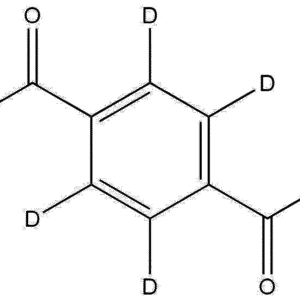
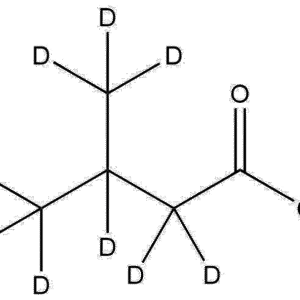
Deuteration Sites: Propyl linker backbone (five deuterium atoms)
The unique isotopic labeling alters vibrational frequencies and NMR characteristics without affecting the chemical reactivity of the parent molecule. As a result, the compound behaves identically in surface-bonding and polymer incorporation reactions while offering enhanced analytical clarity.
KEY FEATURES
-
Isotopically labeled with five deuterium atoms (D5) for superior analytical resolution
-
Dual functionality: methacrylate for polymerization + silane for surface attachment
-
Highly reactive toward hydroxyl-rich substrates such as glass, silica, and metal oxide surfaces
-
Excellent for mechanistic studies, polymer tracing, and spectroscopic investigations
-
Supports the design of hybrid organic–inorganic materials
MECHANISM OF ACTION
The compound features two reactive domains:
1. Silane Reactivity
The trimethoxysilane group undergoes hydrolysis to form silanols, followed by condensation with surface hydroxyl groups. This results in robust, covalent Si–O–Si linkages on:
-
Silica nanoparticles
-
Glass substrates
-
Oxide surfaces (TiO₂, Al₂O₃, ITO)
2. Methacrylate Reactivity
The methacrylate moiety participates in free-radical polymerization. Once bonded to a substrate, the molecule can initiate or propagate organic polymer coatings and crosslinked networks.
The combination of these mechanisms supports the creation of strong, durable organic–inorganic interfaces.
APPLICATIONS
1. Advanced Spectroscopic Studies
Deuteration provides clean signals in:
-
NMR spectroscopy: Reduced proton background enhances peak resolution
-
Mass spectrometry (MS): Stable isotopic labeling facilitates polymer mapping
-
IR/Raman: Deuterium shifts C–D vibrational bands, aiding structural assignment
Researchers frequently employ this compound to investigate polymerization kinetics, degradation pathways, and surface chemistry transformations.
2. Polymer Synthesis and Characterization
The methacrylate group allows straightforward incorporation into polymer chains, enabling:
-
Polymer architecture tracing
-
Copolymer distribution studies
-
End-group and branching analysis
-
Mechanistic insights into radical polymerization processes
3. Surface Functionalization of Nanomaterials
This deuterated silane is ideal for customizing surfaces used in advanced materials:
-
Silica nanoparticles and nanofibers
-
Glass microbeads
-
Microfluidic device channels
-
Optical substrates and sensors
It provides improved monitoring of monolayer formation, surface density, and stability because the deuterium labels enhance analytical detectability.
4. Development of Hybrid Materials
The compound supports the fabrication of hybrid materials used in:
-
Adhesives and coatings
-
Composite materials
-
Biomaterials and biointerfaces
-
Thin film technologies
Its dual-reactive nature enables precise tuning of mechanical, chemical, and interfacial properties.
BENEFITS FOR RESEARCH AND INDUSTRY
-
Enhanced Analytical Accuracy: Deuteration improves quantitative measurements and mechanistic clarity.
-
High Surface Stability: Strong siloxane bonding ensures durable surface modification.
-
Versatility: Suitable for organic polymer networks, inorganic surfaces, and mixed-material engineering.
-
Compatibility: Works with standard radical polymerization conditions and common surface-functionalization protocols.
-
Traceability: Ideal for isotope-aided tracing in complex material systems.
WHY CHOOSE RESOLVEMASS LABORATORIES INC.
ResolveMass Laboratories specializes in high-purity isotopically labeled silanes and advanced functional chemicals for research and industrial innovation. Our products undergo strict quality control, ensuring consistent isotopic purity, superior chemical quality, and reproducible performance in analytical and materials science applications.
Our scientific support team ensures you have access to expert guidance for application development, analytical workflows, and material compatibility questions.
Learn more through,
Deuterated Polymers: A Cornerstone Guide to Synthesis, Applications, and Future Trends
Availability of All the Deuterated Chemicals at ResolveMass Laboratories Inc.
ResolveMass Laboratories: Leading Deuterated Chemical Synthesis Company in the United States.
Deuterated Internal Standards for LC-MS: Selection & Custom Synthesis
How to Choose the Right Deuterated Labelled Chemical Synthesis Company in Canada
How to Choose the Right Deuterium Labelled Compounds Supplier for Your Lab
Deuterium-Labelled Compounds — Synthesis, Applications & Ordering
Custom Synthesis of Deuterated Chemicals
Reviews
There are no reviews yet.