

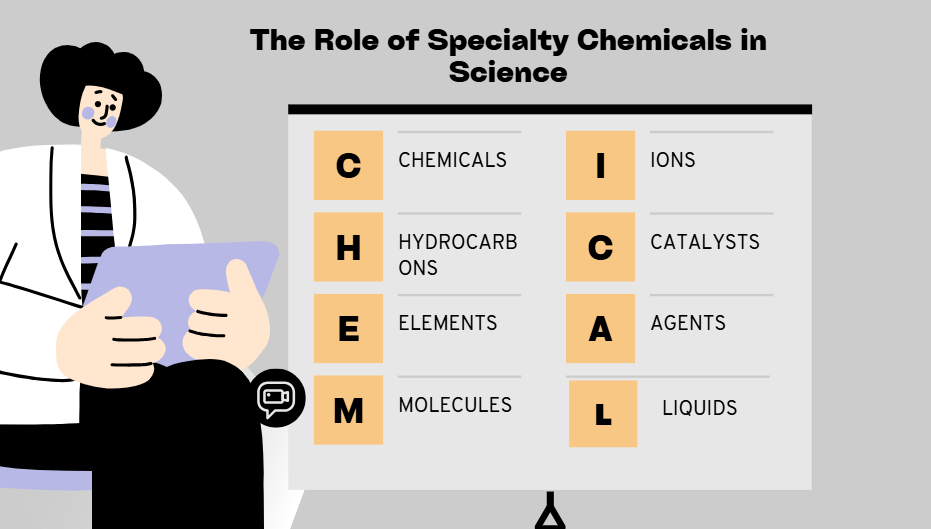
Specialty chemical synthesis plays a pivotal role in modern industries, particularly in pharmaceuticals, biotechnology, and material science. These highly customized chemicals serve as essential building blocks for drug development, biological research, and advanced materials. With rising demands for precision, purity, and sustainability, specialty chemical synthesis has evolved into a critical component for innovation and industrial progress.
In this blog, we explore how specialty chemical synthesis supports these industries, key advancements, challenges, and future trends that will shape the landscape.
The Role of Specialty Chemical Synthesis in Pharmaceuticals
1. Drug Discovery and Development
Specialty chemicals serve as intermediates and reagents in pharmaceutical R&D, enabling the synthesis of active pharmaceutical ingredients (APIs) and complex drug molecules. Advances in chiral synthesis and high-purity reagents have improved drug efficacy and reduced side effects 1.
2. Custom API Synthesis
Pharmaceutical companies require tailored APIs that meet regulatory and therapeutic requirements. Custom synthesis of APIs ensures:
- Enhanced bioavailability
- Optimal stability and solubility
- Scalable manufacturing for commercial production 2.
3. Green Chemistry and Sustainable Drug Manufacturing
Sustainability in pharmaceutical synthesis is gaining traction with:
- Biocatalysis and enzyme-mediated transformations
- Flow chemistry for efficient reactions
- Reduced waste and lower energy consumption 3.
Specialty Chemical Synthesis in Biotechnology
1. Bioprocessing and Biopharmaceuticals
In biotechnology, specialty chemicals are used for:
- Protein engineering and peptide synthesis
- Oligonucleotide synthesis for genetic research
- Cell culture media optimization These applications have been crucial in monoclonal antibody production, vaccine development, and gene therapy 4.
2. Enzyme and Peptide Synthesis
Biocatalysis is revolutionizing biotechnology by providing highly selective and efficient reactions, reducing reliance on harsh chemical processes. Peptide-based therapeutics and enzyme-based drug production rely on specialty chemical synthesis for precise modifications and high yields.
3. Bioinspired and Biodegradable Polymers
Biodegradable polymers, crucial for tissue engineering and drug delivery, are developed using specialty monomers and catalysts. These advancements support the transition toward more biocompatible and environmentally friendly materials.
Specialty Chemical Synthesis in Material Science
1. Advanced Polymers and Nanomaterials
Material science relies on customized specialty chemicals to develop high-performance polymers, nanomaterials, and coatings. Applications include:
- Conductive polymers for flexible electronics
- Nanoparticles for drug delivery and imaging
- Smart materials with self-healing properties 5.
2. Catalysts and Functional Coatings
Catalysts derived from specialty chemicals enable:
- More efficient industrial processes
- Selective chemical transformations
- Environmental-friendly coatings and adhesives
Functional coatings developed using specialty chemicals improve performance in automotive, aerospace, and biomedical applications, offering enhanced durability and resistance to environmental factors.
3. Sustainable and Bio-Based Materials
With increasing focus on sustainability, specialty chemicals are facilitating the shift towards bio-based plastics, renewable composites, and green adhesives. These innovations are key to reducing reliance on fossil-based raw materials and improving recyclability 6.
Challenges in Specialty Chemical Synthesis
1. Scalability and Cost Constraints
Many specialty chemical processes require complex multi-step synthesis, which can limit scalability and increase production costs.
2. Regulatory Compliance
Ensuring compliance with FDA, EMA, and REACH regulations requires extensive documentation, validation, and safety assessments.
3. Environmental Impact and Sustainability
The industry faces pressure to reduce carbon footprints, minimize hazardous waste, and adopt green chemistry principles.
REFERENCES
- Pollak P. Fine chemicals: the industry and the business. John Wiley & Sons; 2011 Mar 29.
- Niemeyer CM. Nanoparticles, proteins, and nucleic acids: biotechnology meets materials science. Angewandte Chemie International Edition. 2001 Nov 19;40(22):4128-58.
- Baskar C, Baskar S, Dhillon RS, editors. Biomass conversion: The interface of biotechnology, chemistry and materials science. Springer Science & Business Media; 2012 May 8.
LET’S CONNECT
Looking for a reliable Custom Synthesis Service Provider? ResolveMass Laboratories Inc. offers high-quality, tailor-made synthesis solutions to meet your research and development needs.
What Is the Difference Between an Antisense Oligonucleotide and a Peptide-Oligonucleotide Conjugate?
Introduction: Anyone comparing an antisense oligonucleotide vs peptide-oligonucleotide conjugate is really asking a structural question:…

Audit-Ready Extractables and Leachables (E&L) Data: How a Drug Establishment Licence Testing Lab Protects Your Submission
Introduction Producing audit-ready Extractables and Leachables (E&L) data depends on a scientifically defensible, cGMP-compliant testing…

How to Choose a Peptide CDMO: A Sponsor’s Evaluation Checklist for Synthesis, Scale-Up, and Quality
Introduction How to Choose a Peptide CDMO? Sponsoring organizations must perform a comprehensive technical audit…

How Long Does Generic Drug Development Take at a CDMO? Timeline Expectations Explained
Introduction: For sponsors planning an Abbreviated New Drug Application (ANDA) or Abbreviated New Drug Submission…

Peptide Technology Transfer: A Sponsor’s Step-by-Step Guide to Moving Programs Between CDMOs
CDMO Technology Transfer Peptide Technology Transfer: A Sponsor’s Step-by-Step Guide to Moving Programs Between CDMOs…
Endosomal Escape in Peptide Oligonucleotide Conjugates (POC) Therapeutics: Mechanisms, Challenges, and Engineering Solutions
Introduction Endosomal Escape in Peptide Oligonucleotide Conjugates (POC) Therapeutics refers to the physical translocation of…

