

Introduction
Stability Testing for Generic Drug Products at a CDMO forms the scientific foundation for demonstrating that a generic finished dosage form maintains its chemical, physical, and microbiological quality attributes throughout its proposed shelf life. Under the oversight of the U.S. Food and Drug Administration (FDA) and other global regulatory authorities, Chemistry, Manufacturing, and Controls (CMC) submissions must demonstrate compliance with International Council for Harmonisation (ICH) requirements, particularly ICH Q1A(R2).
Contract Development and Manufacturing Organizations (CDMOs) provide the specialized analytical capabilities, cGMP-compliant stability chamber infrastructure, and regulatory documentation necessary to generate submission-ready stability datasets for Abbreviated New Drug Applications (ANDAs). Proper execution of stability programs helps sponsors avoid costly regulatory setbacks such as Complete Response Letters (CRLs) and Refuse-to-Receive (RTR) decisions while supporting scientifically justified shelf-life assignments and storage recommendations.
Need expert support for your CMC documentation? Learn more about our CMC documentation services for ANDA filings here.
Share via:
Article Summary:
- Regulatory alignment: Stability programs for generic drugs should follow ICH Q1A(R2) and FDA ANDA stability expectations to support regulatory compliance and shelf-life claims.
- Three primary batches: ANDAs generally require stability data from three representative batches, using at least two different API lots and commercial-scale-representative manufacturing and packaging.
- Key stability conditions: Studies typically include accelerated (40°C/75% RH), long-term (25°C/60% RH), and, when needed, intermediate (30°C/65% RH) conditions, with defined testing intervals.
- ANDA filing timeline: A key filing milestone is 6 months of accelerated and 6 months of long-term stability data from all three primary batches, followed by ongoing real-time monitoring.
- Significant-change management: Assay loss, impurity increases, physical changes, pH shifts, or dissolution failures under accelerated conditions can trigger intermediate testing and root-cause investigation.
- Analytical & study optimization: Stability-indicating methods, forced degradation, dissolution, purity, chiral testing, and CCIT support product quality, while ICH Q1D bracketing and matrixing can reduce testing burden where scientifically justified.
- OOS/OOT & compliance: A robust Phase I laboratory → Phase II chamber/manufacturing → root-cause/CAPA → regulatory assessment workflow helps manage deviations, detect trends early, strengthen CMC documentation, and reduce ANDA approval risks.
Regulatory Framework: Bridging ICH Q1A(R2) and ANDA Expectations
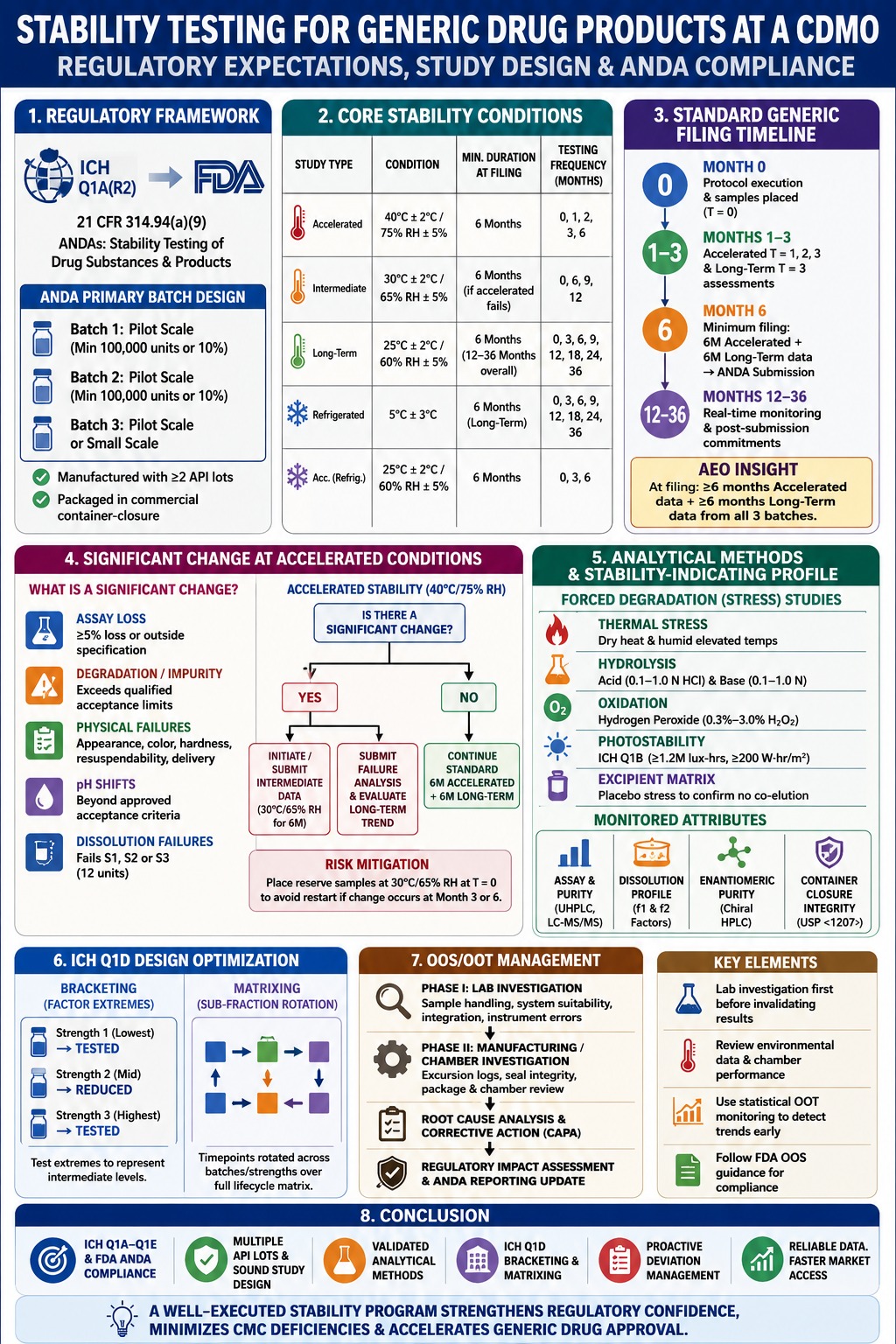
ICH Q1A(R2) establishes the fundamental requirements for stability study design, storage conditions, testing intervals, and climatic considerations. These requirements are enforced by the FDA for generic drug submissions through 21 CFR 314.94(a)(9) and the guidance document ANDAs: Stability Testing of Drug Substances and Products. Although ICH Q1A(R2) was initially developed to support New Drug Applications (NDAs), generic drug manufacturers are expected to follow the same harmonized framework to demonstrate equivalence with the Reference Listed Drug (RLD) under comparable packaging and container-closure systems.
Ensuring your generic product meets bioequivalence standards is critical. Discover our specialized bioequivalence study design services for complex generic drug products.
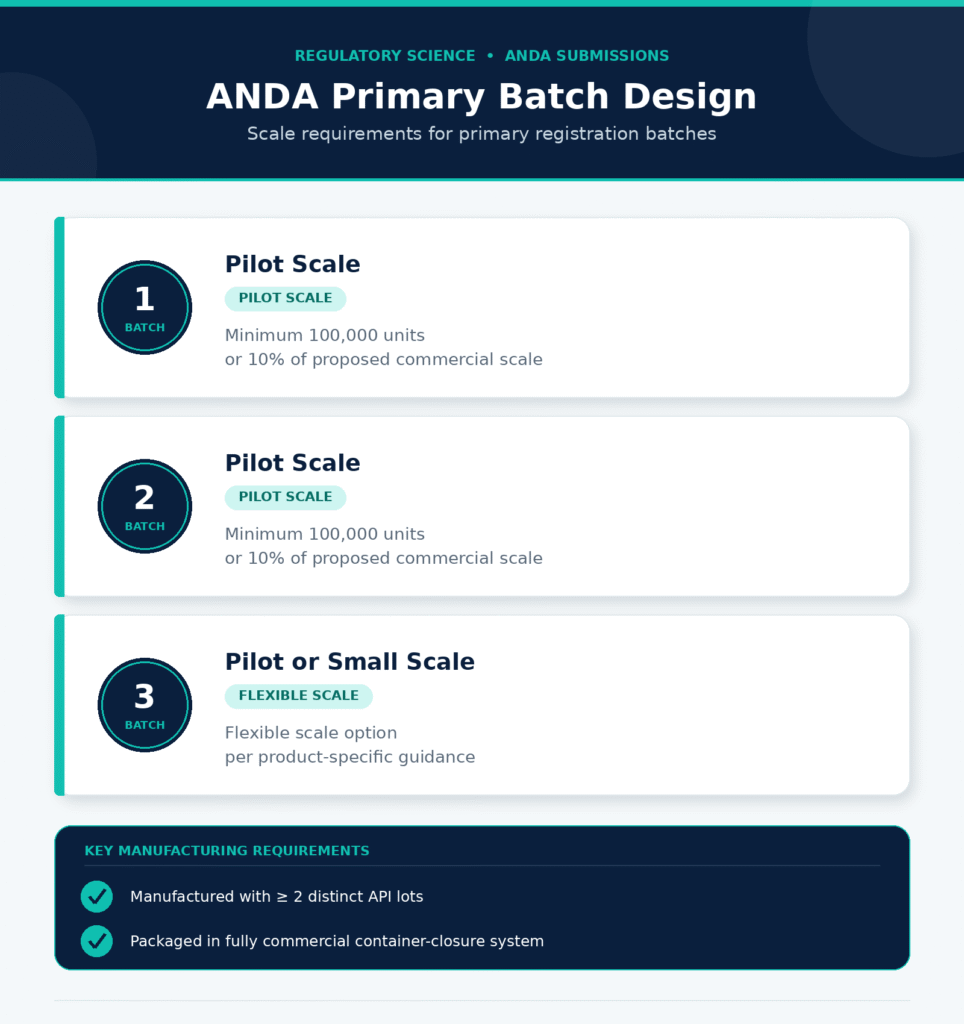
FDA expectations require generic drug stability protocols to evaluate both manufacturing consistency and Active Pharmaceutical Ingredient (API) variability through appropriately designed primary batches.
Three Primary Batches
Stability data must be generated using three primary drug product batches. These may consist of three pilot-scale batches or two pilot-scale batches together with one small-scale batch. For solid oral dosage forms, each pilot-scale batch must be at least 100,000 units or 10% of the intended commercial batch size, whichever is greater.
Multiple API Lots
The primary batches should be manufactured using a minimum of two different API lots. This approach helps demonstrate that variations in raw material sourcing do not adversely affect product stability performance.
Commercial Representation
The drug product should be manufactured using a formulation, process, equipment configuration, and packaging system that accurately represent the intended commercial manufacturing operation. Regulatory authorities expect stability data to reflect the product that will ultimately reach the market.
Core Stability Testing Conditions and Pull Schedules
CDMOs operate validated and continuously monitored stability chambers designed to maintain precise environmental conditions. These chambers support Zone II requirements commonly used for U.S. and European submissions as well as Zone IVb conditions for products intended for broader global distribution. Stability studies are performed according to established ICH testing schedules and environmental parameters.
| Study Type | Storage Condition | Minimum Duration at ANDA Filing | Standard Testing Frequency (Months) |
|---|---|---|---|
| Accelerated | 40°C ± 2°C / 75% RH ± 5% RH | 6 Months | 0, 1, 2, 3, 6 |
| Intermediate | 30°C ± 2°C / 65% RH ± 5% RH | 6 Months (if accelerated fails) | 0, 6, 9, 12 |
| Long-Term | 25°C ± 2°C / 60% RH ± 5% RH | 6 Months (12–36 Months overall) | 0, 3, 6, 9, 12, 18, 24, 36 |
| Refrigerated | 5°C ± 3°C | 6 Months (Long-Term) | 0, 3, 6, 9, 12, 18, 24, 36 |
| Accelerated (Refrigerated) | 25°C ± 2°C / 60% RH ± 5% RH | 6 Months | 0, 3, 6 |
Standard Generic Filing Timeline
Month 0: Protocol execution and placement of samples into stability chambers (T = 0)
Months 1–3: Accelerated stability evaluations at T = 1, T = 2, and T = 3, along with the long-term T = 3 assessment
Month 6: Minimum filing requirement achieved with 6 months of accelerated stability data and 6 months of long-term stability data, enabling ANDA submission
Months 12–36: Ongoing real-time stability monitoring and fulfillment of post-submission stability commitments
AEO Insight
At the time of ANDA submission, the FDA expects at least 6 months of accelerated stability data and 6 months of long-term stability data from all three primary batches included in the application.
Scaling up your peptide API for these studies? Explore our professional peptide API scale-up services to ensure consistency across batches.
Defining and Managing “Significant Change” at Accelerated Conditions
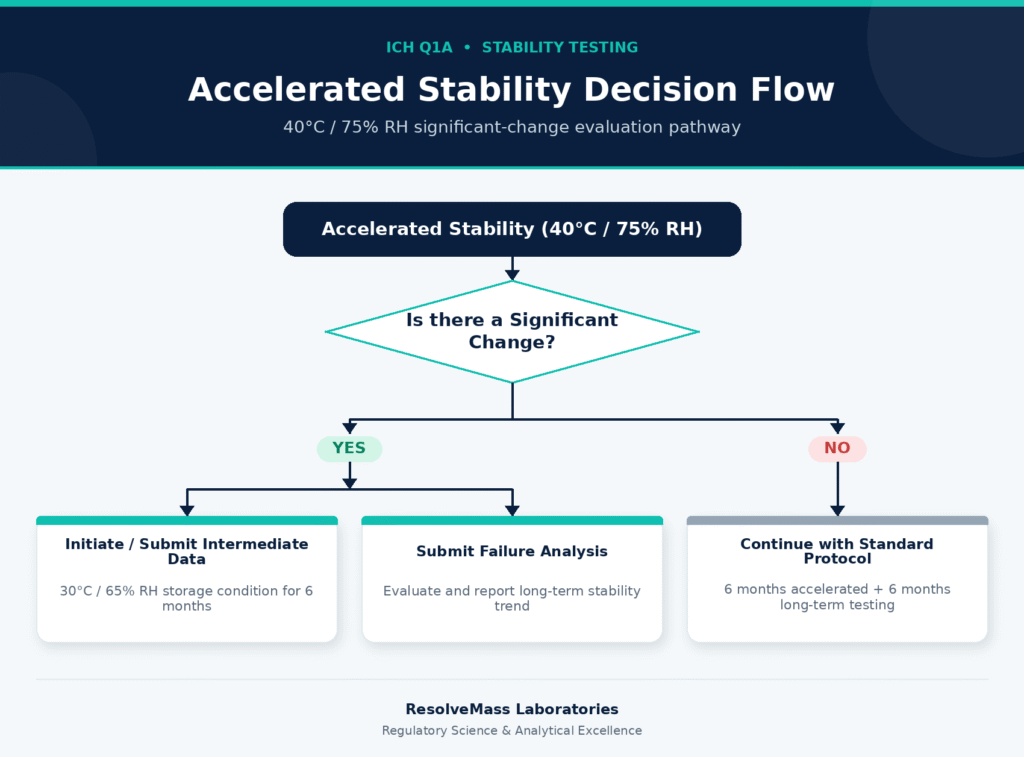
The observation of a significant change during accelerated stability testing requires additional investigation and generally triggers the submission of intermediate-condition stability data together with a documented root-cause assessment.
According to ICH Q1A(R2) Section 2.2.7.1, a significant change in a finished pharmaceutical product may include any of the following outcomes:
Assay Loss
A 5% deviation in assay value relative to the initial measurement at T = 0 or any result that falls outside the established potency specification.
Degradation and Impurity Increases
The appearance of degradation products exceeding qualified acceptance limits established under ICH Q3B requirements.
Physical Attribute Failures
Failure to meet predefined specifications for appearance, physical characteristics, or product functionality, including color changes, phase separation, altered resuspendability, hardness deviations, or delivery-performance failures.
pH Shifts
Movement beyond approved pH acceptance criteria for liquid, suspension, emulsion, or semi-solid dosage forms.
Dissolution Failures
Failure to satisfy dissolution requirements across the prescribed testing stages involving 12 dosage units under S1, S2, or S3 evaluation criteria.
Risk Mitigation Strategy: Parallel Intermediate Placement
To minimize regulatory delays, experienced CDMOs frequently place reserve samples into intermediate storage conditions of 30°C/65% RH at the beginning of the study (T = 0). If accelerated testing reveals a significant change at Month 3 or Month 6, the intermediate samples are already available for immediate testing. This proactive strategy prevents the need to restart an additional 6-month intermediate study and helps preserve overall development timelines.
Facing challenges with your peptide formulations? Find out how to formulate a stable, lyophilized peptide injectable with our expert guidance.
Analytical Method Validation and Stability-Indicating Profiles
Stability-indicating analytical methods (SIAMs) are essential for differentiating the Active Pharmaceutical Ingredient from process-related impurities, excipient-derived interferences, and degradation products. Analytical development groups within CDMOs conduct comprehensive forced degradation studies according to ICH Q1A(R2) and ICH Q2(R2) requirements to confirm method specificity and selectivity.
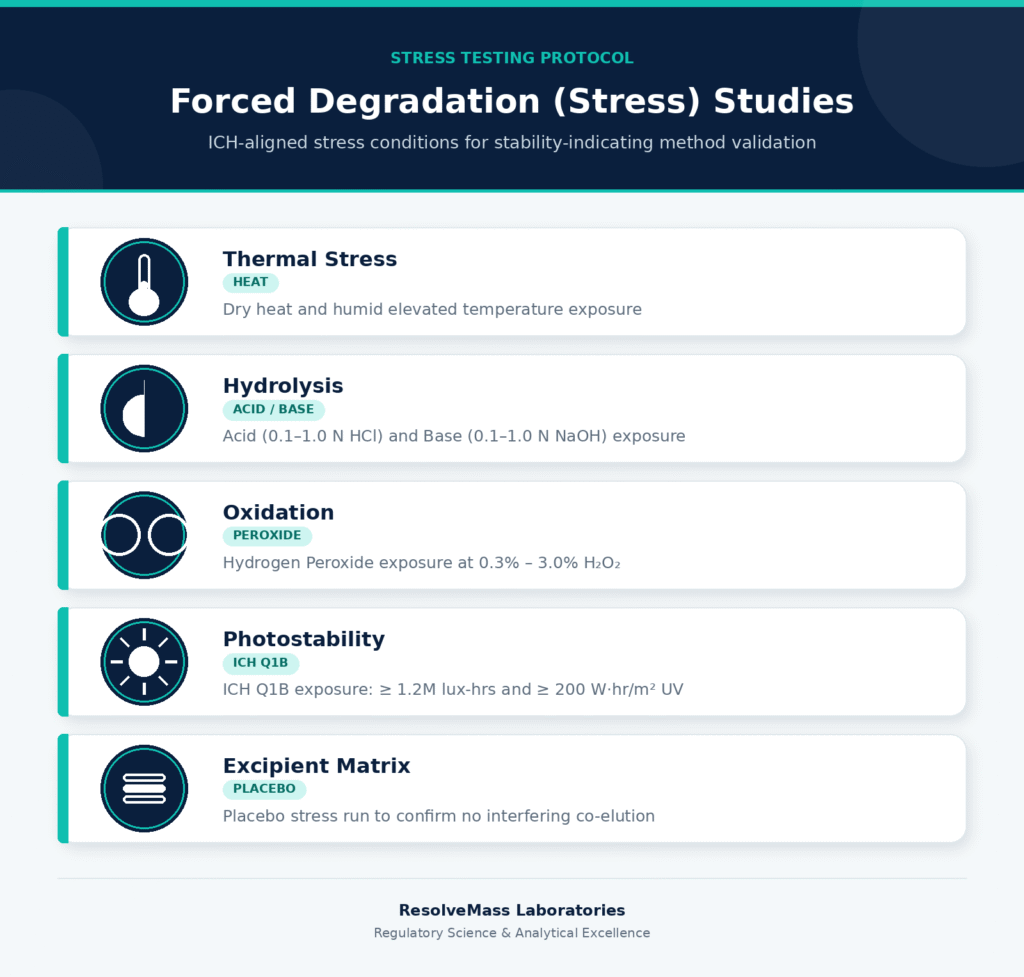
The following analytical quality attributes are routinely monitored throughout stability studies:
Chromatographic Purity and Assay
Ultra-High Performance Liquid Chromatography (UHPLC) coupled with diode-array detection (DAD) or mass spectrometric detection (LC-MS/MS) is used to evaluate potency, impurity profiles, and overall mass balance.
Dissolution Profile Comparisons
Multi-point dissolution testing is performed using f1 difference factors and f2 similarity factors to compare stability samples against reference profiles and initial release data.
Enantiomeric Purity
Chiral chromatographic techniques are employed for APIs susceptible to racemization, stereochemical instability, or enantiomeric conversion during storage.
Container Closure Integrity (CCIT)
Container closure performance is assessed using technologies such as high-voltage leak detection (HVLD), vacuum decay testing, and helium mass spectrometry in accordance with USP <1207>, particularly for sterile products and biologics.
Looking for a partner to handle your analytical requirements? Explore our one-stop CDMO analytical services designed specifically for ANDA success.
Bracketing and Matrixing Protocols Under ICH Q1D
For generic product portfolios containing multiple strengths, fill volumes, or packaging configurations, testing every possible combination at every time point can create a substantial analytical burden. CDMOs often implement reduced-testing approaches permitted under ICH Q1D to optimize resources while maintaining regulatory acceptability.
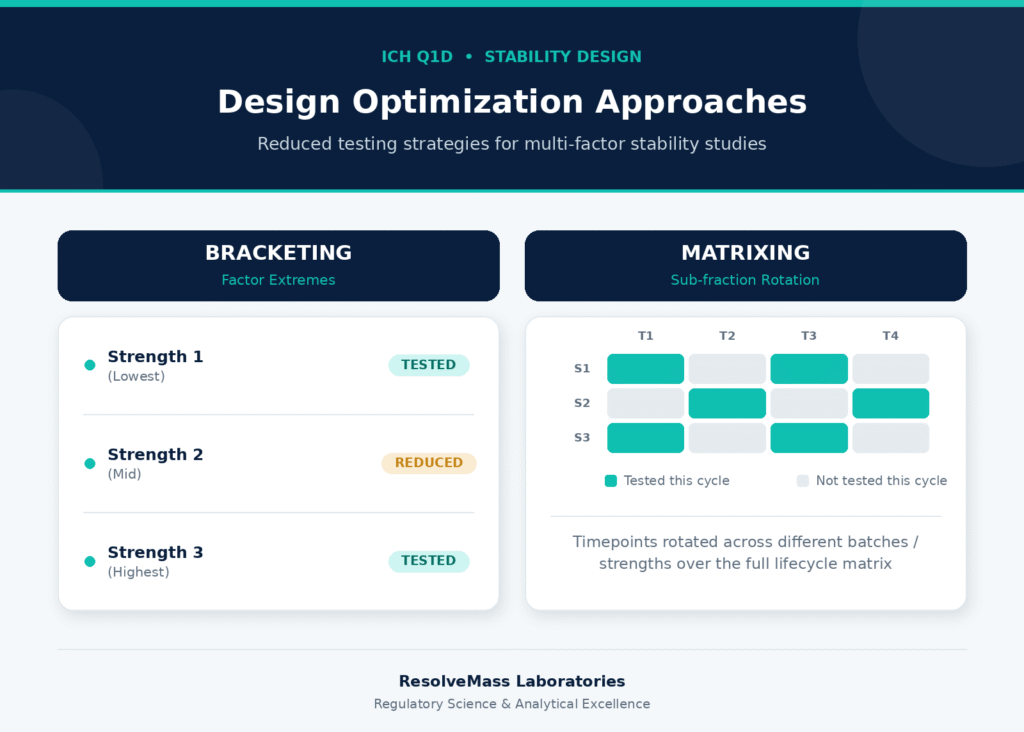
1. Bracketing Design
Bracketing involves testing only the extreme levels of selected variables, such as the highest and lowest strengths or the smallest and largest container sizes. Intermediate configurations are considered represented by the tested extremes.
Applicability: Suitable for closely related formulations where the active-to-excipient ratio remains directly proportional across strengths and packaging configurations.
2. Matrixing Design
Matrixing involves testing only a predefined subset of the total sample population at each scheduled stability interval. Different subsets are evaluated at subsequent time points according to a statistically justified design.
Applicability: Appropriate for products manufactured from common blends, shared granulations, equivalent formulations, or identical packaging systems.
Prerequisite: Matrixing approaches must be supported by statistically sound study designs in accordance with ICH Q1E and must demonstrate adequate power to detect meaningful variability among batches, strengths, or packaging configurations.
Choosing the right partner is the first step in successful development. Learn how to choose the right peptide CDMO in the US for your generic program.
Managing Stability Deviations, OOS, and OOT in a cGMP CDMO
The management of Out-of-Specification (OOS) and Out-of-Trend (OOT) stability results within a CDMO environment requires formal procedures aligned with FDA guidance entitled Investigating Out-of-Specification (OOS) Test Results for Pharmaceutical Production.
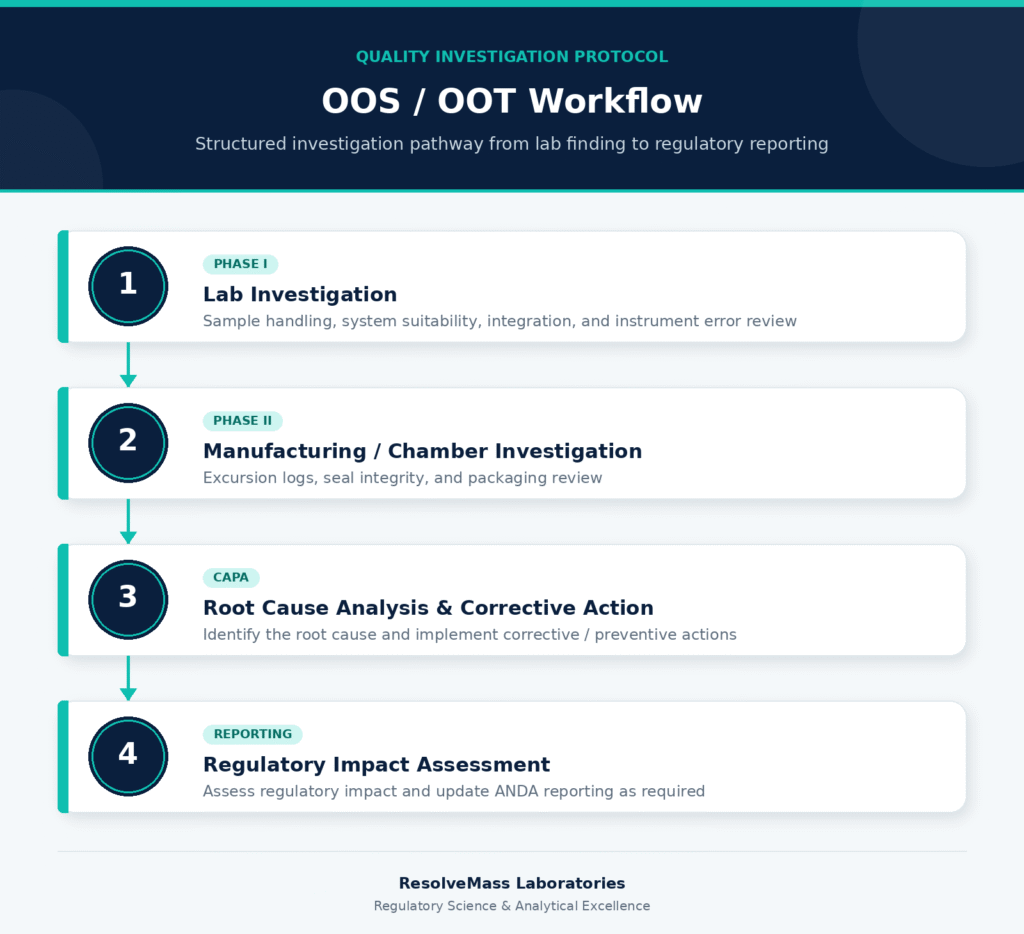
Phase I Laboratory Investigation
The initial investigation focuses on confirming system suitability, reviewing peak integration settings, assessing chromatographic performance, verifying instrument calibration status, and evaluating sample preparation procedures before considering invalidation of the original analytical result.
Phase II Chamber and Packaging Audit
This phase includes review of continuous environmental monitoring records compliant with 21 CFR Part 11, assessment of temperature and humidity excursion events, verification of chamber performance, and evaluation of container-closure integrity.
Statistical Out-of-Trend (OOT) Monitoring
Advanced statistical tools, including regression analysis, degradation modeling, and slope-control charting, are applied to identify emerging trends before official specification limits are exceeded. Early identification of atypical degradation behavior enables proactive corrective actions and risk mitigation.
Understand the key differences before you choose your manufacturing partner. Read our comparison: Peptide CDMO vs. CMO – which one does your project actually need?
Conclusion
Navigating the analytical and regulatory complexities associated with Stability Testing for Generic Drug Products at a CDMO requires comprehensive compliance with ICH Q1A–Q1E guidance and FDA ANDA submission requirements. From qualifying multiple API lots and conducting scientifically sound forced degradation studies to implementing ICH Q1D bracketing and matrixing strategies, a well-designed stability program strengthens regulatory confidence and minimizes the risk of CMC-related deficiencies.
Ready to outsource your manufacturing? Partner with a trusted expert in peptide manufacturing to streamline your path to approval.
By leveraging validated analytical methodologies, robust cGMP stability infrastructure, and proactive deviation management systems, CDMOs play a critical role in supporting successful generic drug development and accelerating time to market. For organizations seeking custom stability protocol development, ICH-compliant storage solutions, and comprehensive ANDA analytical support, a qualified CDMO can provide the expertise necessary to generate reliable, submission-ready stability data packages.
Frequently Asked Questions (FAQs)
No. Regulatory authorities follow ICH stability guidelines, which define study durations using calendar months rather than a fixed number of weeks. As a result, 24 weeks is not considered equivalent to 6 months for regulatory submissions. Sponsors should ensure that stability studies meet the specified monthly duration requirements before relying on the data for an ANDA filing.
ANDA stability studies must demonstrate consistency across different sources of raw material variability. Therefore, the three primary drug product batches are expected to be manufactured using at least two separate lots of the Active Pharmaceutical Ingredient (API). This approach helps confirm that differences between API lots do not adversely affect product quality or stability performance.
When a significant change is observed under accelerated conditions, additional investigation becomes necessary. The applicant is generally required to provide intermediate-condition stability data generated at 30°C/65% RH and conduct a thorough root-cause assessment to determine the reason for the observed change. Regulatory reviewers use this information to evaluate the product’s long-term stability profile and overall shelf-life justification.
A primary stability batch should be representative of the proposed commercial manufacturing process and packaging configuration. For solid oral dosage forms, a pilot-scale batch is typically defined as at least 100,000 tablets or capsules, or 10% of the intended commercial production batch size, whichever value is greater. These batches form the basis of the stability package submitted in an ANDA.
Shelf-life projections are typically based on the principles outlined in ICH Q1E. If accelerated stability testing shows no significant change and long-term stability results indicate minimal degradation with low batch-to-batch variability, a scientifically justified shelf-life may be proposed beyond the available real-time data. Any extrapolated expiry period must be supported by ongoing stability commitments and continued post-approval monitoring.
Temporary temperature or humidity excursions may occasionally occur because of maintenance activities, equipment servicing, or power interruptions. In general, excursions should be limited and carefully documented, with events exceeding 24 hours requiring a formal deviation investigation and risk assessment. The impact of the excursion on product quality and degradation behavior must be scientifically evaluated before data acceptance.
Not necessarily. For aqueous products packaged in semi-permeable containers such as LDPE bottles or blow-fill-seal systems, water loss observed during accelerated testing does not automatically trigger intermediate-condition studies. If long-term stability data demonstrate that the packaging system provides adequate protection and product quality remains within specification, additional intermediate testing may not be required solely because of moisture loss.
Reference:
- U.S. Food and Drug Administration. (2004, June). ANDAs: Stability testing of drug substances and products. U.S. Department of Health and Human Services. https://www.fda.gov/regulatory-information/search-fda-guidance-documents/andas-stability-testing-drug-substances-and-products
- U.S. Food and Drug Administration. (2014, May). ANDAs: Stability testing of drug substances and products—Questions and answers. U.S. Department of Health and Human Services. https://www.fda.gov/regulatory-information/search-fda-guidance-documents/andas-stability-testing-drug-substances-and-products-questions-and-answers
- International Council for Harmonisation of Technical Requirements for Pharmaceuticals for Human Use. (2003, February 6). ICH harmonised tripartite guideline: Stability testing of new drug substances and products Q1A(R2). https://database.ich.org/sites/default/files/Q1A%28R2%29%20Guideline.pdf
- European Medicines Agency. (n.d.). ICH Q1B photostability testing of new active substances and medicinal products: Scientific guideline. https://www.ema.europa.eu/en/ich-q1b-photostability-testing-new-active-substances-medicinal-products-scientific-guideline
- European Medicines Agency. (n.d.). ICH Q1D bracketing and matrixing designs for stability testing of drug substances and drug products: Scientific guideline. https://www.ema.europa.eu/en/ich-q1d-bracketing-matrixing-designs-stability-testing-drug-substances-drug-products-scientific-guideline
- United States Pharmacopeial Convention. (2025). USP <1225> Validation of compendial procedures. In United States Pharmacopeia and National Formulary (USP–NF). United States Pharmacopeial Convention. https://doi.org/10.31003/USPNF_M99926_01_01
Get In Touch With Us
About The Author


