

Introduction
Maintaining effective Peptide Oligonucleotide Conjugate Storage Stability Handling requires strict control of environmental conditions and adherence to carefully designed procedures. Peptide-Oligonucleotide Conjugates (POCs) are an advanced category of therapeutic molecules that integrate the targeting or cell-penetrating properties of peptides with the gene-regulating capabilities of oligonucleotides. Due to their intricate molecular design—which may include specialized chemical linkers, complex peptide sequences, and chemically sensitive nucleic acid structures—these conjugates are significantly more vulnerable to degradation than conventional small-molecule drugs or standalone oligonucleotides. A thorough understanding of their storage and handling requirements is not simply recommended; it is essential for preserving molecular integrity, ensuring reliable preclinical results, and maintaining therapeutic performance. This article examines the key factors involved in preserving POC stability, with particular attention to controlled storage environments, buffer and solvent compatibility, and comprehensive analytical assessment.
Are you looking for more information on the different configurations available? Explore Types of Peptide Oligonucleotide Conjugates
Share via:
Article Summary:
- Peptide-Oligonucleotide Conjugates (POCs) are highly sensitive therapeutics that combine peptides and oligonucleotides, making them vulnerable to hydrolysis, oxidation, nucleolytic degradation, and aggregation if not stored under controlled conditions.
- Temperature management is critical for stability. Liquid formulations are typically stored at -80°C, while lyophilized products are stored between -20°C and 4°C. Repeated freeze-thaw cycles should be avoided through single-use aliquoting.
- Buffer composition and pH significantly influence POC integrity. A pH range of 6.0–7.5 is generally preferred, while HEPES or Tris buffers are often more stable than phosphate buffers during freezing.
- Stabilizing additives such as EDTA help prevent metal-catalyzed oxidation, while trehalose and sucrose act as cryoprotectants that reduce freeze-induced stress and preserve molecular structure.
- Proper handling minimizes sample loss and structural damage. Using low-binding polypropylene containers, gentle mixing, and wide-bore pipette tips helps reduce adsorption, aggregation, and shear-related degradation.
- Long-term storage is best achieved through lyophilization, moisture control, inert gas protection (nitrogen or argon), and hermetic sealing to limit oxygen exposure and maintain conjugate stability.
- Stability should be routinely verified using HPLC, LC-MS/MS, and Circular Dichroism (CD) spectroscopy, which can detect degradation, structural changes, linker instability, oxidation, and loss of biological activity before significant product failure occurs.
Fundamental Chemical Vulnerabilities in POC Stability
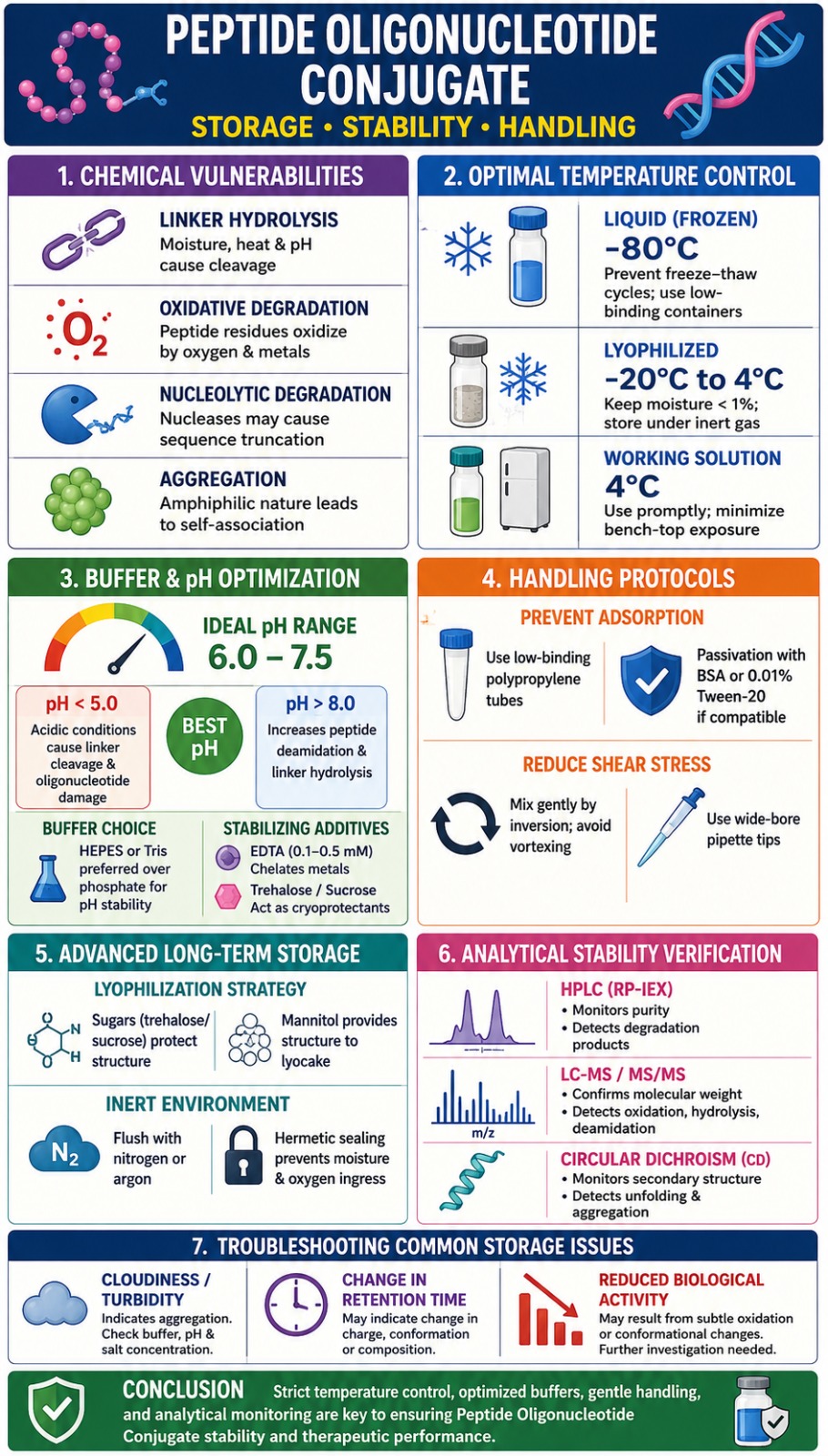
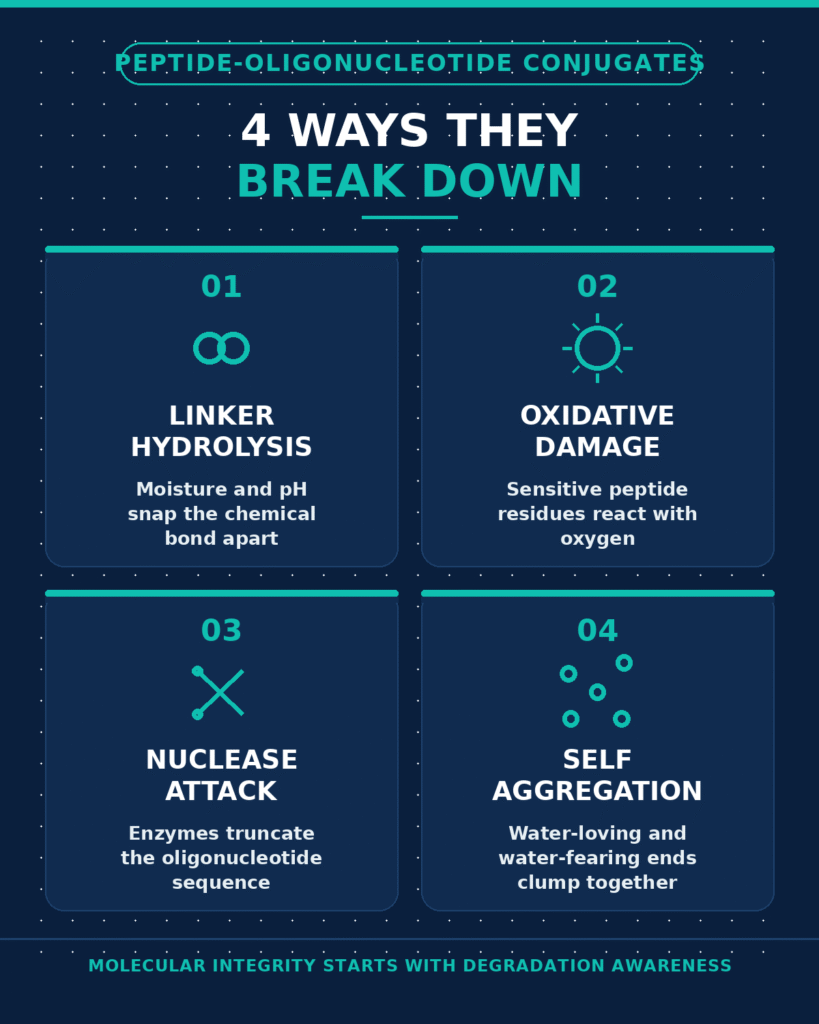
The stability of POCs can be compromised by several degradation mechanisms, including hydrolytic linker cleavage, oxidation of susceptible peptide residues, and nuclease-driven degradation of the oligonucleotide component. Successful Peptide Oligonucleotide Conjugate Storage Stability Handling depends on recognizing and controlling these degradation pathways to prevent molecular dissociation, structural alterations, or aggregation.
A typical POC consists of three principal components: the oligonucleotide sequence, the peptide moiety (commonly a targeting ligand or cell-penetrating peptide), and the chemical linker that joins them. Each component contributes unique stability challenges:
- Linker Hydrolysis: The susceptibility of the linker depends on its chemistry, whether it is based on thioether, disulfide, amide, or other functional groups. Exposure to moisture, elevated temperatures, or fluctuating environmental conditions can trigger premature cleavage. Disulfide linkers are especially sensitive to reducing environments and pH variations, making them particularly vulnerable during storage.
- Oxidative Degradation: Peptide residues such as methionine, cysteine, and tryptophan are prone to oxidation. Contact with dissolved oxygen or trace metal contaminants can initiate oxidative reactions that compromise peptide integrity.
- Nucleolytic Degradation: Although chemically modified oligonucleotides, including phosphorothioate (PS), 2′-OMe, and 2′-MOE analogs, are designed to resist enzymatic degradation, residual nuclease contamination or processing-related factors can still result in sequence truncation.
- Aggregation: Many POCs exhibit amphiphilic behavior due to the coexistence of hydrophobic peptide regions and hydrophilic oligonucleotide segments. This characteristic can promote self-association and aggregation, negatively affecting solubility, potency, and bioavailability.
To reduce these risks, long-term storage approaches should focus on limiting moisture exposure, minimizing oxidative stress, and maintaining stable buffer conditions within the optimal pH range.
Navigating the complexities of these molecules can be difficult. Read about the common challenges in Peptide Oligonucleotide Conjugates
Optimal Temperature Controls and Cold-Chain Integrity
For most POCs, maintaining stability requires storage temperatures of -80°C or lower for liquid formulations, while lyophilized materials are generally stored between -20°C and 4°C, depending on the specific molecular design and linker chemistry. Even temporary deviations from recommended temperatures can accelerate degradation processes or trigger irreversible aggregation.
Liquid Formulations (Frozen)
When POCs are stored as frozen solutions, the primary objectives are to prevent freeze-thaw damage and suppress any residual enzymatic activity.
- Rapid Freezing: Samples should be rapidly frozen using liquid nitrogen or a dry ice/ethanol bath before transfer to long-term storage at -80°C. Slow freezing can result in large ice crystal formation, which may place stress on the conjugate structure. In addition, cryo-concentration effects can increase local solute concentrations, promoting degradation reactions.
- Minimizing Freeze-Thaw Cycles: Repeated freeze-thaw events are among the most significant contributors to POC instability. Each cycle increases the likelihood of peptide denaturation, aggregation, or disruption of the conjugate architecture. To avoid repeated thawing, samples should be divided into single-use aliquots that match anticipated experimental requirements.
Lyophilized Storage
Freeze-drying remains one of the most effective methods for preserving sensitive POCs over extended periods.
- Residual Moisture Control: Following lyophilization, samples should be sealed under an inert atmosphere such as dry nitrogen or argon to minimize exposure to moisture and oxygen. Residual moisture levels exceeding 1–2% can accelerate hydrolytic degradation and compromise linker integrity.
- Glass Transition Temperature (Tg): The storage temperature of the lyophilized product should remain well below the glass transition temperature of the dried matrix. Exceeding this threshold can lead to structural collapse of the lyocake, resulting in increased molecular mobility and faster degradation.
| State | Optimal Temperature | Critical Considerations |
|---|---|---|
| Solution | -80°C | Prevent freeze-thaw cycles; use low-binding containers. |
| Lyophilized | -20°C to 4°C | Maintain moisture below 1%; store under inert gas. |
| Working Solution | 4°C | Use promptly and minimize bench-top exposure. |
Solvent Selection and Buffer pH Optimization
The stability profile of a POC is strongly influenced by buffer composition, pH, and ionic strength. These factors affect peptide protonation, intermolecular interactions, and linker stability. In most cases, maintaining a pH range between 6.0 and 7.5 provides the best balance for reducing hydrolytic and oxidative degradation.
Impact of pH on Structural Integrity
Many linker chemistries used in POCs contain functional groups whose stability is highly dependent on pH.
- Acidic Conditions (pH < 5.0): Acidic environments may trigger cleavage of acid-sensitive linkers such as hydrazones and can also promote depurination within the oligonucleotide sequence.
- Basic Conditions (pH > 8.0): Elevated pH values increase the likelihood of peptide deamidation, particularly in asparagine and glutamine residues, and may accelerate hydrolysis of susceptible chemical bonds.
- Buffer Selection: While Phosphate Buffered Saline (PBS) is widely used, it may not be ideal for frozen storage because phosphate buffers can experience significant pH changes during freezing. Alternatives such as HEPES or Tris buffers are often preferred because they exhibit greater pH stability across temperature fluctuations.
Solvent Additives for Stabilization
Additional formulation components can further improve Peptide Oligonucleotide Conjugate Storage Stability Handling by reducing degradation risks.
- Chelating Agents: Small quantities of EDTA (0.1–0.5 mM) can bind trace metal contaminants that catalyze oxidative reactions involving peptide residues.
- Cryoprotectants: Non-reducing sugars such as trehalose and sucrose help stabilize conjugates during freezing by creating a protective glass-like matrix that limits ice crystal formation and reduces mechanical stress.
The chemistry of your conjugate defines its stability. Deep dive into Peptide Oligonucleotide Conjugate Linker Chemistry
Handling Protocols: Mitigating Shear and Surface Adsorption
Proper handling of POCs involves minimizing physical stress and preventing losses caused by adsorption to laboratory surfaces. The use of low-protein-binding and low-nucleic-acid-binding materials is critical for preserving sample concentration and structural integrity.
Adsorption Prevention
Because of their amphiphilic characteristics, POCs can strongly interact with container surfaces, resulting in substantial material loss, especially at low concentrations.
- Material Selection: Certified low-binding polypropylene tubes should be used whenever possible. Untreated glass surfaces are generally less suitable because POCs may interact with exposed hydroxyl groups, increasing adsorption.
- Surface Passivation: In applications involving extremely dilute solutions, surface passivation strategies may be required. The use of bovine serum albumin (BSA) or low concentrations of nonionic detergents such as 0.01% Tween-20 can reduce adsorption, provided these additives do not interfere with analytical or biological assays.
Shear Force Reduction
The combination of a peptide and oligonucleotide creates a large and structurally complex molecule that may be sensitive to mechanical stress.
- Gentle Mixing: Solutions should be mixed through gentle inversion or light tapping rather than vigorous vortexing, which can introduce localized shear stress.
- Pipetting Technique: Wide-bore pipette tips are recommended for transferring concentrated POC solutions, as they reduce mechanical stress during aspiration and dispensing.
Understand how these molecules navigate biological barriers. Learn: How do Peptide Oligonucleotide Conjugates Enter Cells?
Advanced Strategies for Long-Term Storage
Long-term preservation of POCs requires minimizing molecular mobility and limiting exposure to chemical degradation pathways. Advanced storage approaches typically involve optimized lyophilization procedures and the creation of oxygen-free storage environments.
The Role of Excipients in Lyophilization
The success of a lyophilized formulation depends heavily on the selection of appropriate excipients.
- Sugar-to-Protein Ratio: Sugars such as trehalose and sucrose serve as effective lyoprotectants by replacing water molecules around the conjugate during drying. Maintaining an appropriate sugar-to-POC ratio helps preserve peptide conformation and overall molecular structure.
- Bulking Agents: Mannitol is frequently incorporated into formulations to provide physical support for the lyocake, reducing the likelihood of collapse or structural defects during the drying process.
Inert Gas Encapsulation
Oxygen exposure remains one of the primary causes of long-term degradation in peptide-containing conjugates.
- Nitrogen Sparging: Prior to vial closure, the headspace should be flushed with high-purity nitrogen or argon to remove oxygen and reduce oxidative degradation during storage.
- Hermetic Sealing: Properly crimp-sealed containers or high-quality screw-cap vials equipped with suitable liners help maintain the inert atmosphere and prevent the ingress of moisture and oxygen.
Ensure your samples remain viable for research. Learn more about our Handling and Storage for Peptide Oligonucleotide Conjugates
Analytical Approaches for Stability Verification
The effectiveness of Peptide Oligonucleotide Conjugate Storage Stability Handling protocols can only be confirmed through comprehensive analytical testing. Techniques such as HPLC and Mass Spectrometry are essential for detecting early signs of degradation and verifying long-term stability.
HPLC-Based Monitoring
Reversed-Phase High-Performance Liquid Chromatography (RP-HPLC) and Ion-Exchange Chromatography (IEX) are widely used to evaluate purity and identify degradation products.
- Purity Profiling: A reduction in the primary chromatographic peak accompanied by the appearance of additional peaks often indicates hydrolysis, nucleolytic degradation, or other degradation processes.
- Resolution of Conjugate vs. Free Components: Monitoring the relative abundance of the intact conjugate compared with free peptide and free oligonucleotide provides valuable insight into linker stability.
Mass Spectrometry (LC-MS/MS)
Mass Spectrometry offers detailed molecular characterization and provides definitive confirmation of chemical integrity.
- Molecular Weight Verification: LC-MS can detect subtle molecular changes, including oxidation events (+16 Da) and hydrolytic modifications.
- Fragmentation Analysis: MS/MS studies can identify modifications within the peptide domain and confirm whether oxidation, deamidation, or other structural alterations have occurred during storage.
Circular Dichroism (CD) Spectroscopy
For POCs containing peptides that require a defined secondary structure, Circular Dichroism spectroscopy provides valuable structural information. This technique enables researchers to monitor changes in alpha-helical content, detect unfolding events, and identify aggregation-associated beta-sheet formation.
Precision is key to valid research. Discover more about Structural Characterization of Peptide Oligonucleotide Conjugates
Troubleshooting Common Storage Failures
Despite careful planning and execution, storage-related issues may still occur. Recognizing early warning indicators can help prevent significant material loss and preserve valuable samples.
- Cloudiness or Turbidity: Visible cloudiness often indicates aggregation or solubility-related problems. Rather than applying aggressive techniques such as sonication, researchers should investigate buffer composition, pH, and salt concentration.
- Changes in Retention Time: Significant shifts in chromatographic retention time may indicate alterations in molecular charge, conformation, or chemical composition.
- Reduced Biological Activity: In some cases, chromatographic purity remains unchanged while biological potency declines. Such observations may reflect subtle oxidation or conformational changes that require additional investigation using MS/MS and CD spectroscopy.
Ensure your data is robust and reproducible. View our QC Testing for Peptide Oligonucleotide Conjugates
Conclusion
Effective Peptide Oligonucleotide Conjugate Storage Stability Handling demands a comprehensive approach that integrates strict temperature control, carefully selected buffer systems, and gentle handling procedures. Preventing hydrolysis, oxidation, aggregation, and surface-induced losses is essential for maintaining the structural integrity and therapeutic functionality of these highly sensitive conjugates. Long-term stability is best achieved through a combination of optimized lyophilization practices, oxygen-free storage conditions, and ongoing analytical monitoring. As peptide-oligonucleotide therapeutics continue to gain importance within the pharmaceutical and biotechnology sectors, the ability to store and manage these molecules with precision will remain a critical factor in successful drug development.
If you require professional analytical support to evaluate conjugate stability or assistance with optimizing storage and handling strategies, please contact our team for expert guidance.
Contact Us: https://resolvemass.ca/contact/
Frequently Asked Questions:
Several environmental and formulation-related variables determine the stability of POCs throughout storage. Temperature fluctuations, moisture exposure, oxygen levels, buffer composition, pH, and physical handling conditions can all affect molecular integrity. Since POCs contain both peptide and oligonucleotide components, they are susceptible to multiple degradation mechanisms, including oxidation, hydrolysis, aggregation, and linker breakdown. Proper control of these factors is essential for maintaining product quality and functionality.
Snap-freezing rapidly lowers the temperature of the sample, reducing the likelihood of large ice crystal formation. Large ice crystals can create physical stress within the conjugate structure and contribute to concentration gradients that accelerate degradation. Rapid freezing helps preserve molecular uniformity, minimizes structural disruption, and improves the overall stability of the conjugate during long-term frozen storage.
Lyophilized POCs are generally stored between -20°C and 4°C in tightly sealed containers protected from moisture and oxygen. In contrast, liquid formulations are typically maintained at -80°C or lower to suppress degradation reactions and residual enzymatic activity. Working solutions may be kept at 4°C for short periods, but they should be used promptly to minimize stability risks.
Repeated freezing and thawing can expose POCs to continuous physical and chemical stress. Changes in ice formation and solute concentration during each cycle may destabilize the peptide portion, promote aggregation, or weaken the linker connecting the peptide and oligonucleotide. Dividing samples into single-use aliquots is one of the most effective ways to avoid repeated freeze-thaw exposure and preserve sample consistency.
A pH range of approximately 6.0 to 7.5 is commonly considered optimal for maintaining POC stability. This range helps reduce the likelihood of acid- or base-driven degradation reactions while supporting overall molecular integrity. Buffers such as HEPES and Tris are often preferred for storage applications because they generally maintain more stable pH values during temperature changes compared with phosphate-based systems.
Many POCs possess both hydrophobic and hydrophilic regions, making them prone to interacting with container surfaces. Standard glass containers can promote non-specific adsorption due to the presence of active surface groups, resulting in sample loss and inaccurate concentration measurements. Low-binding polypropylene containers are typically recommended because they reduce surface interactions and help maintain sample recovery.
Nitrogen and argon are commonly used to replace oxygen within storage containers before sealing. By reducing oxygen exposure, these inert gases help limit oxidative reactions that can damage sensitive amino acid residues within the peptide component. Maintaining an oxygen-reduced environment can significantly improve long-term stability and preserve the biological performance of the conjugate.
Mechanical stress generated by aggressive mixing or rapid pipetting can negatively affect delicate conjugate structures. Gentle handling practices, such as slow pipetting and mixing by inversion rather than vortexing, help reduce the risk of structural disruption. The use of wide-bore pipette tips is also beneficial, particularly when working with concentrated samples or high-molecular-weight conjugates.
The chemical properties of the linker play a major role in determining overall conjugate stability. Disulfide linkers are more sensitive to reducing environments and may require tighter control of storage conditions to prevent premature cleavage. More stable linkers, such as thioether-based or click-chemistry-derived linkages, generally offer greater resistance to degradation, although appropriate temperature, moisture, and oxygen control remain important for protecting the entire conjugate structure.
Reference:
- Klabenkova, K., Fokina, A., & Stetsenko, D. (2021). Chemistry of peptide-oligonucleotide conjugates: A review. Molecules, 26(17), 5420. https://doi.org/10.3390/molecules26175420
- Lennox, K. A., Young, R. C., & Behlke, M. A. (2025). Chemical modifications in nucleic acid therapeutics. In Methods in Molecular Biology (Vol. 2965, pp. 57–126). Humana Press. https://doi.org/10.1007/978-1-0716-4742-4_3
- Wu, X., Zhang, Z., He, Z., Wang, Z., Qin, F., Zeng, M., & Chen, J. (2021). Effect of freeze-thaw cycles on the oxidation of protein and fat and its relationship with the formation of heterocyclic aromatic amines and advanced glycation end products in raw meat. Molecules, 26(5), 1264. https://doi.org/10.3390/molecules26051264
- Maharjan, R., Shin, C. Y., Lee, S.-K., Ha, E.-S., Park, H., Kim, J.-S., Kim, K. H., Kim, N. A., Kim, M.-S., & Jeong, S. H. (2026). Stabilization strategies and advancements in lyophilization to preserve integrity and efficacy of next-generation biologicals. International Journal of Pharmaceutics: X, 11, 100575. https://doi.org/10.1016/j.ijpx.2026.100575
Get In Touch With Us
About The Author


