

United States vs. Overseas Peptide CDMOs: Should You Reshore Your Supply Chain?
 By Anusha Sinha
•
August 6, 2026
By Anusha Sinha
•
August 6, 2026
Introduction

The decision to partner with U.S. versus overseas peptide Contract Development and Manufacturing Organizations (CDMOs) requires organizations to carefully balance immediate cost advantages against long-term considerations such as supply chain stability, regulatory compliance, intellectual property protection, and geopolitical uncertainty. For biopharmaceutical companies developing increasingly complex peptide-based therapeutics, the question of whether to reshore or nearshore active pharmaceutical ingredient (API) manufacturing has evolved far beyond a straightforward cost-comparison exercise. It has become a critical strategic decision that can significantly influence development timelines, regulatory success, and commercial viability.
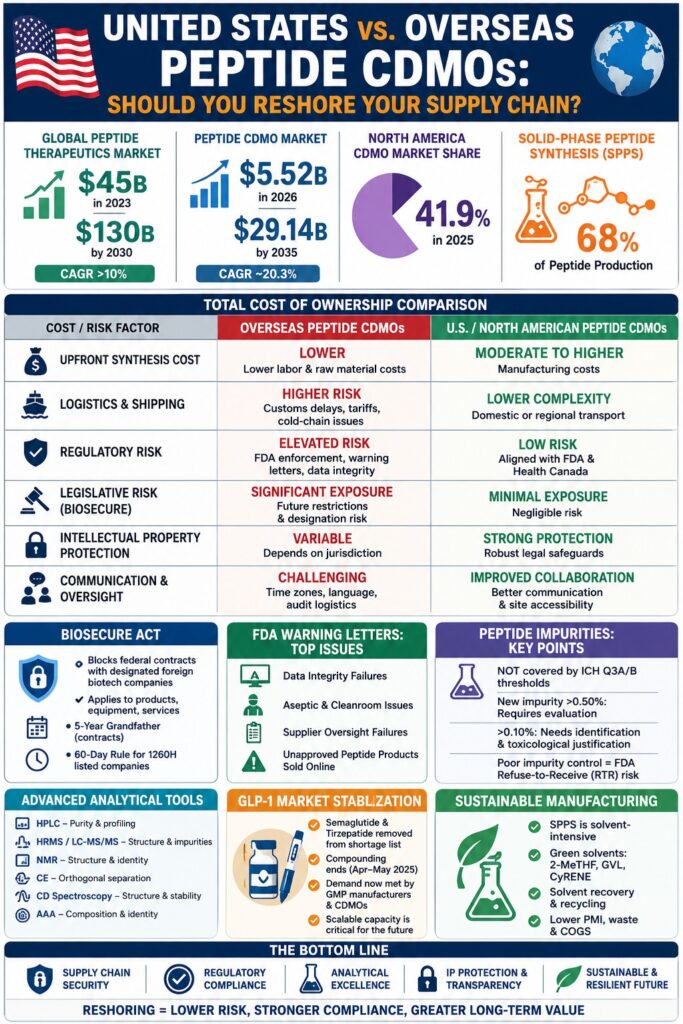
The global peptide therapeutics market was valued at approximately 45 billion in 2023 and is anticipated to expand to nearly 130 billion by 2030, reflecting a compound annual growth rate (CAGR) exceeding 10%. This rapid market expansion is being fueled largely by the growing demand for GLP-1 receptor agonists and other peptide-based therapies targeting metabolic disorders. As a result, global Good Manufacturing Practice (GMP) manufacturing capacity is facing unprecedented pressure, creating new challenges for sponsors seeking reliable production partners.
Looking for an end-to-end partner for your therapeutic pipeline? Explore ResolveMass’s Comprehensive Peptide CDMO Services to accelerate your drug development journey.
Historically, many pharmaceutical companies relied on overseas CDMOs, particularly those located throughout the Asia-Pacific region, to benefit from lower labor expenses and reduced raw material costs during early-stage solid-phase peptide synthesis (SPPS). However, the global outsourcing environment has changed considerably in recent years. Legislative developments, including the BIOSECURE Act, combined with increased regulatory oversight by the U.S. Food and Drug Administration (FDA) concerning data integrity practices and aseptic manufacturing controls at foreign facilities, have prompted pharmaceutical leaders to reassess traditional outsourcing strategies.
Today, evaluating U.S. versus overseas peptide CDMOs requires a far more comprehensive analysis based on Total Cost of Ownership (TCO). Although overseas manufacturers may continue to offer attractive price-per-gram synthesis rates, North American organizations such as ResolveMass Laboratories Inc. provide compelling advantages through stronger intellectual property safeguards, region-specific regulatory expertise, enhanced transparency, and the seamless integration of advanced analytical characterization within the manufacturing process. This report presents a detailed examination of the evolving CDMO marketplace, the impact of federal legislation and FDA enforcement activities, the complexities of peptide impurity assessment, and the strategic factors driving peptide supply chain reshoring initiatives.
Concerned About Supply Chain Risks with Overseas Peptide CDMOs? Contact ResolveMass today to discuss your peptide development, analytical testing, and manufacturing requirements. Our team can help you assess supply chain risks, navigate regulatory expectations, and build a reliable path from development to commercialization. Contact us
Article Summary Key Takeaways
- Reshoring peptide manufacturing is becoming a strategic priority as pharmaceutical companies focus on supply chain resilience, regulatory compliance, intellectual property protection, and long-term business continuity rather than only lower manufacturing costs.
- North American peptide CDMOs offer significant advantages through stronger FDA and Health Canada regulatory alignment, advanced manufacturing technologies, integrated analytical services, improved communication, and greater transparency compared with many overseas facilities.
- Total Cost of Ownership (TCO) extends beyond production costs. While overseas CDMOs may offer lower upfront synthesis costs, hidden expenses related to logistics, tariffs, regulatory risks, quality oversight, and supply chain disruptions can reduce overall cost benefits.
- The BIOSECURE Act and increased FDA enforcement are accelerating supply chain reshoring. New legislation, stricter inspections, and rising concerns over data integrity and manufacturing quality are encouraging companies to partner with trusted North American CDMOs.
- Peptide development requires advanced analytical characterization using techniques such as HPLC, HRMS/LC-MS/MS, NMR, Capillary Electrophoresis, Circular Dichroism, and Amino Acid Analysis to ensure impurity control, regulatory compliance, and successful ANDA or commercial submissions.
- Growing demand for GLP-1 therapies and generic peptides is increasing pressure on CDMO capacity. Scalable GMP manufacturing, technology transfer expertise, and peptide sameness studies have become essential for supporting future commercial production.
- Sustainability is becoming a key differentiator as leading CDMOs adopt green solvents, continuous-flow peptide synthesis, solvent recycling, and environmentally responsible manufacturing practices to reduce costs, improve efficiency, and meet evolving regulatory expectations.
The Strategic Calculus of US vs. Overseas Peptide CDMOs
The strategic landscape increasingly supports reshoring or nearshoring peptide manufacturing operations to North America as pharmaceutical companies place greater emphasis on supply chain resilience, business continuity, and regulatory responsiveness rather than focusing exclusively on short-term manufacturing cost reductions.
Although the Asia-Pacific region continues to demonstrate the fastest projected CAGR within the CDMO sector, estimated at approximately 14.8% due to significant investments in manufacturing infrastructure and capacity expansion, North America remains the dominant regional market. In 2025, North America is expected to account for approximately 41.9% of total global CDMO revenue, supported by sophisticated biopharmaceutical ecosystems, advanced technological capabilities, and sustained outsourcing demand.
Evaluating North American outsourcing options? Compare Canadian vs. US Peptide CDMOs to see which regulatory and geographic benefits fit your project.
The worldwide peptide CDMO market is experiencing substantial growth, with estimates placing its value at approximately 5.52 billion in 2026 and forecasting expansion to nearly 29.14 billion by 2035. This trajectory represents an exceptional CAGR of approximately 20.3%. The market momentum is supported by more than 170 peptide therapeutics currently progressing through clinical development programs worldwide and over 80 approved commercial peptide products across major pharmaceutical markets. Such growth is creating significant demand for scalable, efficient, and high-quality peptide manufacturing solutions.
Solid-phase peptide synthesis remains the dominant manufacturing approach, accounting for nearly 68% of all peptide production activities. Its widespread adoption stems from its ability to consistently achieve high-purity products while supporting efficient scale-up from clinical to commercial manufacturing volumes.
When comparing U.S. and overseas peptide CDMOs, sponsors must carefully assess the sophistication and maturity of available manufacturing infrastructure. North American facilities increasingly incorporate automated synthesis platforms, digital process monitoring tools, and advanced analytical technologies that enhance process control and reduce manufacturing cycle times by as much as 25%. As large pharmaceutical companies and venture-backed biotechnology firms continue to expand outsourcing activities, there is growing demand for CDMO partners capable of executing highly specialized peptide modifications rather than simply manufacturing standard sequences.
These modifications may include PEGylation, complex cyclization approaches, incorporation of D-enantiomers, non-natural amino acids, and other advanced structural alterations required for next-generation peptide therapeutics. U.S. and Canadian CDMOs frequently demonstrate significant expertise in these specialized areas while maintaining continuous compliance with stringent FDA and Health Canada regulatory expectations. This combination of technical proficiency and regulatory alignment provides a substantial competitive advantage for sponsors seeking efficient development pathways and predictable regulatory outcomes.
Evaluating the Total Cost of Ownership: Upfront Savings vs. Hidden Risks
A comprehensive evaluation of Total Cost of Ownership (TCO) often reveals that the apparent financial advantages associated with overseas manufacturing can be significantly offset by hidden expenses related to logistics, regulatory compliance, quality oversight, and supply chain disruptions.
Although a basic price-per-gram comparison may initially favor offshore CDMOs, a broader assessment frequently demonstrates that nearshoring can provide greater overall value, particularly for late-stage clinical programs and commercial products.
Peptide synthesis is inherently resource-intensive and requires substantial quantities of raw materials, reagents, and solvents. A significant portion of SPPS manufacturing costs is attributable to Fmoc-protected amino acid building blocks, coupling reagents such as HBTU, HATU, and DIC, as well as large volumes of polar aprotic solvents including dimethylformamide (DMF). Overseas manufacturers often benefit from lower procurement costs through regional supplier networks, localized production ecosystems, and economies of scale.
Planning your manufacturing strategy? Learn key considerations before you Outsource Peptide Manufacturing to a CDMO.
However, these apparent savings must be evaluated alongside the operational challenges associated with international manufacturing. Pharmaceutical sponsors frequently encounter increased complexity related to cross-border shipping, customs clearance procedures, tariff exposure, temperature-controlled transportation requirements, and the extensive quality assurance oversight needed to ensure consistent product quality and regulatory compliance.
To better understand the financial and operational implications of manufacturing location decisions, organizations should consider a structured Total Cost of Ownership framework.
Total Cost of Ownership Comparison Matrix
| Cost / Risk Factor | Overseas Peptide CDMOs | U.S. / North American Peptide CDMOs |
|---|---|---|
| Upfront Synthesis Cost | Lower due to reduced labor expenses and localized raw material sourcing | Moderate to higher manufacturing costs |
| Logistics & Shipping | Higher risk of customs delays, tariff exposure, and cold-chain complications | Lower complexity through domestic or regional transportation |
| Regulatory Risk | Elevated risk due to FDA enforcement actions, warning letters, and data integrity concerns | Strong alignment with FDA and Health Canada expectations |
| Legislative Risk (BIOSECURE) | Significant exposure to future restrictions and designation risks | Minimal to negligible exposure |
| Intellectual Property Protection | Variable protection levels depending on jurisdiction | Strong legal protections and enforcement mechanisms |
| Communication & Oversight | Challenges associated with time zones, language differences, and audit logistics | Improved collaboration, communication, and site accessibility |
Swipe horizontally to view the full table on smaller screens.
Ultimately, even small variations in raw material quality, environmental conditions, process controls, or manufacturing practices can contribute to impurity formation and product variability. The financial impact of a failed commercial manufacturing batch, delayed regulatory approval, or an FDA Refuse-to-Receive (RTR) determination resulting from inadequate impurity characterization can far exceed any short-term savings achieved through offshore production. Consequently, organizations must evaluate manufacturing decisions using a long-term strategic framework rather than focusing exclusively on initial production costs.
Navigating the BIOSECURE Act: A Catalyst for Supply Chain Reshoring
The BIOSECURE Act has emerged as a powerful driver of pharmaceutical supply chain reshoring by imposing significant restrictions on federal contracting activities involving designated foreign biotechnology entities. Enacted on December 18, 2025, as Section 851 of the National Defense Authorization Act (NDAA) for Fiscal Year 2026, the legislation represents one of the most consequential policy shifts affecting global biopharmaceutical manufacturing and outsourcing strategies.
The Act was developed in response to growing national security concerns related to the collection, storage, and potential misuse of genomic data, as well as increasing dependence on suppliers linked to foreign adversarial nations within critical biotechnology supply chains. Under the legislation, federal executive agencies are prohibited from procuring biotechnology products, equipment, or services from organizations designated as Biotechnology Companies of Concern (BCCs). The restrictions extend further by prohibiting agencies from entering into, renewing, or extending contracts with any organization that utilizes equipment or services provided by a designated BCC during the execution of federal contracts.
In addition, federal agencies are prohibited from using grant funding, loan programs, or other forms of federal financial assistance to procure biotechnology products or services from designated entities. These provisions significantly expand the impact of the legislation beyond direct federal procurement activities.
Ensure your supply chain remains secure and compliant—read our insights on How to Choose a Peptide CDMO in the US.
For peptide developers and pharmaceutical sponsors, the consequences are substantial. A company that relies on a designated overseas CDMO for API manufacturing, analytical testing, process development, or related biotechnology services may find its products excluded from eligibility for procurement by U.S. executive agencies. This includes important government healthcare systems such as the Veterans Health Administration and may also influence broader participation within federally funded healthcare programs and procurement networks.
The BIOSECURE Act defines a Biotechnology Company of Concern as an organization subject to the ownership, administrative control, governance, or influence of a foreign adversary, including countries such as China, North Korea, Russia, and Iran, that participates in biotechnology-related manufacturing or service activities and presents a potential national security concern.
As pharmaceutical companies continue to evaluate long-term manufacturing strategies, the BIOSECURE Act has transformed supply chain decisions from a purely operational consideration into a critical regulatory and commercial risk management issue. Consequently, many organizations are accelerating efforts to identify trusted North American manufacturing partners capable of supporting secure, compliant, and resilient peptide supply chains for future development and commercialization programs.
Grandfather Clauses and Compliance Timelines
The BIOSECURE Act establishes clearly defined compliance deadlines while incorporating limited grandfather provisions intended to reduce the risk of immediate disruptions to critical pharmaceutical supply chains. Rather than explicitly identifying individual companies within the statutory language, the legislation automatically applies the Biotechnology Company of Concern (BCC) designation to any organization included on the U.S. Department of Defense’s Section 1260H list of “Chinese military companies.” In addition, the Office of Management and Budget (OMB) is required to publish a comprehensive list of designated BCCs within one year of the Act’s enactment, with publication expected by December 2026. The OMB is also responsible for issuing detailed implementation guidance within 180 days thereafter, establishing an anticipated deadline of June 2027.
Although the legislation contains transition provisions designed to facilitate compliance and minimize disruptions, these protections are subject to important limitations. Existing contracts involving entities designated by the OMB may qualify for a five-year grandfathering period, allowing organizations additional time to transition their supply chains and sourcing strategies. However, this safe harbor provision does not apply to companies that were already identified on the Department of Defense’s 1260H list as of December 18, 2025.
For organizations included on the 1260H list, compliance obligations become significantly more immediate. The statutory restrictions take effect only 60 days after the Federal Acquisition Regulation (FAR) is amended to incorporate the BIOSECURE Act requirements. As a result, pharmaceutical companies are conducting extensive reviews of their manufacturing and supplier networks, assessing U.S. versus overseas peptide CDMOs through the lens of long-term legislative exposure and business continuity risk. This evolving regulatory environment has accelerated reshoring and nearshoring initiatives as sponsors seek partnerships with compliant North American manufacturing organizations capable of supporting uninterrupted development and commercialization activities.
Regulatory Scrutiny and FDA Warning Letters: A Warning to Overseas Facilities
The FDA has intensified its oversight of foreign manufacturing facilities, with recent enforcement actions demonstrating a clear focus on identifying systemic quality deficiencies related to data integrity, supplier management, contamination control, and aseptic manufacturing practices.
Regulatory scrutiny has increased substantially in recent years, and foreign operations have become a major focus of inspectional activity.
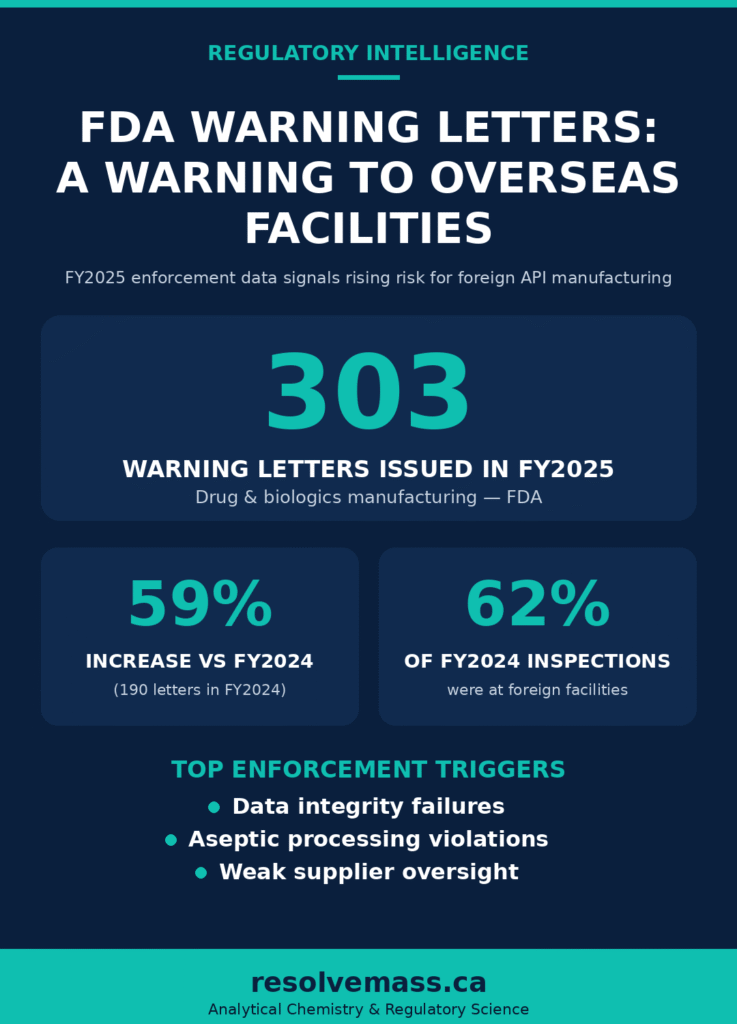
During Fiscal Year (FY) 2024, more than 62% of FDA drug quality inspections were conducted at foreign manufacturing facilities, highlighting the agency’s commitment to maintaining consistent global quality standards regardless of geographic location. The agency has repeatedly emphasized that manufacturers supplying products to the U.S. market are expected to meet identical Current Good Manufacturing Practice (CGMP) requirements, irrespective of whether operations are located in North America, Europe, India, China, or other international regions.
This enforcement trend intensified further during FY 2025. The FDA issued 303 warning letters related to drug and biologics products, representing a substantial increase of approximately 59% compared with the 190 warning letters issued during FY 2024. These figures underscore the agency’s heightened focus on quality system effectiveness, manufacturing controls, and regulatory compliance across the global pharmaceutical supply chain.
Mitigate compliance risks early with robust Peptide Analytical Characterization Services built to satisfy FDA and Health Canada standards.
As overseas facilities continue expanding capacity to meet increasing demand for peptide therapeutics and other advanced pharmaceutical products, many have encountered challenges in maintaining the robust quality systems required to satisfy evolving regulatory expectations. Consequently, pharmaceutical sponsors are placing greater emphasis on selecting manufacturing partners with demonstrated histories of regulatory compliance and inspection readiness.
Data Integrity and Aseptic Processing Deficiencies
A detailed review of recent FDA warning letters reveals that many regulatory observations stem not from isolated operational errors, but from broader deficiencies within quality management systems. Among these concerns, data integrity remains one of the most heavily scrutinized areas of regulatory compliance.
The FDA routinely identifies deficiencies involving incomplete or missing audit trails, shared user accounts, unauthorized access to computerized systems, backdated analytical records, inadequate documentation practices, and failures to properly investigate out-of-specification (OOS) results. These issues raise significant concerns regarding the reliability and accuracy of manufacturing and analytical data used to support product quality decisions.
In several enforcement actions, facilities have been cited for manipulating critical manufacturing information, failing to investigate significant environmental excursions, and neglecting to assess the impact of abnormal storage conditions on product quality. Such deficiencies undermine confidence in a manufacturer’s ability to maintain consistent product quality and regulatory compliance.
Aseptic processing operations and cleanroom controls represent another area of substantial regulatory concern. FDA inspections have documented serious violations at foreign facilities, including personnel making direct contact with sterile products while wearing gloves, deteriorating cleanroom infrastructure characterized by peeling paint and damaged surfaces, inadequate contamination control procedures, and improper gowning practices. These observations can significantly increase the risk of microbial contamination and product quality failures.
Supplier qualification and contractor oversight also remain recurring themes in FDA enforcement activities. Regulatory agencies frequently cite quality units for failing to adequately evaluate suppliers, contract manufacturers, and service providers or for neglecting to verify that previously identified deficiencies have been effectively corrected. These shortcomings create vulnerabilities throughout the supply chain and may compromise the overall quality of finished pharmaceutical products.
The regulatory risks associated with overseas operations extend beyond manufacturing practices alone. The FDA has also intensified enforcement efforts targeting unapproved and misbranded peptide products entering the United States through foreign distributors and online platforms. Several entities, including websites marketing semaglutide, tirzepatide, retatrutide, and other peptide products under “Research Use Only” designations, have been cited for distributing unapproved new drugs intended for human administration.
Such products frequently bypass established regulatory safeguards, creating significant risks related to contamination, inaccurate labeling, inconsistent potency, and unpredictable dosing. For pharmaceutical sponsors, partnering with highly regulated U.S. or Canadian CDMOs helps ensure compliance with 21 CFR 211.22 requirements and other applicable regulatory standards, reducing the likelihood of enforcement actions while protecting both corporate reputation and commercial operations.
Peptide Impurities and the Complexities of ICH Q3A/B Compliance
Managing peptide impurity profiles presents unique scientific and regulatory challenges because synthetic peptides are not subject to the standard qualification thresholds outlined in ICH Q3A and ICH Q3B guidance documents. Instead, impurity acceptance criteria must be scientifically justified on a product-specific basis, requiring a significantly more rigorous regulatory strategy.
The inherent structural complexity of peptides contributes substantially to this challenge. Peptides are vulnerable to numerous degradation pathways, including oxidation, deamidation, hydrolysis, racemization, aggregation, truncation, and sequence-related modifications. These degradation mechanisms can generate a diverse array of process-related and product-related impurities, making impurity characterization one of the most demanding aspects of peptide drug development.
Under conventional ICH Q3A(R2) and Q3B(R2) frameworks, small-molecule pharmaceuticals are subject to clearly defined reporting, identification, and qualification thresholds that are based on maximum daily exposure levels. Synthetic peptides, however, occupy a unique position between traditional small molecules and larger biologic therapeutics. Consequently, both the FDA and the European Medicines Agency (EMA) have excluded peptides from the standard impurity threshold framework and instead apply product-specific regulatory expectations.
New impurity above 0.10% → structural characterization + toxicological assessment
For highly purified synthetic peptide products, regulatory authorities generally expect exceptionally stringent impurity control strategies. As a general principle, newly observed impurities that are absent from the Reference Listed Drug (RLD) should not exceed 0.50%. In addition, any newly identified impurity present above 0.10% typically requires structural characterization and a scientifically justified toxicological assessment to demonstrate patient safety.
Failure to adequately characterize impurities or provide sufficient scientific justification for proposed impurity limits remains one of the leading causes of FDA Refuse-to-Receive (RTR) determinations during Abbreviated New Drug Application (ANDA) reviews. CDMOs that lack sophisticated analytical capabilities frequently encounter difficulties in detecting, identifying, and quantifying impurities at the extremely low levels required for regulatory submissions. These limitations can ultimately result in costly development delays, additional studies, and extended review timelines.
Advanced Analytical Support for Impurity Profiling
Achieving compliance with stringent peptide impurity requirements requires the integration of advanced analytical technologies throughout the manufacturing lifecycle rather than relying solely on end-product testing. Conventional High-Performance Liquid Chromatography (HPLC), while essential, is often insufficient as a standalone analytical approach because structurally similar peptide variants may co-elute or exhibit nearly identical ultraviolet (UV) absorption profiles.
To support regulatory-grade peptide characterization, leading CDMOs employ comprehensive, orthogonal analytical strategies that combine multiple complementary techniques. This integrated approach enables accurate identification, quantification, and characterization of both expected and unexpected impurities while providing robust evidence of product quality and structural integrity.
Developing complex therapies? Learn about specialized techniques for GLP-1 Peptide Analytical Characterization.
High-Performance Liquid Chromatography (HPLC)
HPLC serves as the primary analytical platform for peptide purity assessment and chromatographic profiling. Reverse-phase methods utilizing C18 stationary phases and UV detection are commonly employed to evaluate purity, monitor process performance, and establish retention time profiles throughout development and manufacturing activities.
High-Resolution Mass Spectrometry (HRMS) and LC-MS/MS
HRMS and LC-MS/MS are indispensable tools for peptide characterization. These technologies enable precise molecular weight determination, detection of sequence variants, identification of post-translational modifications, and characterization of low-level impurities. Tandem mass spectrometry (MS/MS) provides detailed peptide mapping and sequence confirmation, supporting comprehensive impurity investigations and regulatory submissions.
Nuclear Magnetic Resonance (NMR) Spectroscopy
NMR spectroscopy plays a critical role in elucidating molecular structure and confirming peptide identity. The technique provides valuable information regarding conformational characteristics, stereochemical integrity, and structural consistency. Quantitative NMR (qNMR) can also be utilized to support purity assessments and reference standard characterization.
Capillary Electrophoresis (CE)
Capillary electrophoresis functions as a powerful orthogonal analytical technique that complements chromatographic methods. Because separation is based on charge and electrophoretic mobility rather than hydrophobic interactions, CE is particularly effective for resolving hydrophilic peptides, charged variants, and structurally related isomers that may be difficult to separate using conventional HPLC methods.
Circular Dichroism (CD) Spectroscopy
CD spectroscopy provides critical insights into peptide secondary structure and conformational stability. The technique enables the evaluation of structural features such as α-helices, β-sheets, and random coil configurations under varying environmental conditions, supporting assessments of product stability and biological functionality.
Amino Acid Analysis (AAA)
Amino Acid Analysis serves as an important confirmatory technique for evaluating peptide composition and overall structural integrity. By quantifying individual amino acid content, AAA helps verify sequence composition, establish concentration, and support identity testing throughout development and manufacturing activities.
By integrating these advanced analytical technologies directly into the peptide synthesis workflow, leading North American CDMOs establish comprehensive control over critical quality attributes at every stage of manufacturing. This integrated model minimizes the risks associated with fragmented development processes and eliminates the “silo effect” frequently encountered when synthesis and analytical characterization are performed by separate organizations. As a result, sponsors benefit from improved data quality, accelerated development timelines, and stronger regulatory confidence throughout the product lifecycle.
Generic Peptide Projects and Peptide Sameness Studies
The generic peptide sector demands exceptional scientific precision through the execution of comprehensive Peptide Sameness Studies. These highly specialized studies are designed to demonstrate that a proposed generic peptide product is molecularly, structurally, and functionally equivalent to the innovator reference product.
Unlike conventional small-molecule drugs, peptide therapeutics possess intricate molecular architectures and are particularly sensitive to even minor manufacturing variations. As a result, reproducing these molecules after patent expiration presents significantly greater scientific and regulatory challenges.
A Peptide Sameness Study involves a detailed comparison of multiple critical attributes, including the primary structure, exact amino acid sequence, higher-order structural characteristics, physicochemical properties, impurity profiles, and overall product performance. Regulatory authorities require compelling evidence that the generic product closely matches the Reference Listed Drug (RLD) across all relevant quality attributes before considering approval pathways that reduce or eliminate the need for extensive clinical efficacy studies.
When a generic developer successfully generates robust analytical evidence demonstrating molecular sameness, the FDA may permit reliance on comparative analytical characterization in place of certain costly and time-consuming clinical trials. This regulatory approach is heavily dependent upon rigorous head-to-head product characterization studies in which the generic candidate and the RLD are evaluated using advanced analytical technologies.
Techniques such as High-Resolution Mass Spectrometry (HRMS), Nuclear Magnetic Resonance (NMR) spectroscopy, and Circular Dichroism (CD) spectroscopy play central roles in confirming structural equivalence and identifying even subtle differences between products. These methods provide detailed information regarding molecular identity, conformational behavior, purity, and stability, enabling sponsors to establish a scientifically defensible case for sameness.
Preparing an ANDA submission? Discover our One-Stop CDMO Analytical Services for ANDA Filings.
Advanced CDMOs such as ResolveMass Laboratories Inc. possess specialized expertise in managing these complex end-to-end Abbreviated New Drug Application (ANDA) development programs for peptide-based therapeutics. Their capabilities extend across several highly sought-after peptide targets, including Semaglutide, Liraglutide, Lanreotide, and Tirzepatide.
Want to dive deeper into structural characterization? Read our detailed Peptide Characterization Case Study of Semaglutide.
Certain peptide products present particularly demanding development challenges. For example, injectable formulations such as Lanreotide rely on self-assembling peptide structures that form long-acting depot systems following administration. Reproducing the precise release characteristics, physicochemical behavior, and therapeutic performance of such products requires advanced formulation expertise, sophisticated analytical characterization, and extensive stability optimization.
By collaborating with experienced peptide CDMOs, pharmaceutical sponsors can reduce development risk, minimize clinical study requirements where appropriate, accelerate regulatory pathways, and maintain the highest standards of product quality and patient safety throughout the development process.
The Resolution of GLP-1 Shortages and Market Stabilization
The rapid stabilization of the GLP-1 receptor agonist market has fundamentally altered peptide manufacturing dynamics by eliminating many of the temporary regulatory pathways that previously allowed compounded alternatives to enter the marketplace. As a result, the responsibility for meeting patient demand has shifted almost entirely back to commercial GMP manufacturing facilities and specialized CDMO networks.
Beginning in 2022, demand for metabolic therapies such as semaglutide products (Ozempic and Wegovy) and tirzepatide products (Mounjaro and Zepbound) increased dramatically, creating widespread supply shortages across multiple healthcare markets. During these shortage periods, regulatory frameworks permitted certain 503A compounding pharmacies and 503B outsourcing facilities to manufacture products that were essentially copies of the approved therapies in order to address urgent patient needs and improve access to treatment.
However, regulatory conditions changed significantly during late 2024 and early 2025. Following extensive reviews of manufacturing capacity and market availability, the FDA formally removed both semaglutide and tirzepatide from its national drug shortage list. Although industry organizations and compounding trade groups pursued legal challenges seeking continued flexibility, the FDA established clearly defined transition periods ending in April and May 2025.
Following the expiration of these grace periods, compounding facilities were no longer permitted to routinely manufacture copies of these products without exposing themselves to significant regulatory enforcement risks. This regulatory transition represents a pivotal moment for the peptide industry and highlights the increasing importance of commercial-scale manufacturing infrastructure.
With compounded alternatives no longer serving as a supplemental source of supply, the burden of supporting the entire patient population now falls on approved manufacturers and qualified CDMOs. This shift requires robust, scalable, and fully compliant GMP manufacturing operations capable of producing multi-kilogram quantities of peptide active pharmaceutical ingredients while maintaining stringent quality standards.
Ready to transition from development to commercial volumes? Explore ResolveMass’s Peptide API Scale-Up Capabilities.
As the industry moves toward the eventual introduction of GLP-1 generic products, the ability of leading CDMOs to execute large-scale technology transfers, rapidly expand manufacturing capacity, and support commercial production requirements will play a decisive role in shaping the future competitive landscape of metabolic therapeutics. Organizations that possess the infrastructure, expertise, and regulatory readiness necessary to support this transition are likely to emerge as key contributors to the next generation of peptide-based healthcare solutions.
Sustainable Manufacturing and Green Solvent Alternatives in SPPS
Environmental sustainability has become an increasingly influential factor when evaluating U.S. versus overseas peptide CDMOs. Regulatory agencies and environmental authorities throughout North America and Europe are implementing stricter sustainability requirements that encourage the adoption of green chemistry principles across pharmaceutical manufacturing operations.
Solid-phase peptide synthesis is widely recognized as a solvent-intensive process. Traditional manufacturing approaches rely heavily on large volumes of polar aprotic solvents such as dimethylformamide (DMF) and N-methyl-2-pyrrolidone (NMP). While these solvents have historically provided excellent performance characteristics, they are also associated with concerns regarding toxicity, reproductive health risks, environmental persistence, and occupational safety.
In response to growing sustainability expectations and evolving regulations, including the European Union’s REACH (Registration, Evaluation, Authorisation and Restriction of Chemicals) framework, pharmaceutical manufacturers are actively pursuing greener alternatives that reduce environmental impact while maintaining process efficiency and product quality.
Leading CDMOs have begun implementing environmentally responsible solvent systems that replace conventional solvents with more sustainable options. Examples include 2-methyltetrahydrofuran (2-MeTHF), gamma-valerolactone (GVL), and CyRENE, all of which have demonstrated promising performance characteristics in peptide synthesis applications.
Scientific studies have shown that solvent systems containing 2-MeTHF provide excellent resin swelling capabilities for both polystyrene and polyethylene glycol-based solid supports. These solvent systems also support efficient amino acid solubilization and maintain strong coupling reaction performance throughout peptide assembly processes. As a result, they offer a viable pathway toward reducing the environmental footprint of peptide manufacturing without compromising synthesis efficiency.
Beyond solvent substitution, many advanced North American and European CDMOs are investing in continuous-flow peptide synthesis technologies, process intensification strategies, and sophisticated solvent recovery and recycling systems. These innovations contribute to substantial reductions in solvent consumption, waste generation, and overall manufacturing costs.
The adoption of these technologies delivers several important benefits. Organizations can reduce the Cost of Goods Sold (COGS), lower Process Mass Intensity (PMI), improve resource utilization, and enhance overall manufacturing sustainability. Additionally, companies that proactively embrace green chemistry practices are better positioned to adapt to future environmental regulations and evolving sustainability expectations from regulators, investors, and healthcare stakeholders.
In contrast, facilities that continue relying heavily on legacy solvent systems without meaningful sustainability initiatives may face increasing operational challenges as global environmental standards become more stringent. Consequently, sustainability considerations are becoming an increasingly important component of long-term CDMO selection and supply chain strategy.
Conclusion
The strategic framework for evaluating U.S. versus overseas peptide CDMOs has undergone a profound transformation. While offshore manufacturing historically maintained a significant advantage in terms of direct production costs, the modern biopharmaceutical environment requires companies to consider a much broader range of strategic factors when selecting manufacturing partners.
The enactment of the BIOSECURE Act, the increasing intensity of FDA oversight of foreign manufacturing operations, and the extraordinary complexity of modern peptide therapeutics such as GLP-1 receptor agonists have elevated supply chain security, regulatory compliance, analytical excellence, and operational transparency to critical decision-making criteria.
For pharmaceutical sponsors operating within this highly regulated environment, reshoring and nearshoring initiatives have evolved beyond simple risk-reduction strategies. They are increasingly viewed as essential components of a competitive and resilient business model capable of supporting long-term growth and regulatory success.
Collaborating with a technologically advanced North American CDMO provides access to numerous strategic advantages, including strong intellectual property protection, close regulatory alignment, advanced analytical characterization capabilities, sustainable manufacturing practices, and integrated development support throughout the product lifecycle. These capabilities are particularly important for peptide therapeutics, where manufacturing precision, impurity control, and structural characterization directly influence regulatory outcomes and commercial success.
Organizations seeking to strengthen their peptide supply chains, conduct comprehensive peptide sameness studies, accelerate regulatory approvals, and leverage fully integrated CDMO expertise can benefit from partnering with experienced providers such as ResolveMass Laboratories Inc. Through advanced scientific capabilities, regulatory knowledge, and end-to-end development support, sponsors can position their peptide programs for successful clinical and commercial outcomes in an increasingly competitive global marketplace.
For more information, contact the team at ResolveMass Laboratories Inc.: Contact
Frequently Asked Questions
How exactly does the BIOSECURE Act impact my choice of a peptide CDMO?
The BIOSECURE Act introduces new considerations for pharmaceutical companies that rely on foreign biotechnology suppliers. Organizations using services or equipment from designated Biotechnology Companies of Concern may face restrictions when pursuing federal contracts or government-funded opportunities. As a result, many drug developers are reassessing supply chains and prioritizing manufacturing partners that align with emerging U.S. regulatory and national security expectations.
Is it genuinely more cost-effective to manufacture peptides overseas?
Lower manufacturing rates overseas can make offshore production appear financially attractive at first glance. However, a comprehensive evaluation should include transportation costs, customs clearance, quality oversight activities, regulatory risks, supply chain disruptions, and potential project delays. When these factors are considered, domestic or nearshore manufacturing often provides stronger long-term value and improved operational predictability.
What analytical capabilities are non-negotiable when selecting a peptide CDMO?
A qualified peptide CDMO should possess a comprehensive suite of analytical technologies capable of supporting development, characterization, and regulatory submissions. Critical capabilities include High-Performance Liquid Chromatography (HPLC), High-Resolution Mass Spectrometry (HRMS), LC-MS/MS, Nuclear Magnetic Resonance (NMR), and Capillary Electrophoresis (CE). These techniques work together to verify peptide identity, purity, structural integrity, and impurity profiles throughout the product lifecycle.
Why are peptide impurities so difficult to qualify for regulatory approval?
Peptide therapeutics present unique challenges because they do not fall neatly within traditional impurity qualification frameworks established for small-molecule drugs. Regulatory agencies often require product-specific assessments of impurities, including structural identification and toxicological justification. Since peptides are susceptible to degradation pathways such as oxidation, deamidation, and racemization, impurity characterization demands highly sensitive analytical methods and extensive scientific evaluation.
Can nearshoring to Canada provide the exact same benefits as U.S. manufacturing?
For many pharmaceutical sponsors, Canadian CDMOs offer advantages that closely mirror those available in the United States. These benefits include strong intellectual property protections, compliance with internationally recognized regulatory standards, convenient communication, and access to advanced analytical and manufacturing infrastructure. Nearshoring to Canada can also help reduce supply chain complexity while maintaining close alignment with FDA expectations.
How are CDMOs addressing the environmental impact of Solid Phase Peptide Synthesis (SPPS)?
Many modern peptide manufacturers are incorporating sustainability initiatives into their production strategies to reduce environmental impact. This includes replacing traditional solvents with greener alternatives, implementing solvent recovery systems, and investing in more efficient synthesis technologies. Such measures help lower waste generation, improve resource utilization, and support compliance with evolving environmental regulations and sustainability goals.
What is a Peptide Sameness Study, and why is it critical for generic developers?
A Peptide Sameness Study is a detailed analytical comparison between a proposed generic peptide and its Reference Listed Drug (RLD). The study evaluates molecular structure, amino acid sequence, physicochemical characteristics, impurity profiles, and higher-order structural attributes. Demonstrating a high degree of sameness can strengthen regulatory submissions and may reduce the need for extensive clinical studies, accelerating the pathway toward market approval.
How did the resolution of the GLP-1 shortage affect the peptide manufacturing industry?
The removal of semaglutide and tirzepatide from the FDA drug shortage list significantly changed the manufacturing landscape for GLP-1 therapies. As temporary compounding allowances expired, commercial manufacturers and GMP-compliant CDMOs became responsible for meeting full market demand. This transition increased the need for large-scale peptide production capacity, technology transfer expertise, and reliable supply chain infrastructure.
When is the optimal time in the drug development lifecycle to reshore a peptide project?
Reshoring decisions are generally most effective when implemented during early development or before entering late-stage clinical programs. Transitioning manufacturing activities at an earlier stage reduces the complexity of future technology transfers and minimizes regulatory risks associated with changing suppliers later in development. Early alignment with a North American CDMO can also support smoother IND, NDA, or ANDA submission strategies and long-term commercial readiness.
Reference:
- Behrendt, R., White, P., & Offer, J. (2016). Advances in Fmoc solid-phase peptide synthesis. Journal of Peptide Science, 22(1), 4–27. https://doi.org/10.1002/psc.2836
- U.S. Food and Drug Administration. (2025, February 26). USApeptide.com – 696885 – 02/26/2025. FDA. FDA Warning Letter
- U.S. Food and Drug Administration. (2026, March 31). Gram Peptides – 721806 – 03/31/2026. FDA. https://www.fda.gov/inspections-compliance-enforcement-and-criminal-investigations/warning-letters/gram-peptides-721806-03312026
- U.S. Food and Drug Administration. (2026, April 1). FDA clarifies policies for compounders as national GLP-1 supply begins to stabilize. FDA. https://www.fda.gov/drugs/drug-alerts-and-statements/fda-clarifies-policies-compounders-national-glp-1-supply-begins-stabilize
- U.S. Food and Drug Administration. (2025, February 21). Declaratory order: Resolution of shortages of semaglutide injection products (Ozempic and Wegovy). FDA. https://www.fda.gov/media/185526/download
- Scognamiglio, A., Magli, E., Caliendo, G., Perissutti, E., Santagada, V., & Severino, B. (2026). Once upon a time without DMF: Greener paths in peptide and organic synthesis. Molecules, 31(3), Article 536. https://doi.org/10.3390/molecules31030536
Concerned About Supply Chain Risks with Overseas Peptide CDMOs?
Contact ResolveMass today to discuss your peptide development, analytical testing, and manufacturing requirements. Our team can help you assess supply chain risks, navigate regulatory expectations, and build a reliable path from development to commercialization.
Contact usAbout The Author
Anusha Sinha
Anusha Sinha, B.Pharm, is an experienced pharma professional with a strong background in Analytical Chemistry and Polymer Chemistry. With a passion for translating complex scientific data into clear, accessible content, she plays a vital role in communicating ResolveMass Laboratories Inc.’s advanced testing capabilities. In addition to her scientific expertise, Anusha leads Business Development initiatives, helping clients across pharmaceutical, biotechnology, and materials science sectors find tailored analytical solutions. Her combined experience in science and strategy positions her at the forefront of client engagement and technical communication.

