

Introduction
Container closure elastomers are considered one of the most significant sources of extractables and leachables in pharmaceutical packaging. Their manufacture involves chemical cross-linking processes, organic accelerators, plasticizers, and low-molecular-weight oligomers, many of which can migrate into liquid drug formulations. For this reason, evaluating Rubber and Elastomer Leachables is critical for minimizing the risks of active pharmaceutical ingredient (API) degradation, therapeutic protein aggregation, and patient safety concerns associated with parenteral dosage forms.
Injectable formulations, prefilled syringes, autoinjectors, and complex biologics may remain in prolonged and continuous contact with elastomeric components, including vial stoppers, syringe plungers, tip caps, and seals, throughout their commercial shelf life. Unlike rigid inorganic packaging materials, elastomeric matrices are chemically complex thermoset or thermoplastic networks that may contain numerous intentionally added chemical constituents. During storage, environmental and formulation conditions can promote the diffusion of unreacted reagents, degradation products, and polymer fragments from these components into the drug product. As a result, substances initially identified as potential extractables may become actual leachables in the finished pharmaceutical formulation.
Need expert CRO support for E&L testing in Canada? Explore comprehensive testing strategies at Resolve Mass CRO Services.
Under compendial chapters USP <1663>, USP <1664>, and the draft ICH Q3E guidelines, biopharmaceutical developers are expected to implement comprehensive, risk-based characterization programs capable of identifying, quantifying, and qualifying chemical species that migrate from packaging components. Analytical evaluations conducted under cGMP conditions provide the chemical profiling necessary to establish packaging suitability, protect patient safety, and meet the expectations of regulatory authorities worldwide.
Looking to understand migration risks in finished drug products? Read our detailed guide on Extractables and Leachables in Pharmaceutical Products.
Article Summary:
- Rubber and elastomer components are major sources of E&L risk because their complex manufacturing chemistry can introduce mobile compounds that may migrate into pharmaceutical formulations, especially injectables and biologics.
- Elastomers present broader chemical risks than glass or many plastics due to vulcanization agents, accelerators, antioxidants, activators, oligomers, and other formulation additives that can generate diverse extractables and leachables.
- Important elastomer-derived contaminants include N-nitrosamines, 2-MBT, halo-oligomers, zinc species, antioxidants, and processing-related compounds, which may affect drug stability, protein integrity, product quality, and patient safety.
- A comprehensive risk assessment requires both extractables and leachables studies, supported by frameworks such as USP <1663>, USP <1664>, USP <382>, ISO standards, and the risk-based principles outlined in draft ICH Q3E.
- Toxicological evaluation relies on exposure-based thresholds, including the SCT, QT, and product-specific AET, to determine which detected compounds require identification, quantification, and further safety qualification.
- Risk reduction can be achieved through material and design strategies, including fluoropolymer barriers such as ETFE, PTFE, and FEP, thermoplastic elastomers, pre-washing, extraction conditioning, and continuous container closure integrity monitoring.
- Orthogonal analytical testing is essential for comprehensive characterization, combining GC-MS or Headspace GC-MS for volatile compounds, UHPLC-HRMS/MS for non-volatile organics, and ICP-MS for elemental impurities, with reference standards supporting reliable quantification and regulatory compliance.
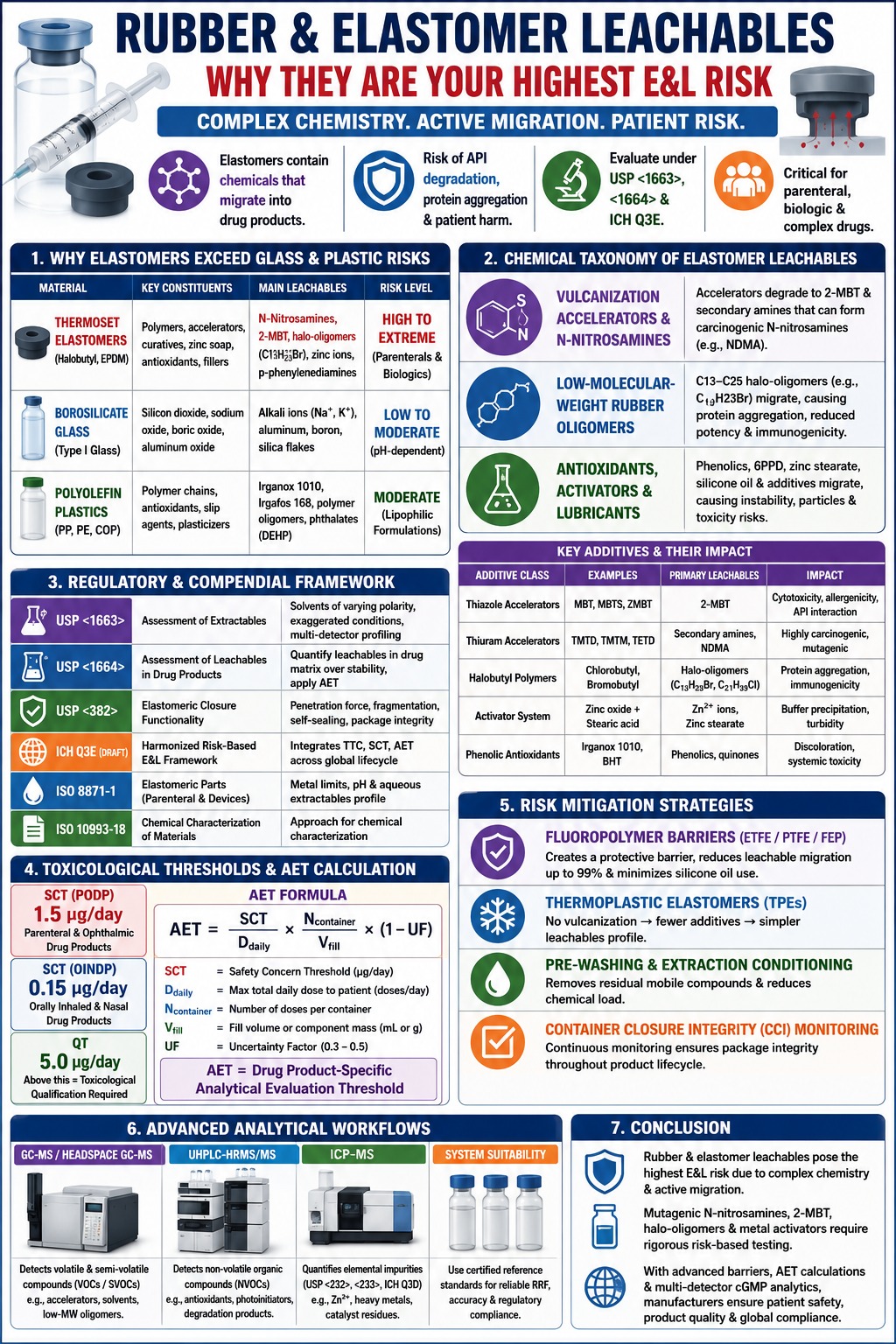
Material Chemistry: Why Rubber and Elastomer Leachables Exceed Glass and Plastic Risks
Rubber and elastomer leachables generally represent a greater chemical risk than those associated with glass or plastic packaging because elastomer manufacturing depends on chemical cross-linking, or vulcanization, with organic accelerators, antioxidants, and curing agents. These manufacturing processes can generate a broad range of reactive and mobile chemical compounds. Whereas glass is primarily associated with inorganic ion release and plastic materials are commonly linked to the migration of plasticizers or residual monomers, elastomeric components may release volatile, semi-volatile, and non-volatile organic compounds, elemental catalysts, and low-molecular-weight polymeric oligomers.
The flexibility and compression set properties required for elastomeric closures to maintain container closure integrity (CCI) require sophisticated polymer compounding systems. Thermoset rubbers, including halogenated butyl rubbers such as chlorobutyl and bromobutyl, undergo chemical cross-linking at elevated temperatures and pressures. Sulfur donors, metal oxides, or organic peroxides may be used during this process. Because of the high-energy nature of elastomer processing, unreacted curing chemicals, secondary reaction products, thermal degradation compounds, and low-degree-of-polymerization oligomers may remain within the final material.
By comparison, Type I borosilicate glass is an inorganic vitreous matrix whose primary chemical risks are generally associated with the release of alkali ions such as Na+, B3+, and Al3+, trace heavy metals, and glass delamination flakes under specific alkaline conditions. Rigid plastic polymers, including polyethylene, polypropylene, and cyclo-olefin polymers, are predominantly uncrosslinked and generally release substances such as synthetic antioxidants, slip agents, and plasticizers, including phthalates.
| Packaging Material Class | Primary Chemical Constituents | Predominant Extractables & Leachables Observed | Primary Migration Mechanism | Relative Toxicological & Product Safety Risk |
|---|---|---|---|---|
| Thermoset Elastomers (Halobutyl, EPDM) | Base polymer, sulfur/peroxide curatives, accelerators, zinc soap, antioxidants, fillers | N-Nitrosamines, 2-MBT, halo-oligomers (C13H23Br), zinc ions, p-phenylenediamines | Solvation and diffusion of unreacted additives and cross-linking byproducts | High to Extreme (Parenterals & Biologics) |
| Borosilicate Glass (Type I Glass) | Silicon dioxide, sodium oxide, boric oxide, aluminum oxide | Alkali ions (Na+, K+), aluminum, boron, silica flakes | Surface leaching, ion exchange, and aqueous hydrolysis | Low to Moderate (pH-dependent) |
| Polyolefin Plastics (PP, PE, COP) | Hydrocarbon polymer chains, hindered phenol antioxidants, slip agents | Irganox 1010, Irgafos 168, polymer oligomers, phthalate plasticizers (DEHP) | Solvation and swelling-induced diffusion of uncrosslinked additives | Moderate (Lipophilic Formulations) |
Chemical Taxonomy of Rubber and Elastomer Leachables
Elastomer-derived leachables can broadly be organized into three major chemical groups: vulcanization accelerators and their degradation products, including carcinogenic N-nitrosamines; low-molecular-weight rubber oligomers; and protective or processing-related additives such as antioxidants, plasticizers, and metal activators. Each group demonstrates different migration behavior, analytical characteristics, and toxicological implications when present in pharmaceutical products.
Vulcanization Accelerators, Degradation Products, and N-Nitrosamines
Vulcanization accelerators increase the rate of sulfur cross-linking during rubber curing. However, some of these compounds can degrade into highly mobile and potentially toxic reaction products, including 2-mercaptobenzothiazole (2-MBT) and secondary amine precursors capable of forming carcinogenic N-nitrosamines. Because these leachables may present direct patient safety concerns, their detection and quantification require highly sensitive chromatographic methods capable of monitoring trace-level concentrations.
Primary accelerators, including thiazoles such as 2-mercaptobenzothiazole (MBT) and dibenzothiazyl disulfide (MBTS), as well as sulfenamides such as CBS and TBBS, contribute to processing safety and the development of the desired cross-link density. Secondary accelerators, including thiurams such as tetramethylthiuram disulfide (TMTD) and dithiocarbamates such as zinc diethyl dithiocarbamate (ZDEC), increase cure rates but can undergo cleavage reactions that release secondary amines.
When nitrosating agents are present, including nitrogen oxides generated during processing or sterilization, these secondary amines may react to form potent mutagenic N-nitrosamines. As a result, regulatory agencies apply stringent controls to N-nitrosamine leachables. These concerns have encouraged elastomer manufacturers to adopt alternative curing systems that do not generate N-nitrosamines, including tetrabenzylthiuram disulfide (TBzTD) and zinc dibenzyldithiocarbamate (ZDBC).
Low-Molecular-Weight Rubber Oligomers and Biologic Compatibility
Rubber oligomers are low-molecular-weight cyclic or branched polymer fragments, typically ranging from C13 to C25, that may be generated during elastomer synthesis and subsequently migrate into aqueous or protein-containing formulations. In biopharmaceutical products, oligomeric species such as brominated compounds represented by C13H23Br may contribute to protein aggregation, reduced active therapeutic potency, and increased immunogenicity concerns.
Because these compounds are not covalently bound to the cross-linked rubber network, low-molecular-weight oligomers can exhibit substantial molecular mobility. When aqueous parenteral solutions or therapeutic protein formulations remain in contact with halobutyl stoppers or syringe plungers for extended periods, hydrophobic oligomeric species may migrate into the liquid formulation.
Under FDA immunogenicity guidelines, elastomer-derived leachables capable of inducing protein conformational changes or the formation of sub-visible particles may be considered important safety concerns. Quantitative characterization of rubber oligomers requires high-resolution gas chromatography-mass spectrometry (GC-MS/MS) and, where necessary, structurally characterized certified reference standards to support reliable identification and quantification.
Evaluating delivery systems like prefilled syringes or autoinjectors? Review our targeted services for Pre-filled Syringe E&L Testing and Autoinjector E&L Testing.
Antioxidants, Antiozonants, Activators, and Processing Lubricants
Antioxidants, antiozonants, fatty acid activators, and silicone oil lubricants are incorporated into elastomer formulations to maintain material stability and preserve physical performance during processing, filling, storage, and administration. Nevertheless, compounds such as hindered phenols, p-phenylenediamines (6PPD), zinc stearate soaps, and free silicone oil may migrate into pharmaceutical formulations and contribute to particulate formation or chemical instability.
Hindered phenolic antioxidants, including Irganox 1010, protect elastomeric materials from thermal oxidation during processing. However, degradation of these compounds may generate quinone derivatives that can subsequently migrate into aqueous formulations. Antiozonants such as 6PPD help protect rubber from atmospheric ozone-induced cracking but may introduce additional toxicological considerations.
The vulcanization activator system, commonly composed of zinc oxide and stearic acid, can produce soluble zinc soaps that release divalent Zn2+ ions. These ions may interact with phosphate buffers in the formulation, potentially resulting in precipitation, or may interact with active sites on the API. In addition, silicone oil emulsions applied to stoppers and plungers to improve lubricity may migrate into drug solutions, where they can contribute to sub-visible particle formation and potentially promote protein denaturation.
| Additive Class | Representative Chemicals | Vulcanization / Functional Role | Primary Leachable Species Observed | Toxicological & Product Quality Impact |
|---|---|---|---|---|
| Thiazole Accelerators | MBT, MBTS, ZMBT | Primary cure accelerator | 2-Mercaptobenzothiazole (2-MBT) | Cytotoxicity, Type IV allergenicity, API chemical interaction |
| Thiuram Accelerators | TMTD, TMTM, TETD | Secondary ultra-accelerator & sulfur donor | Secondary amines, N-Nitrosodimethylamine (NDMA) | Highly carcinogenic, mutagenic DNA reactivity |
| Halobutyl Elastomers | Chlorobutyl, Bromobutyl | Base polymer matrix | Halo-oligomers (e.g., C13H23Br, C21H39Cl) | Protein aggregation, immunogenicity, particulate formation |
| Activator System | Zinc oxide + Stearic acid | Soluble zinc soap formation | Divalent Zinc (Zn2+) ions, Zinc stearate | Buffer precipitation (Zn3(PO4)2), turbidity |
| Phenolic Antioxidants | Irganox 1010, BHT | Thermal-oxidative protection | 3,5-di-tert-butyl-4-hydroxypropionic acid, BHT quinone | Formulatory discoloration, potential systemic toxicity |
Regulatory Mandates and Compendial Frameworks Governing Rubber and Elastomer Leachables
Regulatory oversight of rubber and elastomer leachables is supported by United States Pharmacopeia standards, including USP <1663>, USP <1664>, and USP <382>, together with internationally recognized frameworks such as the draft ICH Q3E guideline and ISO 10993-18. Collectively, these standards support a risk-based lifecycle approach that combines controlled extraction profiling, real-time leaching studies under stability conditions, functional performance testing, and toxicological qualification.
The compendial framework distinguishes between substances that may potentially migrate from packaging components and those that actually migrate into the drug product. USP <1663> provides the framework for controlled extractables studies, which may use solvents with different chemical properties and exaggerated thermal conditions to generate a broad chemical profile of potential migrating substances. USP <1664> focuses on the quantitative evaluation of actual leachables that migrate into the drug matrix under normal storage conditions throughout the product shelf life.
Need step-by-step guidance on compendial requirements? Learn more about USP <1663> & <1664> Standards.
USP <382> additionally addresses the functional suitability of elastomeric closures. Its considerations include fragmentation, penetration force, and self-sealing performance, thereby ensuring that the physical characteristics required for container closure functionality do not compromise chemical safety or package integrity.
At the international level, the draft ICH Q3E guideline brings extractables and leachables assessment into a harmonized, risk-based quality framework that aligns with the principles of ICH Q9. For parenteral products and medical device combination products, ISO 8871-1 establishes requirements related to aqueous extractables from elastomeric components, while ISO 10993-18 provides approaches for chemical characterization.
Regulatory agencies, including the US FDA, apply requirements under provisions such as 21 CFR 211.94(a) and 21 CFR 211.65. Submission deficiencies may arise when extractables and leachables packages do not provide sufficient analytical sensitivity, adequate compound identification, appropriate quantification, or scientifically justified toxicological assessments.
| Compendial / Regulatory Standard | Governing Body | Primary Scope & Objective | Key Analytical & Operational Requirements |
|---|---|---|---|
| USP <1663> | United States Pharmacopeia | Assessment of Extractables associated with Packaging/Delivery Systems | Solvents of varying polarity, exaggerated thermal stress, multi-detector chemical characterization |
| USP <1664> | United States Pharmacopeia | Assessment of Drug Product Leachables in Finished Products | Target compound quantification in drug matrix over stability storage, AET application |
| USP <382> | United States Pharmacopeia | Elastomeric Closure Functionality in Injectable Packaging Systems | Spike/needle access, penetration force, fragmentation, self-sealing capacity, package integrity |
| ICH Q3E (Draft) | ICH Steering Committee | Harmonized Risk-Based Framework for Extractables and Leachables | Integration of TTC, SCT, AET across global drug substance and product lifecycles |
| ISO 8871-1 | International Organization for Standardization | Elastomeric parts for parenterals and devices for pharmaceutical use | Heavy metal limits, acidity/alkalinity, aqueous extractable profile characterization |
Toxicological Safety Thresholds and Mathematical Calculation of AET
The toxicological assessment of rubber and elastomer leachables depends on the establishment of scientifically defined safety thresholds, particularly the Safety Concern Threshold (SCT) and Qualification Threshold (QT), which are used to determine the drug product-specific Analytical Evaluation Threshold (AET). Any leachable detected at or above the established AET should undergo appropriate chemical identification and an evaluation of its potential systemic toxicological effects.
According to recommendations from the Product Quality Research Institute (PQRI), the Safety Concern Threshold (SCT) for Parenteral and Ophthalmic Drug Products (PODP) is established at 1.5 μg/day as the total daily intake. At exposures below this value, a non-mutagenic leachable is generally considered to present a negligible carcinogenic or non-carcinogenic risk. For Orally Inhaled and Nasal Drug Products (OINDP), a lower SCT of 0.15 μg/day is applicable. When a leachable exceeds the Qualification Threshold (QT) of 5.0 μg/day, a specific toxicological qualification is required, which may include the derivation of a compound-specific Permitted Daily Exposure (PDE). Certain high-risk chemical categories, including N-nitrosamines and genotoxic impurities regulated under ICH M7, are subject to more stringent controls, including exposure limits as low as 1.5 μg/day for chronic exposure or compound-specific lifetime exposure limits.
To apply the SCT within the analytical laboratory, scientists calculate the Analytical Evaluation Threshold (AET). This calculation translates the acceptable human daily exposure into a chromatographic concentration threshold that is specific to the drug product and the relevant packaging component. The estimated AET can be calculated using the following equation:
AET = (SCT / Ddaily) × (Ncontainer / Vfill) × (1 − UF)
Where:
- SCT represents the Safety Concern Threshold (μg/day).
- Ddaily represents the maximum total daily dose of the drug product administered to the patient (doses/day).
- Ncontainer represents the total number of doses contained within the primary container closure system.
- Vfill represents the total fill volume or total mass of the packaging component (mL or g).
- UF represents the analytical Uncertainty Factor, typically ranging from 0.3 to 0.5, corresponding to a 30% to 50% adjustment. This factor accounts for potential variation in relative response factors (RRF) among unknown analytes during chromatographic screening.
Need help deriving correct analytical limits or toxicological risk profiles? Check our guides on Calculating AET for E&L Studies and Toxicological Qualification of Leachables.
Risk Mitigation Strategies: Fluoropolymer Barriers and Material Selection
Reducing the risks associated with rubber and elastomer leachables requires a combination of physical barrier technologies, including fluoropolymer film lamination such as ETFE and PTFE, and the selection of advanced non-vulcanized Thermoplastic Elastomers (TPEs). These barrier systems establish a protective interface between the drug formulation and the elastomeric substrate, substantially limiting the migration of organic compounds into the pharmaceutical product.
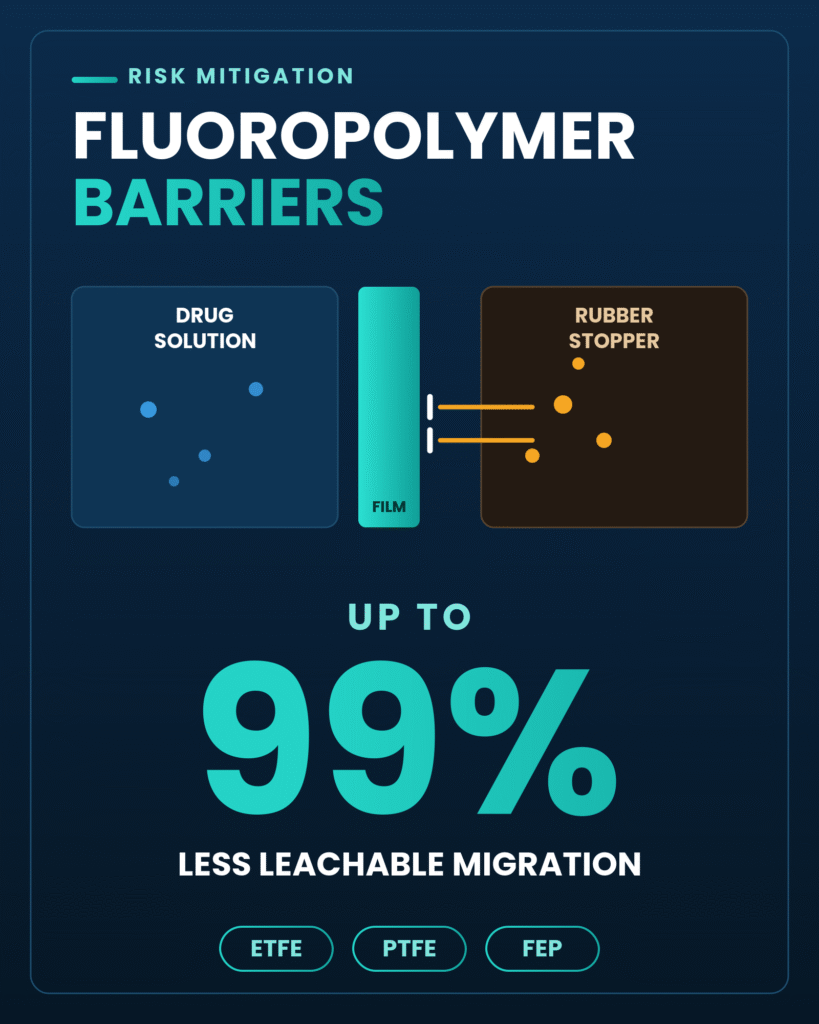
One of the most effective commercial approaches for reducing leachable migration in parenteral products is the application of fluorinated ethylene propylene (FEP) or ethylene tetrafluoroethylene (ETFE) films to the drug-contacting surfaces of vial stoppers and syringe plungers. These fluoropolymer barriers separate the drug solution from the underlying thermoset rubber matrix and can reduce extractable migration by up to 99%. At the same time, they may reduce or eliminate the requirement for heavy silicone oil coatings used to provide lubricity.
Interested in reducing migration risks through smart material choices? Discover best practices for choosing Low-Leachables Packaging Materials.
During lyophilization operations, film coatings applied to non-contact surfaces can also help prevent elastomeric stoppers from adhering to freeze-dryer shelves. This provides an additional manufacturing benefit while maintaining the chemical barrier between the elastomer and the pharmaceutical formulation.
Another engineering strategy is the replacement of conventional thermoset rubbers with Thermoplastic Elastomers (TPEs). TPEs obtain their elastic properties through physical phase separation rather than covalent chemical vulcanization. Since TPE manufacturing does not require sulfur curatives, zinc activators, or conventional vulcanization accelerators, the resulting leachables profile is generally more straightforward and is primarily associated with base polymer oligomers and commonly used plastic antioxidants.
Additional risk reduction can be achieved through aqueous pre-washing procedures, solvent extraction conditioning, and continuous Container Closure Integrity (CCI) monitoring throughout the product lifecycle. These measures can help reduce residual mobile chemical species and provide ongoing assurance that the packaging system continues to maintain its intended protective function.
Advanced Analytical Workflows for Rubber and Elastomer Leachables Profiling
Advanced analytical strategies for the characterization of rubber and elastomer leachables use an orthogonal combination of high-resolution chromatography and mass spectrometry platforms. These analytical systems are selected according to the chemical characteristics of the substances under investigation, including volatile, semi-volatile, non-volatile, and elemental species. Comprehensive chemical characterization generally requires the integration of gas chromatography, liquid chromatography, and inductively coupled plasma mass spectrometry under cGMP conditions.
Because elastomeric closures contain chemically heterogeneous mixtures of polymers, additives, processing agents, and reaction products, a single analytical instrument cannot reliably detect every potential leachable. Therefore, comprehensive screening programs typically incorporate several complementary analytical techniques.
Gas Chromatography-Mass Spectrometry (GC-MS and Headspace GC-MS)
GC-MS and Headspace GC-MS systems may be configured with electron ionization (EI) and chemical ionization (CI) to screen, identify, and quantify volatile organic compounds (VOCs) and semi-volatile organic compounds (SVOCs). These methods are particularly useful for investigating vulcanization accelerators, residual solvents, and low-molecular-weight rubber oligomers.
Ultra-High Performance Liquid Chromatography coupled with High-Resolution Mass Spectrometry (UHPLC-HRMS/MS)
UHPLC-HRMS/MS methods using electrospray ionization (ESI) and atmospheric pressure chemical ionization (APCI) are used for the characterization of non-volatile organic compounds (NVOCs). These techniques are suitable for detecting high-molecular-weight antioxidants, photoinitiators, degradation products, and other chemical species present in complex aqueous matrices.
Comparing chromatographic detection platforms for your study? Read our expert comparative breakdown on GC-MS vs. LC-MS in E&L Testing.
Inductively Coupled Plasma Mass Spectrometry (ICP-MS)
ICP-MS is applied in accordance with USP <232>, USP <233>, and ICH Q3D to quantify trace elemental impurities. This includes the assessment of heavy metals, catalyst residues, and extractable zinc (Zn2+) that may originate from vulcanization activators and other elastomer formulation constituents.
Need trace metal analysis for rubber curatives or catalysts? Learn about ICP-MS Applications in E&L Testing.
System Suitability & Certified Reference Standards
The use of structurally matched reference standards, including certified halobutyl oligomer standards where appropriate, supports the calculation of reliable relative response factors (RRFs). This approach reduces quantitative uncertainty, strengthens method performance, and provides the analytical evidence necessary to support regulatory submissions and compliance expectations.
Conclusion
Effective management of Rubber and Elastomer Leachables is critical for protecting pharmaceutical quality, maintaining the stability of active drug substances, and safeguarding patients receiving parenteral and biologic dosage forms. The implementation of rigorous Extractables and Leachables (E&L) testing programs aligned with USP <1663>, USP <1664>, and ICH Q3E allows biopharmaceutical developers to identify potential chemical hazards, evaluate toxicological risks, and support successful regulatory approval across global markets.
Container closure elastomers continue to represent one of the most significant extractables and leachables risks in primary pharmaceutical packaging because of their complex compounding chemistry and active vulcanization processes. The possible migration of mutagenic N-nitrosamines, reactive accelerators such as 2-MBT, halo-oligomers, and heavy metal activators requires an integrated and scientifically justified risk-based testing strategy.
By combining advanced fluoropolymer barrier technologies, scientifically justified AET calculations, and multi-detector cGMP analytical screening workflows, pharmaceutical manufacturers can significantly improve control over chemical migration risks throughout the entire product lifecycle.
Planning your study budget or setting up stability monitoring protocols? Explore details on Extractables and Leachables Testing Costs and learn how to manage Leachables Monitoring During Stability Studies.
To discuss customized Extractables & Leachables study designs, method validation strategies, or toxicological risk assessments for your container closure systems, contact the expert team at ResolveMass Laboratories Inc. through the Contact Us Page.
Frequently Asked Questions
Important toxicological concerns include mutagenic N-nitrosamines, 2-mercaptobenzothiazole (2-MBT), polycyclic aromatic hydrocarbons (PAHs), and certain vulcanization accelerators such as thiurams and dithiocarbamates. Depending on their concentration and exposure duration, these substances may contribute to systemic toxicity, mutagenicity, or hypersensitivity reactions. Their potential presence at trace concentrations makes sensitive analytical detection and appropriate toxicological assessment essential.
Low-molecular-weight rubber oligomers, including polymer fragments ranging approximately from C13 to C25, may migrate into aqueous formulations containing therapeutic proteins. Their hydrophobic characteristics can promote interactions with non-polar regions of protein molecules, potentially affecting protein conformation and encouraging aggregation. These changes may contribute to sub-visible particle formation, reduced product quality, and increased immunogenicity concerns.
USP <1663> focuses on controlled extraction studies designed to identify substances that could potentially migrate from packaging or delivery systems under exaggerated laboratory conditions. USP <1664> addresses the evaluation of actual leachables that enter the drug product during relevant storage and stability conditions. Together, these chapters provide a structured framework for understanding potential chemical migration and confirming actual exposure in pharmaceutical products.
USP <382> places greater emphasis on the functional performance of elastomeric closure systems in their intended packaging applications. The assessment may include parameters such as needle penetration force, self-sealing performance, spike retention, fragmentation, and other relevant functionality characteristics. This approach helps verify that the closure performs mechanically as intended while maintaining container closure integrity and minimizing particulate-related risks.
Fluoropolymer films such as ETFE and FEP create a chemically resistant separation layer between the drug formulation and the underlying elastomeric material. By reducing direct contact with the bulk rubber matrix, these films can substantially limit the migration of organic extractables and leachables. In suitable applications, they may reduce migration by up to 99% and can also reduce reliance on heavy silicone oil coatings for lubrication.
N-nitrosamines are highly potent mutagenic carcinogens that may form when secondary amines associated with thiuram or dithiocarbamate accelerators react with nitrosating agents. Such reactions may occur during rubber processing, sterilization, or subsequent storage under suitable chemical conditions. Because even very low exposures may be associated with significant lifetime cancer risk, regulatory authorities apply stringent limits and compound-specific exposure controls to these impurities.
A comprehensive E&L program generally requires multiple complementary analytical platforms because elastomeric materials can release compounds with widely different chemical properties. GC-MS and Headspace GC-MS are used for volatile and semi-volatile compounds, while UHPLC-HRMS is suitable for non-volatile additives, antioxidants, and degradation products. ICP-MS provides elemental analysis for metals such as zinc, and the combined use of these orthogonal techniques improves coverage across diverse leachable classes.
Thermoset elastomers develop permanent chemical cross-links through curing systems based on sulfur, peroxides, or related agents, which may generate residual chemicals and reaction byproducts. Thermoplastic Elastomers (TPEs), in contrast, obtain their elastic behavior through physical phase separation rather than permanent chemical vulcanization. Consequently, TPE systems may have a more simplified extractables profile because they can avoid conventional vulcanization accelerators, nitrosamine precursors, and certain metal-based activator systems.
Reference:
- United States Pharmacopeia. (n.d.). Evaluation of elastomeric components used in pharmaceutical packaging/delivery systems. https://www.usp.org/sites/default/files/usp/document/workshops/1381_elastomeric_evaluation_of_elastomeric_components_used_in_pharmaceutical_packagingdelivery_systemspf_43_3.pdf
- Kuzmič, S., Zlobec, T., Sollner Dolenc, M., Roškar, R., & Trdan Lušin, T. (2026). Extractables and leachables in pharmaceutical products: Potential adverse effects and toxicological risk assessment. Toxics, 14(1), 92. https://doi.org/10.3390/toxics14010092
- United States Pharmacopeia. (n.d.). Extractables and leachables. https://www.usp.org/impurities/extractables-and-leachables
- U.S. Food and Drug Administration. (2025, August 1). Q3E guideline for extractables and leachables: Draft version. https://www.fda.gov/media/189890/download
- United States Pharmacopeia. (n.d.). Elastomeric closure functionality in injectable pharmaceutical packaging/delivery systems. https://www.usp.org/sites/default/files/usp/document/workshops/382_elastomeric_closure_functionality_in_injectable_pharmaceutical_packagingdelivery_systems_pf_43_3.pdf
- Bello, W., Hosotte, C., Stampfli, C., Pierrot, A., Munier, F. L., Berger-Gryllaki, M., Carrez, L., Pezzatti, J., & Sadeghipour, F. (2025). Assessment of leachables in hospital pharmacy compounded topotecan conditioned in common off-label syringes for intravitreal use. Scientific Reports, 15, 40736. https://doi.org/10.1038/s41598-025-24557-9
Get In Touch With Us
About The Author


